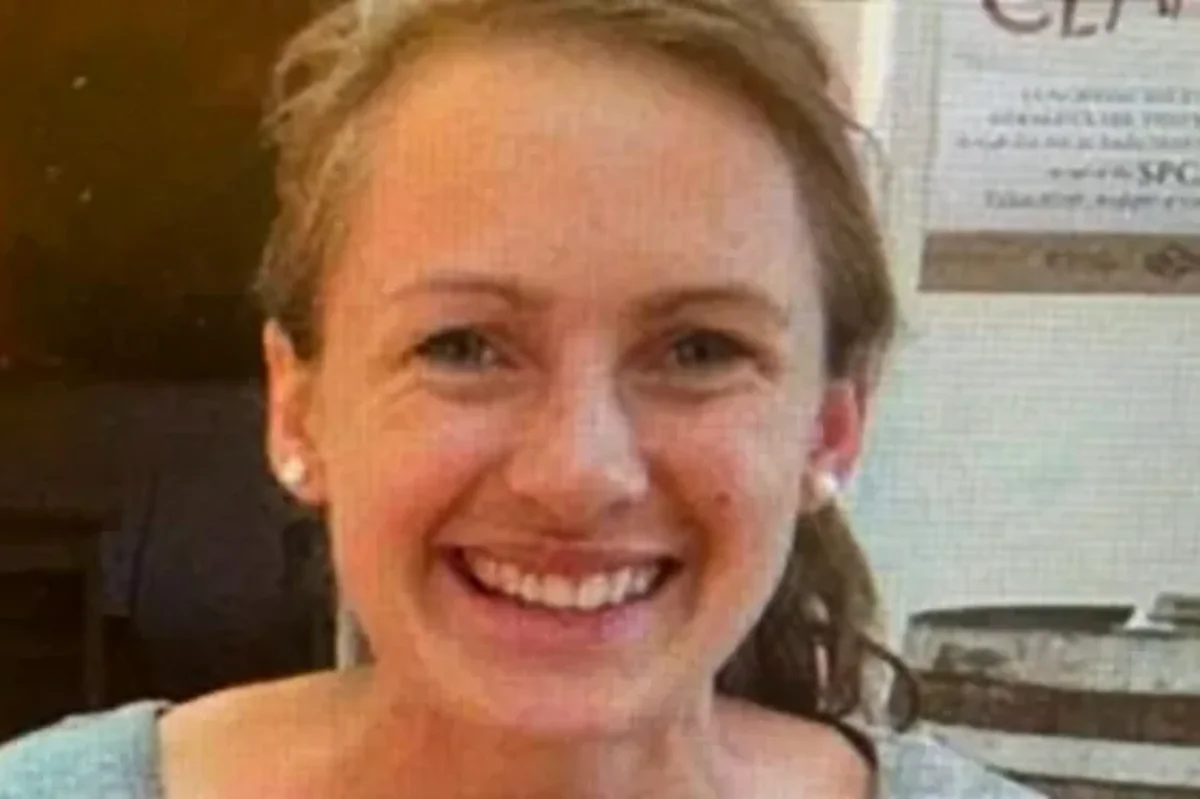
The discovery of a human body stuffed inside a suitcase inside a derelict Athenian building is the kind of grim narrative usually confined to dark fiction. Yet for Greek homicide detectives, the nightmare is tangible, unfolding across international borders and digital footprints.
When a homeless man scavenging through an abandoned property on Evelpidon Street in the densely populated Kypseli district of Athens noticed a foul odor on July 18, he expected the worst. He found a human limb protruding from a standard piece of luggage. Inside was 38-year-old Elisabeth-Jane Ross, an Edinburgh-born woman whose journey had spanned continents before terminating in absolute horror.
Her death has triggered a complex multinational investigation. It exposes the chilling vulnerabilities of transient travelers, the dark mechanics of post-mortem digital deception, and the systemic difficulties law enforcement faces when a crime scene spans the United States, Cyprus, and Greece.
The Anatomy of an International Trail
Reconstructing Ross’s final weeks requires piecing together fragmented airline manifests, immigration records, and sparse witness accounts. Investigators established that Ross arrived in Greece on June 29. Her route was not direct. She traveled from the United States—where her fingerprints were on file, ultimately enabling Interpol and American authorities to confirm her identity—via Cyprus before landing on Hellenic soil.
Once in Athens, her movements grew opaque. Reports indicate she had spent time staying with a friend in Keratsini, a suburban port town roughly a forty-minute drive from where her remains were eventually recovered. How she transitioned from a suburban residence to an abandoned, rubbish-strewn concrete shell in Kypseli remains one of the central puzzles tormenting police.
Kypseli is a multicultural neighborhood known for its vibrant street life, fading modernist apartment blocks, and growing footprint of short-term rentals. It is not a traditional tourist hub, making the presence of a foreign national in a derelict squat particularly jarring. Forensic pathologists estimate that Ross died between five and seven days before her discovery.
The Digital Ghost Protocol
Perhaps the most sinister aspect of the Athens suitcase case is what happened after Ross drew her final breath. Greek police have confirmed that Ross's mobile phone remained active post-mortem.
Text messages were actively dispatched from her device days after forensic indicators suggest she had already perished. Investigators describe these communications as a deliberate maneuver designed to simulate life and throw friends, family, and authorities off the scent. By maintaining the illusion that Ross was still active, mobile, and communicating, whoever controlled the device bought themselves a critical window of impunity.
This digital phantom phenomenon is becoming increasingly common in modern homicide investigations. Perpetrators no longer simply vanish; they hijack the victim's digital identity, using familiar conversational cadences and automated messaging habits to delay the panic that triggers a missing persons report. The phone's signal data, cell tower pings, and cloud recovery logs are now being exhaustively mapped by cyber-crime units in Athens to separate Ross's actual communications from the manufactured narrative left behind by her killer.
The Forensic Wall
Compounding the mystery is the preliminary medical examiner's report. Following the autopsy, Greek police spokespersons acknowledged a frustrating roadblock: the coroner could not immediately establish an exact cause of death, noting a lack of obvious external trauma or visible injuries on the body.
Toxicology panels and advanced histological tests remain pending. Without a definitive cause of death, official classifications tread a careful line. Authorities are treating the location as a crime scene and running a full criminal investigation, though a formal murder charge hinges entirely on the forthcoming laboratory results.
Hypothetically, in cases involving advanced decomposition within enclosed spaces like suitcases, toxicological screening becomes the ultimate arbiter of truth. Investigators must test for pharmacological agents, stealthy poisons, or evidence of asphyxiation that leaves minimal structural trace on skeletal muscles and soft tissues.
The Search for Missing Links
As the British Embassy in Athens coordinates with the Hellenic Police and supports Ross’s grieving father in Scotland, the focus shifts entirely to closed-circuit television networks and local informants.
Detectives are scrubbing footage from commercial properties, corner shops, and municipal traffic cameras across a wide radius from Kypseli to Keratsini. They are searching for the physical transport of the suitcase—a bulky, heavy item that would require either a vehicle or a deliberate, highly conspicuous journey on foot through urban thoroughfares.
Rumors and speculative theories point in multiple directions. Some local law enforcement sources suggest the possibility of predatory targeting by marginalized elements inhabiting the city's abandoned infrastructure. Others suspect a more calculated, pre-planned elimination orchestrated by someone familiar with her itinerary.
The silence from her final digital exchanges continues to cast a long shadow over the investigation. Every ping of a cell tower and every recovered fragment of security camera footage represents a fragile bridge over an abyss of calculated deception