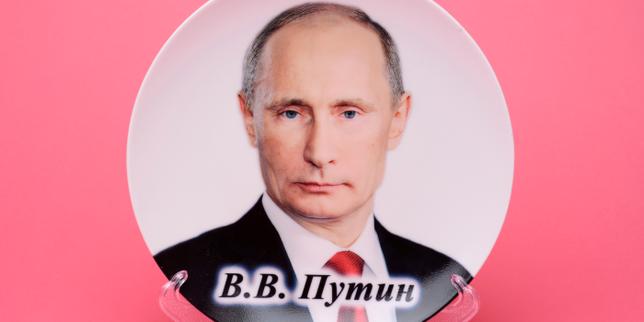
Twenty-five years ago, a nondescript former intelligence operative stepped into the highest office of a fractured federation. He inherited a crumbling state apparatus, an exhausted population, and an economy on the brink of institutional collapse. Today, that same figure presides over an entrenched autocratic ecosystem that has rewritten the boundaries of modern statecraft. Recent investigative reporting, notably extracted from deep-dive Russian exile accounts published in Western press outlets, strips away the facade of grand ideological design. It reveals a reality far more transactional. The longevity of Vladimir Poutine does not stem from a grand geopolitical manifesto or a cohesive societal vision. It survives through calculated survivalism, the systematic neutralization of political friction, and the monetization of state power.
Understanding this quarter-century requires abandoning the comforting myth of a master strategist who foresaw every geopolitical shift since the turn of the millennium. Autocracy in Moscow evolved iteratively. Each phase of consolidation responded directly to immediate crises rather than a meticulously mapped blueprint.
The Myth of Ideology and the Reality of Patronage
Western analysts often spend excessive energy hunting for the ideological anchors of the Kremlin. They look for Eurasianism, deep-seated anti-Western animus, or a resurrected Soviet nostalgia. These elements exist, but they function primarily as rhetorical scaffolding rather than operational drivers.
The machinery of the modern Russian state operates on pure patronage. Power flows downward from the apex through a network of mutual dependencies. Loyalty receives economic rent; dissent invites asset seizure and exile.
- The vertical of power eliminates autonomous regional centers by replacing elected governors with appointed bureaucrats.
- State-controlled energy conglomerates serve as the financial engine sustaining both elite loyalty and security apparatus expansion.
- Information spaces undergo centralized monopolization, transforming television and digital channels into compliance enforcement tools.
When the price of crude oil soared during the 2000s, this system enjoyed an extended grace period. The population accepted a tacit social contract: material stability and rising consumer standards in exchange for political acquiescence. Citizens surrendered their ballot box influence in exchange for paid wages and filled grocery shelves after the chaotic free-fall of the Yeltsin years.
The Transition from Consensus to Coercion
As economic growth slowed in the subsequent decade, the nature of the regime underwent a fundamental shift. Consent became secondary. Coercion moved to the foreground.
A government that relies on economic delivery must reinvent its legitimacy when the economy stagnates. The Kremlin achieved this through manufactured external friction and perpetual crisis management. Every confrontation abroad served a domestic utility. It framed the leader not merely as an administrator, but as the indispensable defender of a besieged fortress.
Independent journalists, opposition organizers, and civic watchdogs experienced a methodical squeeze. The methods evolved from overt violence in the chaotic nineties to sophisticated legal harassment, tax audits, administrative fines, and ultimately, draconian legislation regarding foreign agents and undesirable organizations. The state weaponized its own legal codes. Laws became pliable instruments designed to keep opposition figures perpetually off-balance or behind bars.
Institutional Decay Beneath the Surface
Outwardly, the Kremlin projects an image of monolithic strength and unshakeable control. Parades roll across Red Square; approval ratings remain artificially elevated through pollster compliance; legislative rubber stamps pass decrees with monotonous regularity.
Beneath this polished veneer lies profound institutional fragility. Systems built entirely around a single individual suffer from acute succession anxiety. Because no legal or predictable mechanism exists for transferring authority, every faction within the security services and financial clans watches the others with predatory suspicion.
- The siloviki, or security service elites, compete constantly with technocratic economic managers over shrinking budget allocations.
- Regional elites shoulder mounting financial burdens to fund federal priorities while watching their local infrastructure decay.
- Demographic deficits and capital flight compound long-term stagnation, masked temporarily by wartime economic stimulation.
When decision-making concentrates within an increasingly narrow circle of sycophants, feedback loops break down. Advisers tell the supreme leader what he wishes to hear rather than what analytical reality demands. This informational isolation breeds catastrophic miscalculations, most visible in strategic choices that isolate the country from global financial and technological networks.
The Cost of Staying Forever
A quarter-century in power leaves a heavy footprint on a nation's collective psyche. Entire generations have grown up knowing no other leader, fostering a pervasive political apathy where cynicism replaces active citizenship. People retreat into private lives, separating their personal existence from state actions.
Yet, this atomization is precisely what the architecture of control requires. An atomized populace cannot organize, cannot coordinate, and cannot offer an alternative when the cracks finally widen.
The longevity of this regime offers a grim lesson in modern authoritarian resilience. It demonstrates that a system does not need to be popular, efficient, or innovative to endure. It merely needs to control the instruments of violence, monopolize information channels, and maintain enough elite cohesion to crush opposition before it coalesces. The cost of this endurance is paid in the currency of stagnation, international isolation, and a mortgage on the future of millions who remain trapped inside a system designed for one man's permanent tenure.
Vladimir Poutine : 25 ans de pouvoir en Russie
This video provides additional context on how Vladimir Poutine consolidated his control over twenty-five years.