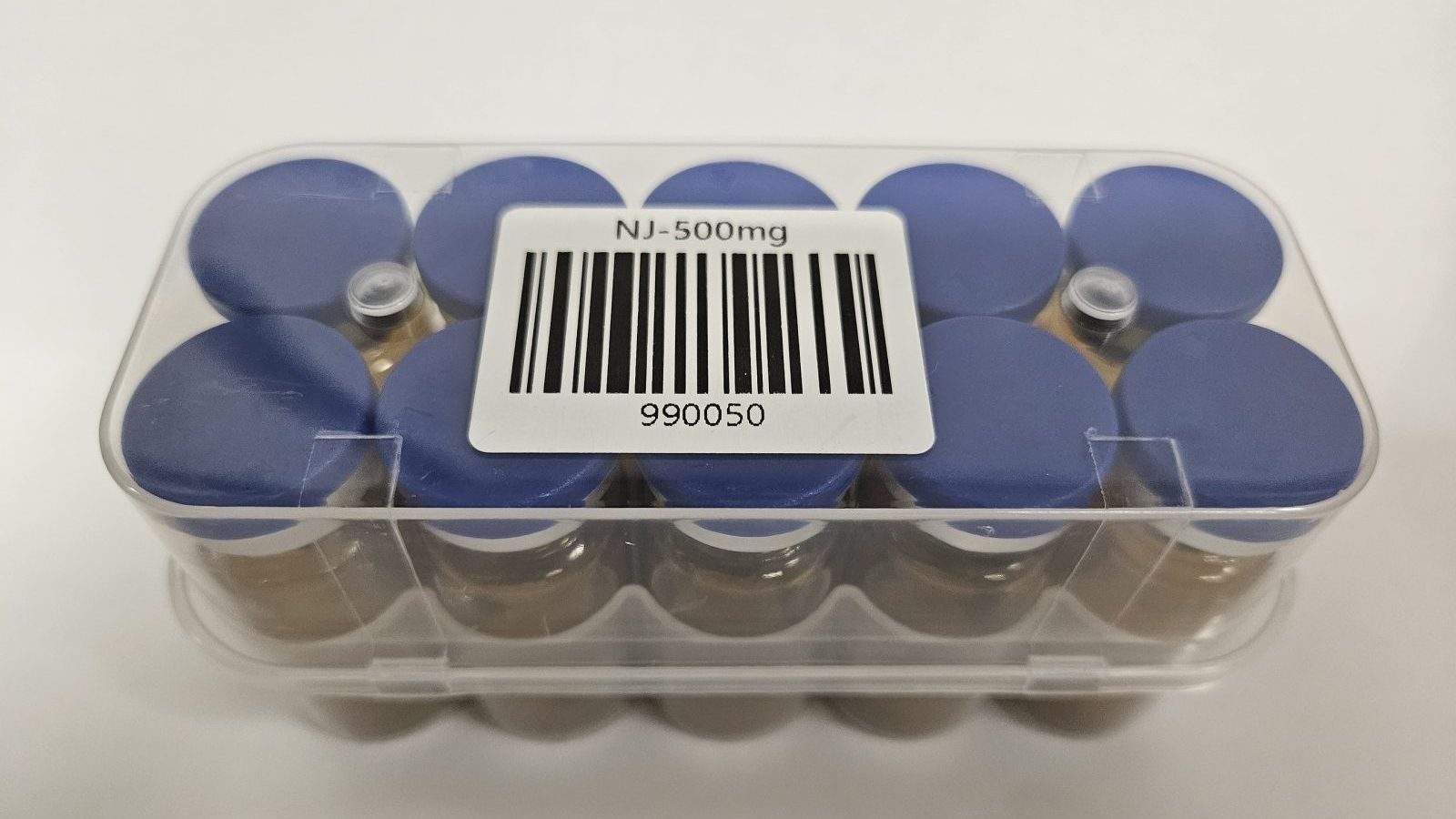
Health Canada has issued an urgent public health warning after laboratory testing revealed dangerous bacterial contamination inside unauthorized injectable peptides sold online. The alert targets unregulated wellness and bodybuilding storefronts operating across the Canadian market, confirming that vials marketed for muscle growth, fat loss, and anti-aging contain live pathogens capable of triggering severe bloodstream infections, tissue necrosis, and sepsis. Buyers purchasing these compounds without a prescription are injecting unsterile substances directly into their bodies.
The numbers tell a grim story, though the silence from the gray-market vendors tells an even worse one. For years, the online peptide market has operated in a convenient legal shadow. Sellers slap a tiny "for research purposes only" label onto a glass vial of lyophilized powder, include a disclaimer stating the product is not for human consumption, and proceed to market the exact same vial on social media as a miracle cure for torn tendons, stubborn belly fat, and sluggish recovery. Federal regulators are finally catching up to the reality on the ground. When Health Canada tests these seized and purchased products, they are not finding pristine pharmaceutical-grade compounds. They are finding microbial soup.
The Anatomy of a Contaminated Vial
To understand why bacterial contamination in injectable peptides is so dangerous, you have to look at how these drugs enter the human body. When you swallow a contaminated dietary supplement, your gastrointestinal tract acts as a formidable barrier. Stomach acid, digestive enzymes, and gut-associated lymphoid tissue destroy the vast majority of stray microbes before they ever reach your bloodstream.
Injectables bypass every single one of those defenses.
Whether a user injects a peptide subcutaneously into belly fat or intramuscularly into a deltoid, they are depositing the solution directly into sterile tissue. The human body has zero tolerance for foreign bacteria in those compartments. In legitimate pharmaceutical manufacturing, producing a sterile injectable requires cleanrooms rated to strict ISO standards, continuous air filtration, automated filling lines, and rigorous end-product sterility testing. Every batch undergoes quarantine until microbiologists confirm the absence of aerobic and anaerobic bacteria, fungi, and endotoxins.
Unregulated peptide vendors do not own ISO-certified cleanrooms. Most do not even manufacture the peptides themselves. The overwhelming majority of online peptide storefronts are simple drop-shipping or white-labeling operations. They buy bulk raw powders from overseas chemical synthesis factories, often in batches intended for industrial or non-clinical laboratory testing. Those raw powders are then shipped to domestic garages, basements, or rented warehouse spaces where uncertified workers reconstitute, filter, vial, and crimp the product by hand.
Consider a hypothetical scenario that plays out daily in this underground supply chain. A vendor orders fifty grams of raw BPC-157 powder from an overseas supplier. During transit, the package sits in humid cargo holds. Once it arrives at a domestic fulfillment house, a technician wearing basic latex gloves—and perhaps no hairnet or respirator—mixes the powder with water on a stainless-steel kitchen table. If the technician touches their face, speaks over the open beaker, or uses a non-sterile pipette, skin flora like Staphylococcus aureus or environmental bacteria like Pseudomonas aeruginosa drop straight into the solution. The mixture is then hand-pumped through a cheap syringe filter into glass vials, freeze-dried, and capped.
The freeze-drying process, known as lyophilization, does not kill bacteria. It puts them to sleep. The microbes sit dormant inside that tiny white puck at the bottom of the vial until a customer in Toronto, Vancouver, or Calgary adds bacteriostatic water, draws the liquid into an insulin syringe, and pushes the plunger. Within hours, those dormant bacteria wake up at body temperature in a nutrient-rich environment.
The Endotoxin Trap Nobody Talks About
Live bacteria are only half the problem. Even if an underground chemist manages to filter out live organisms or sterilize a batch using heat or radiation, they rarely eliminate bacterial endotoxins.
Endotoxins, specifically lipopolysaccharides, are structural components found in the outer membrane of Gram-negative bacteria. When these bacteria die, their cell walls break apart and release endotoxins into the surrounding liquid. Unlike live bacteria, endotoxins are remarkably heat-stable and microscopic. Standard syringe filters used by amateur compounders—typically 0.22-micron filters—will catch intact bacterial cells, yet allow dissolved endotoxins to pass straight through into the final vial.
Injecting endotoxins triggers an immediate, violent immune response. The body recognizes the lipopolysaccharide fragments as a massive bacterial invasion and unleashes a cascade of inflammatory cytokines. Users experience what underground bodybuilding forums casually dismiss as "test flu" or a "bad pin"—sudden chills, violent shivering, high fever, joint pain, and localized swelling. In severe cases, high endotoxin loads cause endotoxic shock, leading to a catastrophic drop in blood pressure and organ failure.
Legitimate pharmaceutical companies test every injectable lot using the Limulus Amebocyte Lysate (LAL) assay to ensure endotoxin levels remain below strict threshold limits. Gray-market peptide websites rarely conduct sterility testing, and almost none pay the hundreds of dollars per batch required for endotoxin screening. When a vendor posts a "Certificate of Analysis" on their website, look closer at the document. Ninety-nine percent of the time, that certificate only shows High-Performance Liquid Chromatography (HPLC) results.
HPLC tells you chemical purity—whether the powder inside the vial is actually the peptide sequence claimed on the label. It tells you nothing about sterility. A vial can be 99.4 percent pure Tirzepatide or Semaglutide and still carry enough bacterial endotoxins to put you in an intensive care unit.
Why Health Canada Is Cracking Down Now
Regulatory agencies like Health Canada and the U.S. Food and Drug Administration have historically treated the research chemical market like a game of whack-a-mole. Shut down one domain name on a Tuesday, and the exact same owners launch a mirror site under a slightly different URL by Thursday morning.
Three major shifts have forced Health Canada to escalate its enforcement and issue blunt public warnings.
The GLP-1 Gold Rush
The explosive popularity of prescription GLP-1 receptor agonists like Ozempic and Wegovy created an unprecedented supply shortage and a massive price barrier. Millions of consumers suddenly wanted weekly injectable weight-loss drugs, and thousands of opportunistic entrepreneurs rushed to fill the void. Vendors who used to sell obscure bodybuilding peptides like Melanotan II or CJC-1295 suddenly pivoted to selling raw, unapproved Semaglutide, Tirzepatide, and Retatrutide. The customer base shifted overnight from hardened gym rats willing to accept high risks to everyday consumers who have never held a syringe in their lives. When inexperienced users inject contaminated products without understanding sterile technique, hospital emergency rooms see the fallout immediately.
Social Media Funneling
For decades, buying gray-market injectables required navigating clunky web forums, using encrypted email, and paying via wire transfer or cryptocurrency. Today, TikTok, Instagram, and podcast sponsors openly funnel mainstream audiences straight to research peptide sites. Influencers discuss dosing protocols for BPC-157, TB-500, and GHK-Cu as casually as they discuss vitamin D or creatine. The barrier to entry vanished, turning a niche underground subculture into a mass-market consumer hazard.
Cross-Border Supply Chain Breakdowns
Health Canada’s border enforcement teams have intercepted a record volume of mislabeled chemical parcels entering the country. Testing conducted by Health Canada’s laboratories revealed widespread discrepancies between label claims and actual vial contents. Beyond bacterial contamination, inspectors found vials containing zero active ingredients, incorrect dosages, heavy metal residues from cheap synthesis catalysts, and entirely different drugs than what was advertised.
The "Research Chemical" Legal Loophole Is a Myth
A persistent rumor in fitness and biohacking circles claims that selling peptides "for research purposes only" makes the transaction completely legal. Sellers believe that adding a checkbox at checkout—requiring the buyer to confirm they are a qualified researcher—shields them from criminal and civil liability.
That assumption is flatly wrong under Canadian law.
Under the Food and Drugs Act and its associated regulations, Health Canada determines a product's regulatory status based on its composition, representation, and intended use, not the disclaimer printed in six-point font on the back of the bottle. If a company sells an injectable substance that has pharmacological activity in humans, markets it via fitness influencers, provides reconstitution calculators on its website, or sells insulin syringes alongside the vials, regulators view the product as an unapproved drug.
"Research chemical" disclaimers do not hold up in court when the surrounding commercial behavior proves the product is destined for human injection. Health Canada has the statutory authority to seize inventory, freeze payment processors, block domain names, issue public advisories naming specific retailers, and refer cases for criminal prosecution. The reason many sites remain active is not because they are legal; it is simply a matter of regulatory bandwidth and the sheer volume of storefronts operating offshore.
How to Spot High-Risk Peptide Vendors
If you are navigating the wellness space, distinguishing between legitimate medical compounding and dangerous underground operations requires looking past sleek branding and paid influencer endorsements. Legitimate pharmacies do not operate in the shadows.
- Missing Prescription Requirements: In Canada, injectable peptides—including insulin, growth hormone secretagogues, and GLP-1 medications—are regulated as prescription drugs. Any website allowing you to add an injectable vial to a shopping cart and pay with a credit card without a valid prescription from a licensed Canadian healthcare practitioner is operating illegally.
- Cryptocurrency or E-Transfer Only: Because major credit card networks actively monitor and terminate merchant accounts caught selling unapproved pharmaceuticals, gray-market vendors frequently rely on Interac e-Transfers, Bitcoin, or high-risk offshore payment processors.
- Lyophilized Powders Sold Without Diluents: Legitimate pharmaceutical injectables either come pre-mixed in sterile pens or multi-dose vials, or they are packaged with pharmaceutical-grade sterile diluent specifically matched to that medication. Underground sellers ship dry powder vials separately and leave the buyer to source their own bacteriostatic water, multiplying the risk of user-introduced contamination during mixing.
- No Drug Identification Number (DIN): Every drug authorized for sale in Canada is assigned an eight-digit Drug Identification Number by Health Canada. This number appears clearly on the outer packaging and vial label. If a vial lacks a DIN, it has not been evaluated for safety, efficacy, or manufacturing sterility.
- Fake or Incomplete Testing Certificates: Reputable compounding pharmacies maintain accreditation from provincial regulatory colleges and adhere to strict USP (United States Pharmacopeia) compounding standards, specifically USP <797> for sterile preparations. Gray-market sites show cropped screenshots of Chinese lab reports dated two years prior, often with the client name blacked out.
The Real Cost of Cheap Injectables
Consumers turn to unauthorized online peptides for two predictable reasons: cost and access. A legitimate prescription for a branded GLP-1 medication or a prescribed peptide therapy through a licensed clinic costs hundreds of dollars per month. An underground website offers a five-milligram vial of the exact same chemical name for forty dollars.
That price difference is not a clever discount; it is the exact cost of skipping sterility assurance, cleanroom manufacturing, regulatory oversight, and medical supervision.
When a contaminated vial causes a deep-tissue abscess, cellulitis, or systemic bacteremia, the financial and physical toll dwarfs whatever money was saved at checkout. Treating a severe soft-tissue infection requires intravenous antibiotics, surgical drainage, and potentially days in a hospital ward. In cases involving necrotizing fasciitis or sepsis, patients face permanent tissue loss, organ damage, or death. Even minor localized infections leave permanent scar tissue and trigger chronic immune sensitization.
There is also the invisible risk of heavy metal toxicity and residual solvents. Solid-phase peptide synthesis—the chemical process used to build peptide chains amino acid by amino acid—relies on harsh organic solvents like dimethylformamide (DMF) and trifluoroacetic acid (TFA). Pharmaceutical-grade manufacturers run extensive purification cycles to strip these toxic solvents out of the final product. Cut-rate chemical factories skip those purification steps to maximize yield and profit margins. Injecting residual TFA causes severe chemical burns to subcutaneous tissue, leading to painful, hard nodules under the skin that take months to resolve.
Navigating the Gray Area Safely
The broader frustration driving consumers toward these sites is real. Modern healthcare systems are slow to adopt emerging therapies, insurance coverage for preventative or metabolic treatments remains restrictive, and compounding regulations have tightened dramatically over the past two years. People dealing with chronic joint pain, metabolic dysfunction, or slow injury recovery feel locked out of promising treatments.
Acknowledging that frustration does not make gray-market vials safe. If you are considering peptide therapy, the only defensible path runs through legitimate medical oversight. Speak with a licensed physician who specializes in sports medicine, endocrinology, or preventative health. If a peptide is clinically appropriate and legally available in Canada, a doctor can write a prescription fulfilled by a licensed, provincially inspected compounding pharmacy.
Those pharmacies operate under strict sterility protocols. They test for microbial growth, verify endotoxin limits, source active pharmaceutical ingredients from registered facilities, and answer directly to provincial pharmacy boards if something goes wrong. If an online vendor cannot tell you the name of their licensed pharmacist-in-charge or provide a verifiable provincial pharmacy license number, close the browser tab immediately. Your bloodstream is not a laboratory test tube.