Texas ranchers, local historians, and conservation groups are suing the Trump administration to stop roughly 600 miles of planned border barriers across West Texas, arguing that the Big Bend sector accounts for only about 1% of southern border apprehensions and that federal officials unlawfully waived environmental and property protections to force construction through rugged desert terrain. The legal battle escalated dramatically in November 2026 when the U.S. Supreme Court issued an 8-1 emergency order lifting a lower court's preliminary injunction, allowing bulldozers and heavy contractors to resume work while the underlying constitutional and statutory challenges grind forward.
The Myth of the Empty Map
To understand why a coalition of lifelong Republicans, two-time Trump voters, and environmental advocates joined forces in federal court, you first have to look at how Washington views the Chihuahuan Desert. From a desk inside the Department of Homeland Security, the 517-mile Big Bend Border Patrol sector looks like a gaping hole on a map. There is no continuous steel curtain separating Presidio, Brewster, and Terrell counties from northern Mexico.
On the ground, the reality is entirely different.
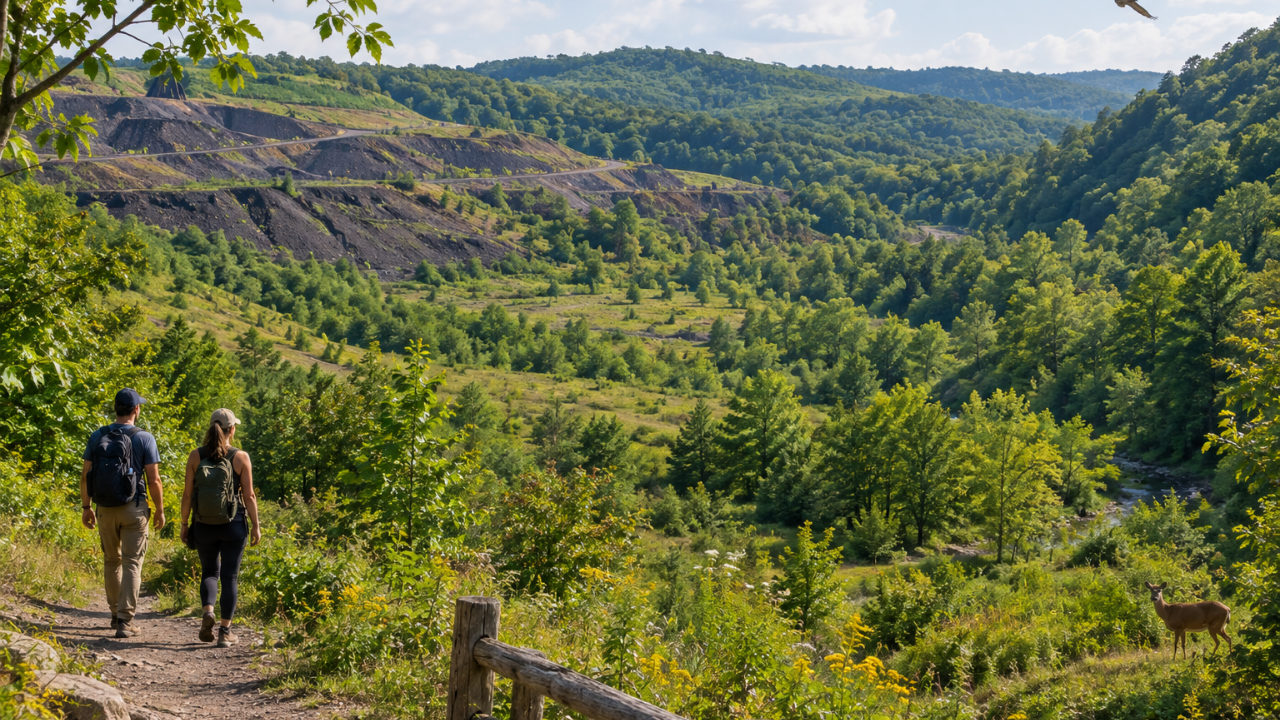
The Rio Grande cuts through sheer limestone canyons—some rising 450 feet straight out of the riverbed—surrounded by miles of waterless scrub, jagged basalt, and extreme summer heat. Local landowners point out that you cannot drive a truck across a 450-foot cliff, nor can you easily take a dirt bike or a mule down the canyon walls. Anyone attempting to cross illegally in much of Big Bend must scramble hand over fist through terrain that acts as a natural deterrent far more unforgiving than 30-foot steel bollards.
Historical enforcement numbers back up what ranchers have been saying for years. Despite covering roughly a quarter of the entire U.S.-Mexico border, the Big Bend sector has historically accounted for around 1% of migrant arrests. Even during the peak migration years between 2021 and 2025, federal filings show slightly more than 89,000 apprehensions across the entire five-year span—a fraction of what busy sectors in South Texas or Arizona routinely recorded in a matter of months.
Yet under a $46 billion congressional border-wall appropriation passed in the summer of 2025, Customs and Border Protection began pushing five massive construction segments across West Texas. The blueprint includes 30-foot bollard walls, low-profile vehicle barriers, surveillance towers, and over 200 miles of widened patrol roads cutting straight through Big Bend National Park, Big Bend Ranch State Park, and nearly 200 miles of the federally protected Rio Grande Wild and Scenic River corridor.
Why Two-Time Trump Voters Are Suing the Administration
Standard political coverage tends to frame every border dispute as a predictable clash between red-state hawks and blue-state environmentalists. Big Bend destroys that narrative.
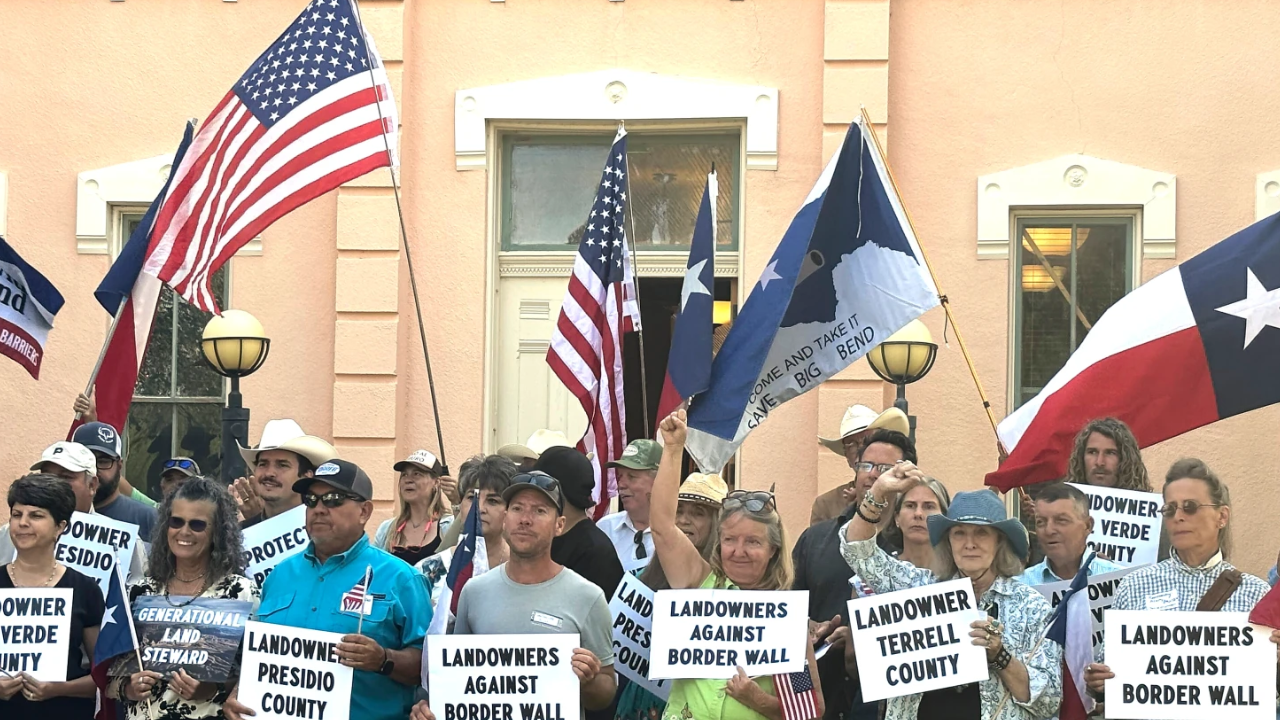
Roughly 65% of the project's footprint sits on private property, backed by the threat of federal eminent domain affecting more than 400 landowners. When survey crews and contractors began staging equipment and clearing brush in August 2026, they did not just anger conservationists. They triggered a revolt among multi-generational ranching families who had backed the president's broader crackdown on illegal immigration.
Laura Allen, a former county judge and two-time Trump voter whose family raises sheep and goats in the region, captured the mood at a press conference in Marfa. She thanked the president for securing the border, then delivered a blunt warning: "I didn't vote for a wall. I wanted our border secured. He accomplished that."
For ranchers like Allen, the fight comes down to three immediate threats that Washington planners either ignored or underestimated:
- Water access: In an arid desert where every square foot of grazing grass matters to a ranch's survival, placing barriers north of the Rio Grande cuts cattle, sheep, and goats off from their primary water source.
- Flash flooding: Desert arroyos stay dry for months until sudden monsoon storms turn them into violent walls of water. Ranchers and engineers warn that concrete footings and steel bollards act like dams, trapping debris and triggering catastrophic upstream flooding across private pastures and historic towns.
- Property sovereignty: Refusing federal access agreements forces the government to initiate condemnation proceedings in federal court. While the Constitution requires financial compensation, landowners argue that no government check replaces century-old family deeds or prevents a ranch from being severed in half.
Local law enforcement has echoed those objections. Terrell County's Republican sheriff, Thad Cleveland—a 26-year veteran of the U.S. Border Patrol—has publicly argued that spending billions on physical barriers in canyon country makes little operational sense. In steep, remote topography, mobile surveillance towers, ground sensors, and autonomous drones give agents far better visibility without destroying the terrain.
The Legal Weapon Behind the Bulldozers
To push the project past local resistance and environmental reviews, the Department of Homeland Security relied on one of the broadest executive powers in federal law: Section 102 of the Illegal Immigration Reform and Immigrant Responsibility Act of 1996.
Originally enacted to speed up barrier construction around urban choke points like San Diego, Section 102 allows the DHS secretary to waive virtually any federal, state, or local law deemed necessary to ensure rapid barrier construction. Throughout 2026, Homeland Security Secretaries Kristi Noem and her successor, Markwayne Mullin, issued sweeping waiver determinations published in the Federal Register. Those decrees wiped away the National Environmental Policy Act, the Endangered Species Act, the Clean Water Act, and the National Historic Preservation Act across hundreds of miles of West Texas.
Section 102 does more than bypass regulations. It strips federal appellate courts of jurisdiction and limits district court challenges strictly to claims alleging a direct violation of the U.S. Constitution.
That statutory bottleneck is where the lawsuits collided with federal judicial power. In April 2026, an environmental group, a local river guide, and a nonprofit working to preserve the historic Sacred Heart of Jesus Church in Ruidosa filed suit, followed in September by a broader coalition of Big Bend ranchers and the advocacy group Conserve Big Bend.
Their central argument targeted the text of the 1996 statute itself. Congress authorized Section 102 waivers specifically for "areas of high illegal entry." By declaring a 500-mile desert wilderness with 1% of border arrests to be a high-entry zone, plaintiffs argued, the executive branch was rewriting federal law and violating the Constitution's separation of powers.
What Happened in Court—And Why the Supreme Court Stepped In
For five weeks, the landowners' strategy worked.
On October 2, 2026, U.S. District Judge Kathleen Cardone issued a preliminary injunction halting construction and ground-disturbing work across the Big Bend sector. Judge Cardone found that the challengers were likely to prove the administration had exceeded its statutory authority, directly questioning how DHS could label Big Bend an area of high illegal entry when agency statistics showed the exact opposite.
The administration did not wait for a full trial. Justice Department lawyers went straight to the U.S. Supreme Court on an emergency stay application, claiming that every day of delay was costing taxpayers nearly half a million dollars in idle contractor fees while leaving a strategic gap vulnerable to cartel smuggling.
On November 9, 2026, the Supreme Court handed the administration a major procedural victory. In an unsigned 8-1 order—with only Justice Ketanji Brown Jackson dissenting—the justices stayed Judge Cardone's injunction.
The Court's reasoning hinged on a sharp legal distinction. Plaintiffs had framed their lawsuit as a constitutional "major questions" challenge under Article I. The Supreme Court rejected that framing, ruling that accusing a cabinet secretary of exceeding statutory authority remains a statutory claim regardless of how lawyers label it. Because Congress barred federal courts from hearing statutory challenges to Section 102 waivers, the justices concluded the government is overwhelmingly likely to win on jurisdictional grounds.
The Contractors and Cash Driving the Build
While constitutional lawyers debate judicial review, heavy civil engineering firms are already executing billions of dollars in task orders across the region.
Customs and Border Protection has pushed construction across the southern border to a pace of roughly 12 miles per week, backed by multi-billion-dollar awards across five distinct West Texas zones. In May 2026 alone, the government awarded a $1.72 billion task order to Southwest Valley Constructors Co., a subsidiary of construction giant Kiewit Corp., covering 17 miles of noncontiguous low-profile vehicle barriers and 205 miles of patrol-road upgrades inside and around Big Bend National Park. Additional segments in Hudspeth, Presidio, and Val Verde counties carry billions more in commitments.
Those contracts explain why the administration fought so aggressively at the Supreme Court. Once a federal agency issues notices to proceed on multi-billion-dollar design-build contracts, pausing work triggers massive standby claims from equipment operators, concrete suppliers, and security subcontractors.
What the Government Argues vs. What Ranchers See
| Issue | Federal Government Position | Big Bend Ranchers and Local Critics |
|---|---|---|
| Crossing Volume | Cites 89,000+ apprehensions (2021–2025) and warns cartels will exploit unbuilt gaps. | Notes Big Bend accounts for ~1% of total border arrests across 517 miles of rugged terrain. |
| Legal Authority | Section 102 grants unreviewable waiver power to speed barrier construction. | Argues DHS fabricated a "high illegal entry" designation to bypass Congress and environmental laws. |
| Infrastructure Impact | Uses low-profile vehicle barriers in parklands to preserve sightlines while blocking trucks. | Warns 205 miles of widened roads, 30-foot walls, and bulldozers permanently scar fragile desert ecosystems. |
| Private Land | Offers market-value compensation through voluntary agreements or eminent domain. | Threatens over 400 landowners with severed pastures, blocked river access, and flash-flood hazards. |
The Irreversible Reality on the Ground
Even though the Supreme Court's November order technically leaves the underlying lawsuits alive while the Justice Department prepares its formal petition for review, both sides recognize the practical reality of desert construction.
You cannot un-bulldoze a 200-year-old mesquite bosque or restore a graded canyon road once heavy excavators carve through limestone. Plaintiffs' attorneys warned the justices that allowing construction to proceed during litigation guarantees permanent damage before any court issues a final judgment on the merits.
Yet landowner resistance has not evaporated. Across Presidio and Brewster counties, ranchers continue refusing voluntary right-of-entry agreements, forcing the Justice Department to litigate eminent domain filings tract by tract. Meanwhile, members of the incoming congressional majority have already vowed to target the project's funding stream when the new session convenes in January 2027.
For the families living along the Rio Grande, the legal technicalities of Section 102 matter far less than the surveyors' stakes hammered into their pastures. As Big Bend historian and plaintiff David Keller put it after watching contractors roll into the region, federal officials assumed they were building across an empty space on a map—and walked straight into a fight with people who refuse to surrender their land without a war in court.