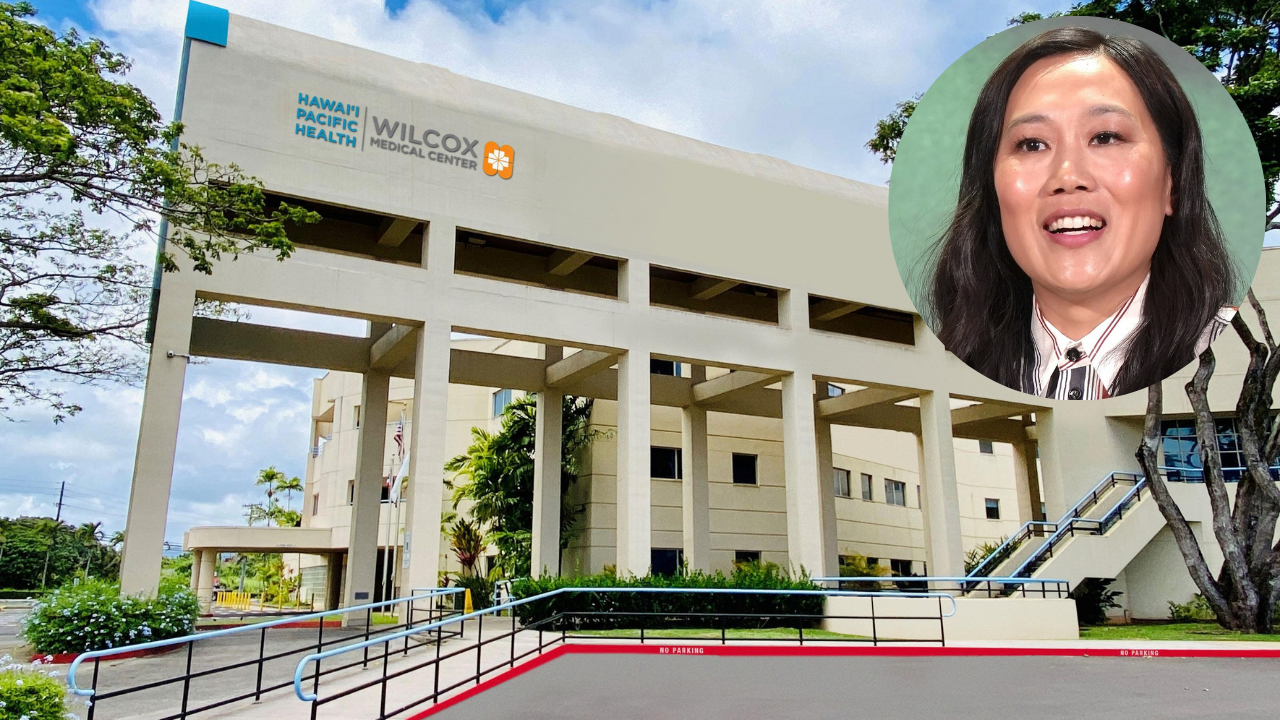
In May 2026, healthcare financing on the island of Kauaʻi shifted significantly when Dr. Priscilla Chan and Mark Zuckerberg directed a $1.48 million contribution through the Chan Zuckerberg Initiative to Wilcox Medical Center. The capital directly targets vital diagnostic infrastructure, specifically funding an advanced magnetic resonance imaging unit alongside high-resolution 3D mammography equipment. Examining this transaction purely as a gesture of simple charity ignores the structural mechanics of how private wealth increasingly patches the widening cracks in rural American medicine. When public health funding stalls and insurance reimbursements fail to cover capital expenditures for isolated facilities, private balance sheets step in to maintain the basic machinery of human survival.
For decades, residents of rural and island communities have lived under a quiet geographic penalty. Getting advanced diagnostic scans often meant boarding inter-island flights or waiting months for appointments because local hospitals lacked the financial velocity to purchase high-end equipment. Wilcox Medical Center operates as Kauaʻi's sole Level III Trauma Center and a primary stroke facility, handling tens of thousands of emergency visits annually. When a hospital carrying that operational weight relies on targeted donations to acquire standard-of-care machinery like modern MRI scanners, the underlying fragility of regional healthcare financing stands exposed to public scrutiny.
The Reality of Island Health Economics
Hospital balance sheets in isolated regions operate on razor-thin margins. Equipment acquisition costs millions upfront, while maintenance contracts, specialized technician salaries, and software licensing fees drain operational budgets year after year. Traditional revenue streams from patient care services rarely generate enough surplus cash to buy state-of-the-art diagnostic technology without taking on burdensome debt.
When philanthropic capital arrives, it alters the math temporarily. The $1.48 million injection into Wilcox Medical Center builds directly on prior contributions from the same donors, which previously funded everything from emergency department renovations to mobile medical units and localized medical training tracks through the University of Hawaiʻi. Yet every single equipment purchase brings a recurring financial tail. A new MRI machine requires specialized housing, uninterrupted power redundancy, certified radiological technologists who command competitive mainland salaries, and periodic software upgrades.
Independent analysts often question what happens when the philanthropic well runs dry or donor priorities shift toward other global initiatives. Hospitals built on episodic infusions of billionaire capital risk becoming dependent on the whims of private wealth management. Healthcare delivery cannot function like venture capital portfolio management, where capital flows toward high-visibility projects while foundational clinics starve for operational cash.
Why 3D Mammography Changes the Equation
Diagnostic precision dictates survival rates, particularly in specialized fields like oncology. Traditional two-dimensional mammography has long served as the baseline screening tool, but standard images struggle against dense breast tissue. In Hawaiʻi, a significant percentage of women possess dense breast tissue characteristics, which obscure early-stage malignancies behind dense fibroglandular patterns.
Three-dimensional mammography, also known as digital breast tomosynthesis, captures multiple low-dose X-ray images of the breast at different angles, reconstructing a thin, layered slice-by-slice view. Radiologists can examine tissue layer by layer, dramatically reducing false positives and spotting hidden tumors that standard two-dimensional imaging misses entirely.
Wilcox performed more than 8,500 mammogram exams in the year preceding the grant announcement, alongside thousands of annual MRI scans. Bringing advanced 3D mammography directly to Lihue means local patients no longer need to travel off-island merely to receive definitive diagnostic clarity. Early detection changes the entire trajectory of breast cancer treatment. When a patient can get accurate answers locally within days rather than weeks, survival statistics improve and the psychological toll of delayed diagnosis diminishes.
Yet the acquisition of advanced hardware highlights a broader policy failure. Access to life-saving diagnostic imaging should be a guaranteed public utility rather than a luxury dependent upon private philanthropy. That wealthy benefactors must step forward to buy mammography machines reveals a taxation and resource allocation system that fails to distribute healthcare infrastructure equitably across geographic lines.
Ten Years of Structured Giving on Kauaʻi
The recent healthcare donation coincides with a decade of organized philanthropic activity by the Chan Zuckerberg Initiative across Kauaʻi. Over the past ten years, the initiative has committed tens of millions of dollars to local organizations, spanning education, housing, environmental conservation, and health services. Unlike traditional high-net-worth donors who write single checks for gala recognition, this deployment strategy involves long-term multi-year commitments designed to embed themselves within local institutional frameworks.
This approach includes funding the Kauaʻi Medical Training Track at the John A. Burns School of Medicine, aimed at training medical students and residents locally to combat the chronic physician shortage plaguing rural Pacific communities. Data from state health reports indicate that Kauaʻi historically required dozens of additional doctors to meet baseline community needs, while suffering higher rates of chronic illness, hypertension, and uninsured residents compared to urban centers on Oahu.
By subsidizing tuition, living expenses, and localized training residency spots, the program attempts to solve the root cause of the doctor shortage: recruitment and retention. Doctors who train in rural environments surrounded by community ties exhibit significantly higher retention rates than mainland recruits who arrive on short-term contracts.
However, critics within community advocacy circles argue that private land acquisitions and large-scale estate developments by ultra-wealthy individuals create secondary pressures on housing costs and local labor markets, which philanthropy alone cannot fully offset. While funding a hospital MRI machine addresses an acute medical supply gap, it operates alongside systemic economic transformations that alter the very fabric of island communities.
The Structural Limits of Private Wealth in Medicine
Relying on private fortunes to fund basic medical infrastructure creates a troubling two-tiered reality. Communities blessed with high-net-worth residents or prominent philanthropic targets receive state-of-the-art diagnostic tools, while forgotten rural counties in Appalachia, the deep South, or isolated interior regions struggle with closing hospitals and obsolete equipment.
Philanthropy functions best as venture capital for social innovation, funding risky pilot projects or unproven interventions that government agencies cannot easily finance. It was never designed to serve as the structural backbone for basic hospital equipment replacement cycles. When MRI machines, CT scanners, and mammography systems rely on private checks, public accountability recedes. Citizens lose their ability to vote on healthcare priorities when medical infrastructure depends on the generosity of private individuals rather than public tax structures and legislative appropriations.
Furthermore, tax structures governing charitable foundations allow ultra-wealthy donors to direct funds toward specific institutional projects while retaining immense influence over regional priorities. Hospital administrators, desperate for capital improvements, tailor their requests to match the stated interests of major donors rather than executing independent, democratically accountable public health strategies.
Evaluating the Long-Term Impact on Wilcox Medical Center
Despite valid structural critiques, the immediate impact on patients walking through the doors of Wilcox Medical Center remains profoundly positive. A patient facing a suspected neurological condition or screening for aggressive breast cancer does not ponder the philosophy of wealth distribution while awaiting test results. They care about machine availability, diagnostic accuracy, and turnaround time.
The $1.48 million equipment funding ensures that Kauaʻi residents retain access to high-end diagnostic capability without enduring the physical and financial exhaustion of traveling to Honolulu or the mainland for routine scans. As regional medical centers face mounting inflationary pressures and rising labor costs, external capital injections act as vital shock absorbers.
The real test of this philanthropic model will not be measured by the ribbon-cutting ceremonies accompanying new machine installations, but by what happens over the next decade. Can Wilcox Medical Center sustain the operational expenses of these advanced diagnostic units independently once the initial capital grants are fully absorbed? Will local training pipelines successfully staff these facilities with permanent physicians and technicians who understand the cultural and linguistic nuances of the patient population?
Philanthropy can buy the iron, but it cannot manufacture sustainable operational permanence. As private wealth continues to reshape rural healthcare delivery across the country, communities must demand policies that transform emergency interventions into permanent, publicly secured rights.
To understand how similar large-scale private endowments operate across different academic and environmental sectors in the region, review this archival overview of institutional funding strategies: Mark Zuckerberg and Dr. Priscilla Chan UH Manoa donation. This video illustrates the scale and mechanics of multi-year philanthropic commitments deployed across Hawaii institutions.


