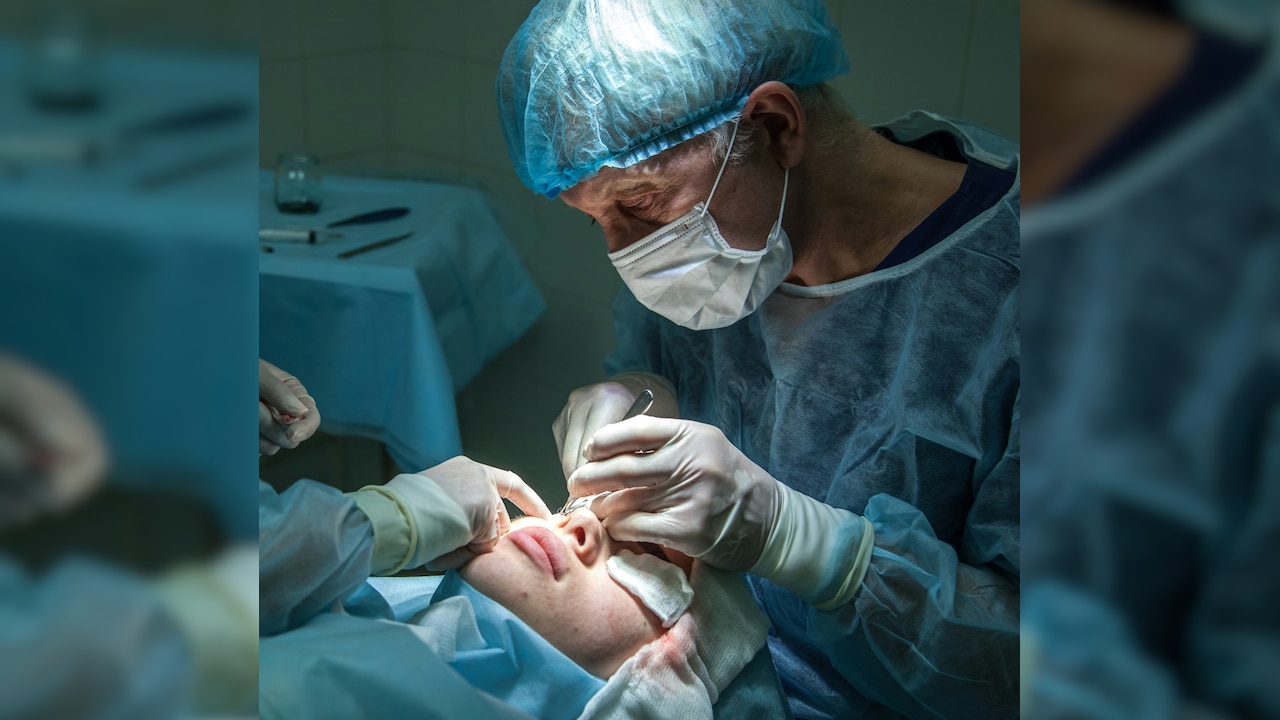
A viral video rarely starts in a doctor's office. It usually begins on a bathroom vanity under ring-light illumination, where a patient pulls down their lower eyelid or demonstrates an inability to close their eyes completely after undergoing blepharoplasty surgery. Across TikTok, users are documenting their post-operative nightmares with surgical precision, showing how an elective procedure designed to refresh tired eyes can result in functional catastrophe. Lagging lids, dry corneas, and permanent rounding of the eye shape have turned a routine cosmetic intervention into an online cautionary tale.
Blepharoplasty, or eyelid surgery, involves the removal or repositioning of excess skin, muscle, and orbital fat. When performed with meticulous precision, it rejuvenates the periorbital region. When aggressive tissue removal or surgical miscalculation occurs, the physiological consequences are immediate and severe. Patients frequently find themselves unable to fully close their eyes during sleep, a condition known as nocturnal lagophthalmos. Corneal exposure follows, leading to chronic irritation, severe dryness, and potential vision impairment.
The underlying mechanics of this rising complication trace back to a mismatch between patient expectations, surgical ambition, and modern platform pressures. Cosmetic surgery has experienced a significant surge in demand, accelerated by digital filter culture and virtual meeting fatigue. Procedures that once belonged to an older demographic are now marketed aggressively to younger audiences seeking an eternal, wide-eyed aesthetic. Clinics push rapid recovery timelines and minimal downtime, creating an environment where surgical risks are frequently minimized or omitted entirely during the consultation process.
Board-certified plastic surgeons and ophthalmologists note that the eyelid is a marvel of delicate engineering. The margin of error is measured in millimeters. When an operating surgeon excises too much skin from the upper eyelid, the remaining tissue lacks the elasticity required to pull the lid downward over the globe. Lower blepharoplasty presents an equally hazardous path; aggressive fat removal or excessive skin trimming can destabilize the support structures of the lower lid, causing it to sag or pull away from the eyeball in a complication called ectropion.
Social media acts as both an amplifier and an accelerator for these medical failures. Algorithms favor high-emotion content, and a botched cosmetic outcome generates millions of views, comments, and stitches. While these viral confessions serve as an essential warning system that breaks through sanitized clinic marketing, they also create a distorted view of risk. Viewers often attribute every poor outcome to malicious malpractice rather than the complex healing variables inherent in surgery. Swelling, temporary tightness, and chemosis are normal parts of post-operative recovery, yet online panic often frames normal healing phases as permanent disfigurement.
Navigating this terrain requires an understanding of what separates safe surgical intervention from high-risk procedures. Patients considering blepharoplasty frequently underestimate the importance of surgeon credentials. Board certification in plastic surgery or specialized oculoplastic surgery is not merely a credential; it represents years of rigorous training dedicated specifically to the intricate anatomy of the face and eyes. General cosmetic practitioners or surgeons operating outside their core specialty frequently lack the advanced reconstructive techniques needed when anatomical complications arise.
Consultations must shift away from quick-fix promises toward conservative surgical planning. A skilled surgeon prioritizes preservation over radical alteration. Preserving structural integrity means leaving enough tissue to guarantee complete eyelid closure, even if it requires a more conservative initial aesthetic result that can be refined later. Revision surgery on the eyelids is notoriously difficult because scar tissue replaces pristine anatomy, making every subsequent correction less predictable than the last.
The digital conversation surrounding blepharoplasty complications is unlikely to fade as long as cosmetic procedures remain democratized and heavily marketed online. Behind every viral horror story lies a complex intersection of patient selection, surgical judgment, and unrealistic aesthetic standards promoted by digital platforms. True safety in cosmetic surgery begins long before the scalpel touches the skin, rooted in the unglamorous reality of medical limitations and the uncompromising laws of human anatomy.