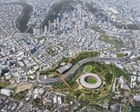
The blueprints look magnificent on a glossy slide deck. Sweeping pedestrian bridges, pristine wetlands, and a 63,000-seat oval arena nestled quietly inside Brisbane's historic Victoria Park.
Yet beneath the state government's glossy concept designs for the 2032 Olympic precinct lies a glaring operational vacuum that local urban planners and civic groups refuse to ignore. When the Queensland government pulled back the curtain on its draft legacy layout, officials promised a world-class public asset that would echo the storied community impact of Expo 88's South Bank.
Critics quickly pointed out a much harsher physical reality.
The site chosen for the multibillion-dollar Brisbane Olympic stadium stands as one of the most topographically constrained, heavily restricted parcels of inner-city land in South East Queensland. Bounded by heavy transit corridors and severed from the central business district by the subterranean and surface barriers of the inner-city bypass, Victoria Park presents a formidable engineering obstacle course.
Public watchdogs and community organizations did not mince words following the big reveal. Representatives from the Save Victoria Park campaign labeled the renderings an insulting exercise in public relations, designed primarily to shift attention away from mounting budget anxieties and long-term infrastructure deficits.
The core friction point stems from a fundamental missing link between imaginative architectural dreaming and hard logistical accountability.
The Missing Infrastructure Math
Renderings can paint over almost anything. They cannot pave a highway lane or widen a congested railway bottleneck through pure digital magic.
The government master plan boldly features two pedestrian bridges spanning the multi-lane inner-city bypass to connect Spring Hill and the urban core to the parklands. What the concept art leaves out is a credible account of how tens of thousands of spectators will actually disperse from an event of global magnitude onto a constrained local street grid.
Consider a hypothetical scenario where an Olympic stadium empties 63,000 attendees onto a single patch of urban parkland simultaneously. Without substantial mass transit expansion directly adjacent to the gates, pedestrian choke points become inevitable safety hazards.
Independent traffic engineers have noted several glaring omissions in the current layout:
- Car parking allocations: The architectural plans show sweeping green vistas, omitting where vehicles, service trucks, and broadcast fleets will stage.
- Arterial road connections: Direct ingress and egress ramps from surrounding multi-lane freeways remain absent from the engineering schematics.
- Crowd-holding plazas: The immediate perimeter lacks the vast hardscaped dispersal squares required to manage heavy security queues and peak foot traffic.
Without these critical elements addressed in detail, the project risks locking Brisbane into a perpetual state of transport gridlock during major events.
Navigating the Heritage and Environmental Cost
Victoria Park—known traditionally as Barrambin—carries profound cultural significance for First Nations custodians alongside its status as the city's largest historic green lung. Paving over portions of this landscape to erect a massive sporting cathedral naturally triggers fierce opposition.
To counter community backlash, officials have emphasized that two-thirds of the park will remain publicly accessible open space. The draft proposal includes expanding the York's Hollow wetland by deliberately flooding existing playing fields and introducing winding forest trails.
Environmental advocates remain skeptical of these balancing acts. Transforming active sports fields into engineered wetlands while carving out a footprint for an international aquatic center and a massive stadium fundamentally alters the hydrology and ecosystem of the park.
The political calculus is clear. The administration wants to brand the Victoria Park venue as an enduring gift to future generations, mirroring the urban transformation of past Olympic cycles. Yet history shows that legacy projects only succeed when their operational foundations match the scale of their political rhetoric.
As early construction earthworks draw closer, the pressure on planners to transition from artistic illustrations to concrete, defensible engineering data intensifies. Brisbane cannot afford a venue that looks stunning on a screen but fails the fundamental test of moving people safely through the city.
The time for fantasy visions has expired, leaving the state government facing a narrow window to prove that its grand stadium design can survive contact with reality.