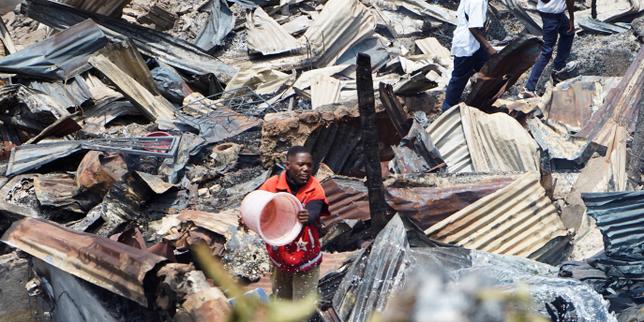
An inferno swept through the densely packed Cimpunda district of Bukavu in eastern Democratic Republic of Congo, leaving at least fourteen to twenty-four schoolchildren dead and hundreds of families displaced. The disaster, which targeted the Ujamaa and Furaha primary schools in the mountainous Kadutu commune, highlights a recurring pattern of structural vulnerabilities, municipal neglect, and the heavy human cost of prolonged conflict in the region.
When the flames broke out during regular class hours, panic immediately consumed the campus. Children younger than ten years old found themselves trapped as fire quickly engulfed buildings constructed primarily from wooden planks and lightweight materials. Survivors and witnesses recounted horrifying scenes of students leaping from upper floors to escape the advancing heat while a violent stampede unfolded at the primary exits. Medical personnel at nearby clinics confirmed that dozens of students suffered from severe smoke inhalation and critical burns, pushing local healthcare infrastructure past its absolute breaking point.
The Anatomy of an Avoidable Disaster
Fires are rarely isolated anomalies in this part of South Kivu. Local data indicates that thousands of homes and multiple community structures have succumbed to fast-moving blazes across Bukavu over recent months. The urban geography of the city creates a permanent hazard. Cramp neighborhoods feature tightly clustered wooden houses built along steep slopes without standard fire breaks, electrical grid safety, or municipal water access.
When a fire starts in a residential sector, it frequently acts as a fuse. It travels rapidly through narrow alleys before jumping to institutional buildings like schools. Teachers at the Ujamaa primary school reported that the fire originated in a neighboring residential plot before leaping directly onto school grounds. Without functional municipal fire services or rapid-response infrastructure, communities are left to fight massive walls of flame using buckets of water and dirt.
Structural poverty dictates every layer of this vulnerability. Families send their children to schools built from cheap, combustible materials because no public funding exists to construct safer, stone-reinforced academic facilities. The architecture of education in eastern Congo reflects systemic abandonment. Classrooms pack children tightly into small, poorly ventilated rooms with single bottleneck exits, turning routine emergencies into fatal traps.
The Political Vacuum and Security Collapse
The tragedy in Bukavu compounds an already catastrophic security and humanitarian context. Since early last year, the city has operated under the administrative control of the AFC/M23 armed group following a major territorial shift in eastern Congo. This shift created a fractured governance model. Local administrative duties are managed by rebel-appointed authorities, while the central government in Kinshasa issues formal statements of condolence and asserts national jurisdiction from afar.
This institutional fracture prevents coherent disaster response or long-term urban planning. Humanitarian agencies face immense restrictions, and local authorities lack both the financial resources and the international legitimacy required to execute large-scale urban safety overhauls. Accountability gets lost between opposing political factions. Kinshasa laments its lack of physical control over the zone, while the de facto administration struggles to provide basic civil protections, leaving ordinary citizens entirely unprotected against recurring environmental shocks.
The human toll extends far beyond the initial casualty counts reported by hospitals. Dozens of families are now homeless, mourning children under the weight of an ongoing war economy that drains resources away from civil infrastructure. Educational continuity for the surviving students remains deeply uncertain as damaged classrooms lie in ruins and traumatized parents refuse to send their children back to unsafe structures.
Preventing future catastrophes requires confronting the core drivers of urban vulnerability in eastern Congo. Improvised wooden construction and neglected municipal layouts will continue to harvest young lives unless structural investments prioritize basic fire safety, regulatory oversight, and safe building codes. Until authorities shift focus toward the daily survival needs of urban populations trapped inside conflict zones, tragedies like the one in Cimpunda will remain an inevitable reality of life in the region.


