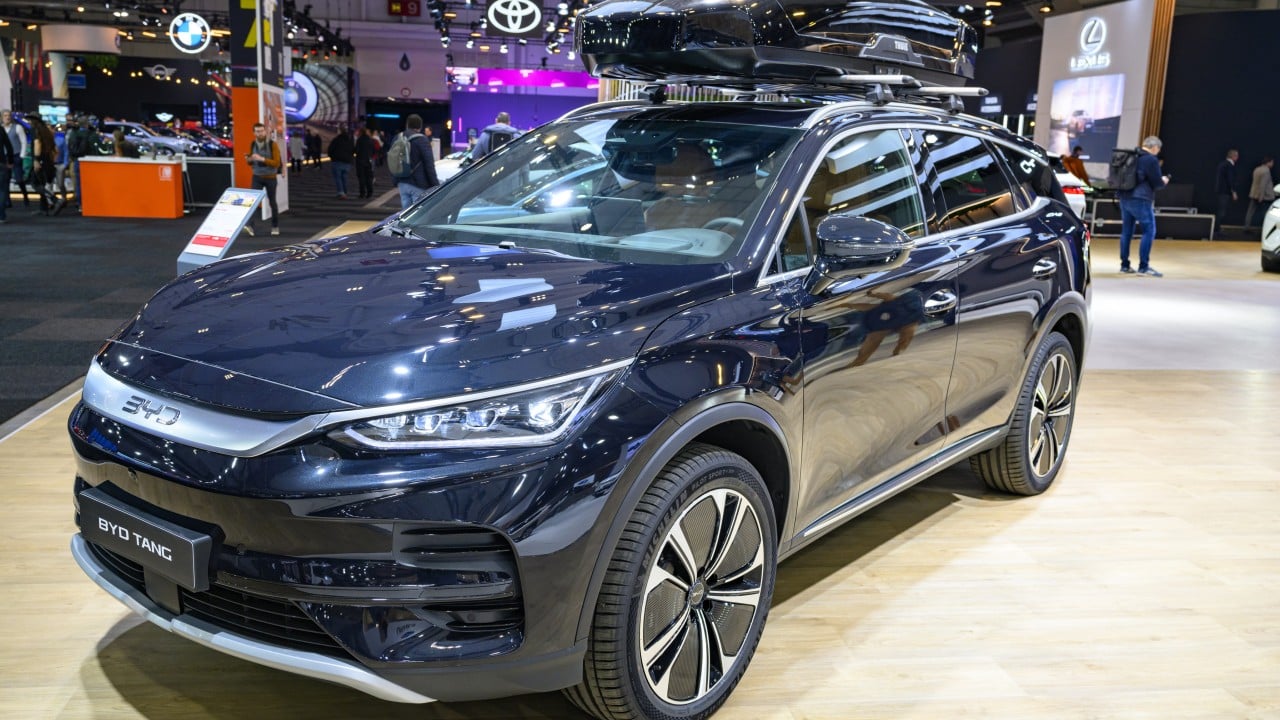
When the world’s largest electric vehicle maker issues a formal apology over mismatched wheel rims, it isn't just a clerical hiccup. It is a symptom of an industrial machine running dangerously close to its mechanical redline. BYD’s public contrition over a specification error on customer vehicles arrived right as Chinese regulators tightened the screws on domestic automotive quality, signaling a sharp pivot in Beijing’s industrial strategy. For years, the mandate for China’s electric vehicle sector was simple: scale at all costs, capture market share, and out-innovate Western legacy automakers. Now, the bill for that breakneck velocity has come due, and state regulators are demanding a shift from hyper-growth to strict manufacturing discipline.
The Anatomy of a Spec-Sheet Failure
A wheel rim seems like a trivial piece of hardware until you examine how modern automotive supply chains actually operate. In high-volume vehicle assembly, a wheel isn't just an aesthetic choice bolted onto a hub at the end of the line. It is a calibrated component tied directly to unsprung mass, aerodynamic drag coefficients, suspension geometry, and electric range ratings. If you found value in this article, you might want to read: this related article.
When BYD acknowledged that a batch of vehicles left the factory with wheel rims that did not match the advertised configurations or regulatory filings, seasoned manufacturing veterans immediately recognized the underlying friction. Modern EV assembly lines operate on just-in-time sequencing. Every chassis moving down the conveyor belt is paired with a digital build sheet that dictates which battery pack, wiring harness, interior trim, and wheel assembly arrives at the station at the exact second it is needed.
An error in wheel-rim installation points to one of two failures: For another look on this story, check out the latest update from Reuters Business.
- Enterprise Resource Planning (ERP) desynchronization: The software translating customer orders and regulatory homologation data into physical factory instructions suffered a mismatch, causing workers or automated robots to pull the wrong pallet from the staging area.
- Last-minute supply substitution: Faced with a localized bottleneck from a tier-one supplier, plant managers authorized a running change on the factory floor without waiting for the slow bureaucratic wheels of marketing updates and regulatory re-certification to turn.
In the hyper-competitive Chinese auto market, product cycles have compressed from the traditional five-to-seven years down to eighteen months—or sometimes even less. Automakers routinely push mid-year refreshes, tweak battery chemistries, and swap trim packages to undercut a rival’s pricing announced the previous week. Under that kind of relentless pressure, configuration drift becomes almost inevitable. What used to be caught during months of pre-production validation gets pushed straight onto the live assembly line.
Why Beijing Is Suddenly Crashing the Party
To understand why a wheel-rim error triggered such a swift corporate apology and intersected with a broader regulatory crackdown, you have to look at the shifting priorities of China’s State Administration for Market Regulation (SAMR) and the Ministry of Industry and Information Technology (MIIT).
For over a decade, Beijing protected, subsidized, and aggressively championed its domestic new energy vehicle (NEV) champions. The goal was energy independence and industrial dominance. That strategy worked beyond anyone’s wildest projections. Domestic brands crushed foreign joint ventures in China and began flooding export markets from Southeast Asia to Europe and Latin America.
Success, however, creates new vulnerabilities. Regulators in Beijing are acutely aware of two existential threats to their automotive crown:
- Domestic reputational erosion: Chinese consumers have grown vastly more sophisticated. Five years ago, buyers forgave panel gaps, glitchy infotainment screens, or mismatched trim because EVs felt like futuristic gadgets backed by generous government subsidies. Today, families are spending hard-earned savings on these cars as primary household transport. Viral social media complaints on platforms like Weibo and Douyin about quality lapses can torpedo a model's sales overnight.
- Global trade weaponization: Every time a Chinese automaker suffers a quality stumble, a recall, or a regulatory discrepancy at home, foreign trade officials in Brussels, Washington, and Tokyo take notes. As Chinese EVs face steep tariffs and intense scrutiny over safety and compliance abroad, Beijing cannot afford to let sloppy quality control hand ammunition to protectionist critics.
By cracking down on vehicle quality issues—ranging from misleading range claims and over-the-air software updates that secretly throttle battery performance to hardware discrepancies like wheel rims—Beijing is effectively pruning its own orchard. The message to automakers is blunt: the era of wild-west experimentation is over. If you want to remain a national champion, your manufacturing tolerances and regulatory compliance must match or exceed the standards of Toyota, Volkswagen, and BMW.
The Hidden Cost of Vertical Integration at Hyper-Scale
BYD’s rise to the top of the global EV charts was built on a level of vertical integration that Henry Ford would have envied. Unlike traditional automakers that act primarily as assemblers of parts bought from giant suppliers like Bosch, Continental, or Magna, BYD manufactures its own batteries, electric motors, power electronics, semiconductors, seats, and even owns the cargo ships that transport its cars overseas.
In theory, owning the entire supply chain gives a manufacturer total control over quality and cost. In practice, scaling that entire ecosystem from half a million vehicles a year to well over three million in a few short years puts unimaginable stress on middle management and quality assurance protocols.
Think of a hypothetical example to see how this plays out on the shop floor. Suppose an automaker increases output across four different mega-factories simultaneously while launching six new models and twelve trim refreshes in a single calendar year. Every new trim requires distinct tooling, separate supplier audits, updated homologation paperwork with government ministries, and revised quality-control checklists at the end of the line. Even if the core engineering is sound, the administrative and logistical connective tissue begins to fray.
When a company controls everything internally, there is also a subtle cultural hazard. External tier-one suppliers push back hard when an automaker demands an impossible last-minute change; they demand contract amendments, liability waivers, and re-testing fees. Internal divisions, by contrast, operate under the same corporate roof and answer to the same executive targets. When the command comes down to hit a monthly delivery milestone or rush a refreshed model to dealerships, internal component teams rarely have the institutional leverage to say no.
The Price War Squeeze on Component Tolerances
You cannot separate manufacturing quality from the brutal price war that has engulfed the Chinese automotive sector since early 2023. Initiated by aggressive price cuts from Tesla and rapidly escalated by BYD’s own "Champion Edition" and "Honor Edition" rollouts, the battle for market share has stripped margins down to the bone across the entire industry.
When retail prices drop by 10 to 20 percent on a vehicle that was already priced aggressively, engineers and procurement officers are forced into a ruthless hunt for cost savings. Sometimes those savings come from genuine breakthroughs—like cell-to-body battery integration, simplified wiring harnesses, or gigacasting that replaces dozens of stamped steel parts with a single aluminum piece.
Other times, the cost-cutting manifests in ways consumers only notice months later:
- Thinner paint coats and reduced underbody sound deadening.
- Downgraded interior plastics and cheaper seat foam densities.
- Sub-tier component substitutions where an auxiliary part meets the bare minimum regulatory threshold rather than the original engineering target.
- Compressed end-of-line testing windows to keep vehicles moving out the factory gates faster.
Most Chinese automakers outside of BYD and a handful of profitable peers are currently losing money on every electric vehicle they sell. Even profitable giants face intense pressure from investors to defend their gross margins while defending their turf against hungry challengers like Geely, Chery, Leapmotor, and tech entrants like Xiaomi and Huawei. In that environment, quality assurance departments often find themselves fighting an uphill battle against finance and production teams.
Regulatory Homologation and the Compliance Trap
In China, no vehicle can be legally sold to the public until it appears in the monthly catalog published by the MIIT. Getting a car into that catalog requires submitting exact physical specifications, photographs, weight distributions, dimensions, and approved component options—including every single wheel-rim design and tire size permitted for that specific chassis code.
This system is designed to prevent manufacturers from bait-and-switch tactics and to ensure that vehicles on public roads match the exact configurations that passed crash and emissions testing. However, it also creates a rigid bureaucratic bottleneck. If a consumer demands a certain aesthetic package, or if a factory runs short of a specific rim style, swapping in an alternative wheel isn't just a customer service issue—it can technically put the vehicle out of compliance with its national type-approval certificate.
For owners, the consequences are immediate and frustrating. In China’s strict vehicle registration and annual inspection system, if the physical car sitting in the inspection bay doesn't match the official photo and spec sheet tied to its Vehicle Identification Number (VIN), the owner can be blocked from registering the car, modifying their insurance, or passing mandatory roadworthiness checks.
That explains why BYD couldn't simply brush the wheel-rim discrepancy under the rug with a quiet dealership voucher. When a hardware error collides with state registration rules, it becomes a public compliance failure that demands an immediate corporate apology and a documented remediation plan.
What Legacy Automakers Learned the Hard Way
History offers a clear warning for any automaker growing at breakneck speed. In the late 2000s, Toyota was on an unstoppable march to dethrone General Motors as the world’s largest automaker. Driven by ambitious volume targets, Toyota expanded its global manufacturing footprint faster than its legendary cadre of master engineers could train local plant managers. The result was the 2009–2010 unintended acceleration recall crisis, which tarnished the gold standard of automotive reliability and forced Toyota to freeze new plant construction for years to rebuild its quality-control foundation.
Volkswagen suffered a similar institutional failure in the mid-2010s, where top-down mandates to dominate global diesel sales collided with engineering realities, culminating in the Dieselgate scandal that cost the company tens of billions of dollars and forever altered its corporate trajectory.
China’s EV champions are now standing at that exact inflection point. They have proven beyond a shadow of a doubt that they can out-engineer legacy rivals on battery chemistry, electric powertrains, digital cockpits, and manufacturing speed. What remains to be proven is whether they can sustain Six Sigma consistency across millions of units year after year while navigating tightening regulatory oversight at home and hostile trade environments abroad.
The Shift From Speed to Discipline
Beijing’s current crackdown on automotive quality issues is not an attempt to slow down its domestic industry; it is an effort to bulletproof it for the next decade of global competition. State regulators recognize that the easy phase of the electric transition—winning over early adopters with flashy tech and low prices—is finished. The next phase requires winning over conservative, risk-averse mainstream buyers globally who expect a car to last fifteen years without a single hardware surprise.
For BYD and its peers, the wheel-rim apology is a relatively inexpensive wake-up call. Nobody was injured, no battery packs caught fire, and the physical fix is straightforward. Yet the episode exposes the razor-thin margin for error inside a supply chain operating at maximum velocity. As regulators tighten compliance checks and consumers hold domestic brands to the highest international benchmarks, the winners of the next chapter won't be the companies that build cars the fastest—they will be the ones that never let a wrong part reach the loading dock in the first place.