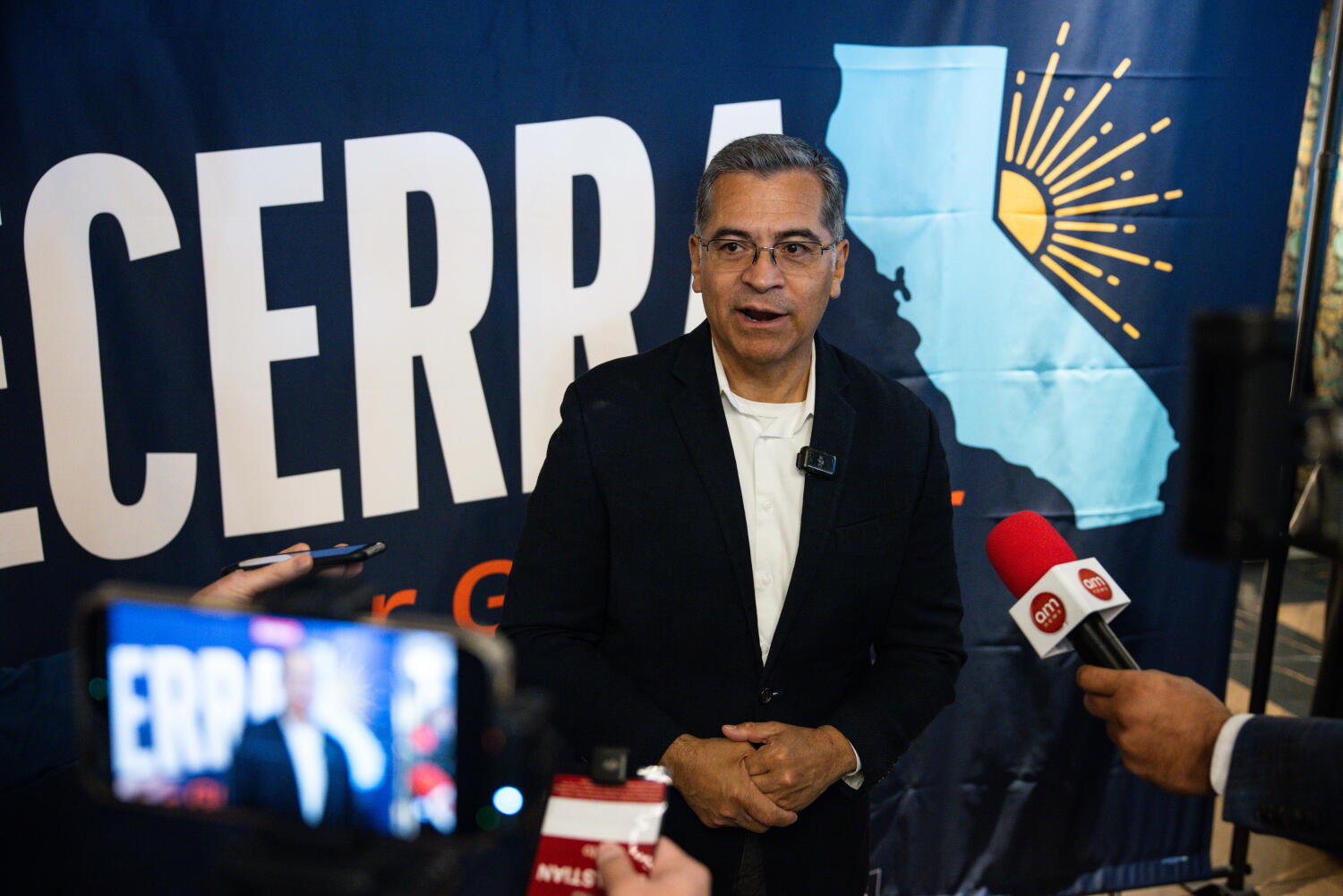
Xavier Becerra won California's 2026 gubernatorial race not by dazzling voters with grand policy manifestos, but by running a deliberate, low-risk campaign that kept him out of self-inflicted trouble until mail ballots arrived and national headwinds carried him across the finish line.
For months, observers watching the Xavier Becerra gubernatorial campaign saw something counterintuitive in the nation's most populous state. While rivals traded sharp blows and candidates in other states flooded airwaves early, Becerra often kept a low public profile, declined to lock himself into sweeping promises, and leaned on more than three decades of institutional experience. Only in the autumn home stretch—when ballots hit mailboxes and Republican challenger Steve Hilton pressed his case against one-party rule—did Becerra step up public appearances and television advertising.
Anyone who covered California politics over the last twenty years recognizes the temptation to dismiss a quiet campaign as drift. That reading misses the mechanics of the race. In a state where Democrats have held a long-running statewide winning streak and term limits opened Gavin Newsom's seat, caution was not an accident. It was an insulation strategy.
Why Low-Profile Politics Worked in a Crowded Field
California's top-two primary changes how candidates calculate risk. When dozens of contenders crowd a ballot, early front-runners often become targets before voters even focus. Party strategists had once worried about splitting the Democratic vote and opening the door to a general-election lockout, a fear that shaped how early contenders positioned themselves.
Becerra spent much of the early stretch polling in low single digits before the race fractured. When former Rep. Eric Swalwell ended his campaign in April amid sexual assault allegations and resigned from Congress, the dynamic shifted rapidly. Becerra moved past billionaire progressive Tom Steyer to claim the top spot in the June primary alongside Hilton.
A veteran officeholder rarely wins a crowded California primary by out-shouting ten opponents in February. Survival until undecided voters tune in is often half the battle.
Once Becerra reached the general election, the math favored containment over constant improvisation. With a vast Democratic registration advantage and national frustration directed at President Donald Trump's administration, Becerra's team did not need to reinvent his identity every week. They needed to stay legible to base voters, avoid alienating moderate swing voters, and wait for the fall window when mail-in ballots dominate turnout.
The Discipline of Refusing Inflated Promises
What frustrated some political analysts—and delighted cautious aides—was Becerra's reluctance to bind himself to rigid targets. Asked about housing construction, for example, he acknowledged the pressure to expand supply while stopping short of promising a specific production number he feared might prove unrealistic. On health care, he signaled openness to broadening access for hard-working Californians, including undocumented residents, without committing to a single-payer push he had previously indicated he would not pursue as governor.
That restraint carries a real price. Voters squeezing through high living expenses, property and liability insurance headaches, and stubborn homelessness want concrete answers on how a governor will move needles. Critics from the right, including Hilton, argued that vagueness was a symptom of entrenched one-party complacency that had failed to fix affordability and street conditions. Some progressive activists likewise wanted sharper commitments on structural overhaul rather than incremental adjustments.
Yet seen through the lens of executive governance rather than campaign theater, Becerra's hesitation reflects a familiar habit among longtime lawyers and administrators. A hypothetical example makes the trade-off plain: suppose a candidate pledges to double annual housing starts within two years despite local permitting bottlenecks, high interest rates, and utility hookup delays. If those external constraints stall construction, the pledge becomes an albatross by year two. By framing goals around feasibility and record rather than grandiosity, Becerra preserved room to maneuver once inside the governor's office.
Timing the Autumn Surge
Calling a campaign "muted" until October overlooks how modern California elections actually unfold. Millions of Californians vote by mail weeks before November. Pouring maximum oxygen and television dollars into July or August often burns cash while attention is scattered across summer vacations and sports.
As ballots arrived in voters' hands, Becerra shifted gears. His events picked up pace, his television spots sharpened their contrast with Hilton and the White House, and his message zeroed in on protecting rights, lowering everyday costs, and standing up to federal pressure.
| Strategic Element | Early & Mid-Campaign Phase | Autumn Home Stretch | Practical Impact on Voters |
|---|---|---|---|
| Public Visibility | Selective appearances; low-key posture | More frequent public events and media | Conserved energy until ballot mailing window |
| Policy Framing | Emphasis on record; avoidance of rigid pledges | Focus on costs, rights, and federal pushback | Reduced early attack surface while keeping base aligned |
| Paid Media | Restraint while primary field sorted out | Active television push during mail voting | Targeted persuasion when attention peaked |
That late acceleration worked because the foundation was already set. Democrats already knew Becerra from decades in the state Assembly, Congress, the California attorney general's office, and Washington. When he stepped forward in the final weeks, voters did not need an introduction; they needed a reason to mark their ballots.
Unfinished Business Waiting in Sacramento
Winning the election is the easy part of a cautious campaign; governing without a detailed blueprint is much harder. As Becerra prepares to take office as California's first elected Latino governor since 1875, the grace period of quiet positioning ends.
Several thorny tests already sit on his desk:
- Infrastructure and road funding: As electric vehicle adoption grows, gas tax revenues face a projected multi-decade decline, forcing tough conversations about how California pays for highways and transit. Becerra has signaled openness to user-fee principles and new revenue where needed, a stance that will test voter patience on taxes.
- Artificial intelligence and tech regulation: Silicon Valley investors and companies have pushed back hard against heavy-handed state rules on AI safety, labor, and data centers. Balancing consumer and worker protections with economic competitiveness will require sharp technical judgment rather than slogans.
- Affordability, insurance, and disasters: Homeowners squeezed by wildfire risk and rising premiums, alongside families struggling with childcare and housing costs, expect measurable relief—not just committee studies.
- Capital punishment and criminal justice: Continuing Newsom's moratorium on executions over fairness and wrongful-conviction concerns signals a deliberate choice, yet it keeps alive long-running debates over public safety and accountability.
A low-risk campaign bought Becerra time, stability, and a historic mandate. Now the state's voters will judge whether that measured restraint was a prelude to steady, disciplined execution—or an unwillingness to confront California's hardest trade-offs head-on.


