Canada is not experiencing a standard cyclical rebound. What economists politely call a gradual and bumpy recovery is, in reality, a structural reckoning masked by falling interest rates and sluggish per-capita output. While the headline gross domestic product figures avoid the technical definition of a prolonged depression, the everyday financial reality for Canadian households and businesses tells a much harsher story of stalled productivity, mortgage renewal shocks, and an overreliance on real estate and population growth to paper over systemic weaknesses.
Walk down any commercial corridor in Toronto, Vancouver, or Calgary, and the disconnect between macroeconomic optimism and street-level reality becomes immediately obvious. Corporate advisory firms like KPMG routinely frame economic transitions in measured, diplomatic language. They talk about moderation, headwinds, and gradual stabilization. That phrasing keeps corporate boards calm. It does not, however, explain why the average Canadian feels poorer today than they did five years ago, even as inflation cools from its post-pandemic highs. You might also find this connected coverage useful: Executive Visibility and Antisemitism Signals: A Structural Audit.
The Illusion of Headline Growth
To understand why the Canadian economic recovery feels like running in wet cement, you have to separate aggregate numbers from per-capita reality. For years, Ottawa relied on a simple formula to keep top-line GDP moving upward. Bring in record numbers of newcomers, watch total consumption rise, and point to the resulting aggregate growth as proof of national resilience.
It worked on paper. In practice, it created a statistical mirage. As reported in latest articles by Harvard Business Review, the results are notable.
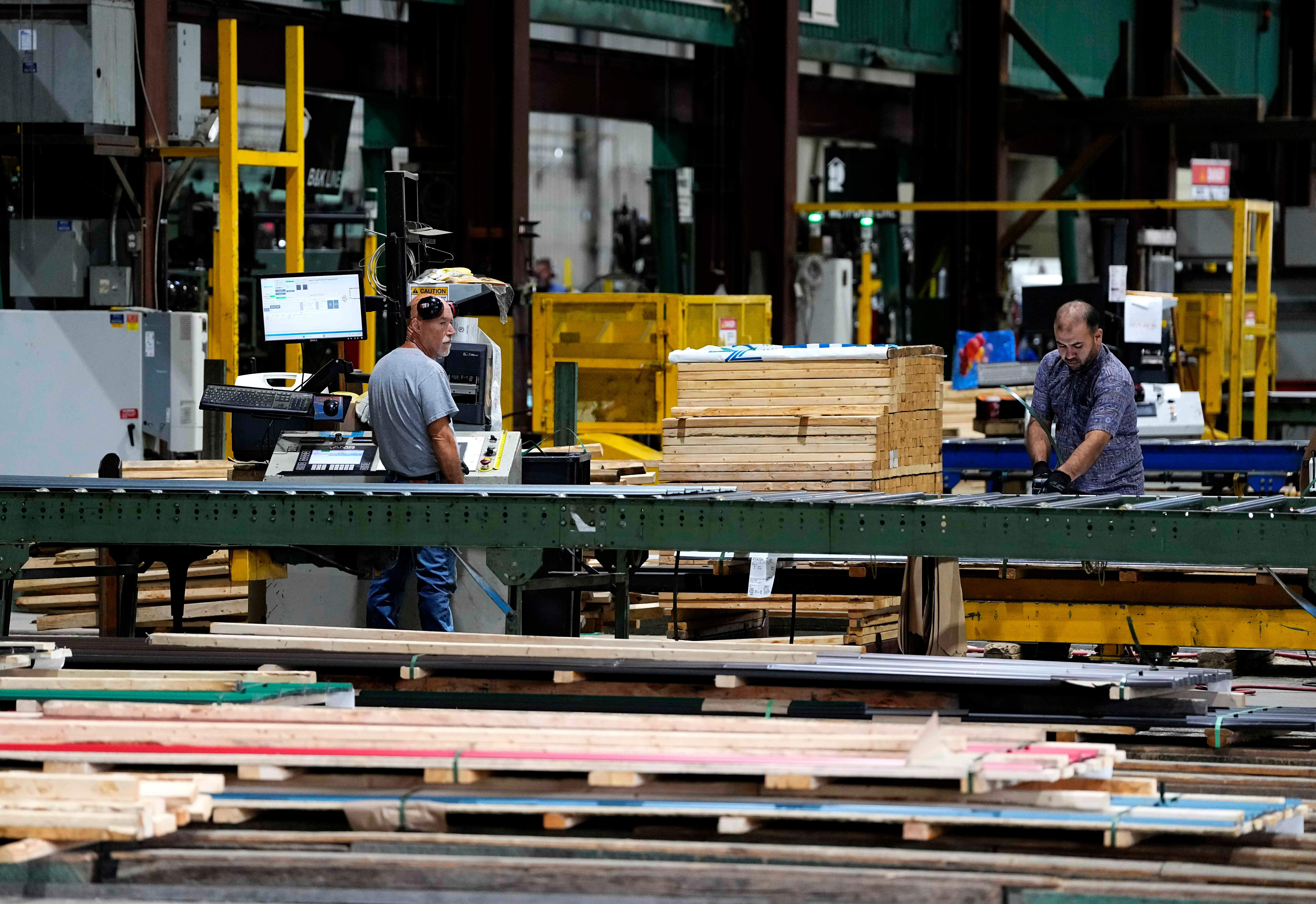
When an economy grows solely because there are more people buying groceries, renting apartments, and paying cell phone bills, individual prosperity does not improve. In fact, GDP per capita—the actual measure of living standards—has consistently lagged behind peer nations, particularly the United States. While American workers saw their output and real wages climb on the back of massive capital investment and technological adoption, Canadian output per hour worked stagnated.
The math is unforgiving. If a country adds more workers without equipping them with better tools, stronger infrastructure, and more efficient processes, the economic pie gets divided into thinner slices. As immigration targets tighten and population growth slows from its historic surge, that artificial floor beneath Canada's retail and service sectors is disappearing. Without population-driven demand propping up the numbers, the underlying weakness of the domestic economy is fully exposed.
The Mortgage Renewal Wall
Monetary policy operates with a notorious lag, and nowhere is that lag more painful than in the Canadian housing market. Unlike the United States, where 30-year fixed-rate mortgages insulate homeowners from sudden central bank tightening, the Canadian mortgage system forces borrowers to refinance every three to five years.
This structural quirk turns every Bank of Canada rate cycle into a slow-motion financial stress test.
Homeowners who locked in ultra-low rates during the pandemic stimulus era are hitting their renewal dates. Even as central bankers trim benchmark overnight rates from their peak, the new normal for borrowing costs remains significantly higher than the near-zero environment of 2020 and 2021. Consider a hypothetical family in suburban Ontario carrying a $600,000 mortgage originally secured at 1.8 percent. Renewing that same balance at 4.5 percent adds hundreds of dollars to their monthly overhead overnight, without adding a single square foot to their home or a single dollar to their paycheck.
That money has to come from somewhere. It gets pulled directly out of discretionary spending. Restaurants see fewer mid-week diners. Independent retailers watch foot traffic thin out. Big-ticket purchases like vehicles and home renovations get pushed off indefinitely. Because household debt-to-income ratios in Canada sit near the highest levels in the G7, consumer spending cannot act as the reliable engine of recovery that it once was. Every basis point of relief from the central bank takes months to filter through the banking system, leaving millions of households trapped in a prolonged squeeze.
Where Did Business Investment Go?
A healthy recovery requires private companies to bet on the future. They need to build factories, upgrade software, fund research, and expand capacity. In Canada, corporate capital expenditure has been chronically anaemic for over a decade.
Why are Canadian executives so hesitant to open their wallets? The reasons are rooted in how capital is rewarded north of the border.
For generations, the safest and most lucrative bet in Canada was real estate. Why take the operational risk of launching a manufacturing startup or scaling an enterprise software firm when buying a plot of land or a portfolio of condo units yielded tax-advantaged, double-digit returns with minimal effort? Real estate sucked the oxygen—and the investment capital—out of the productive economy. Banks happily lent against bricks and mortar while starving innovative, asset-light businesses of the credit they needed to scale globally.
At the same time, interprovincial trade barriers continue to act as self-inflicted wounds. Moving goods, services, and credentialed workers between Ontario, Quebec, British Columbia, and the Prairie provinces often involves navigating a maze of conflicting regulations, licensing rules, and local protections. Economists have repeatedly pointed out that dismantling internal trade barriers could add tens of billions of dollars to the national economy without costing taxpayers a dime in new spending. Yet political inertia keeps these internal borders intact, forcing Canadian firms to look south for scale before they can even conquer their own domestic market.
The Productivity Crisis Explained
Productivity is not about telling workers to type faster or skip their lunch breaks. It is about capital intensity—the amount of machinery, technology, and intellectual property supporting each worker.
- Underinvestment in automation: Canadian firms consistently spend less per worker on information and communications technology than their American counterparts.
- Regulatory friction: Complex permitting processes for major infrastructure, energy, and mining projects stretch timelines from years into decades, driving international institutional investors toward jurisdictions with clearer rules and faster approvals.
- Market concentration: Key sectors of the Canadian economy—from banking and telecommunications to groceries and airlines—are dominated by a handful of protected oligopolies. Without fierce domestic competition forcing them to innovate, these incumbents have little incentive to take aggressive risks.
When big players can protect their margins through pricing power rather than efficiency gains, national productivity suffers. Consumers pay more for basic services, leaving them with less capital to invest or spend elsewhere.
The Trade Vulnerability Factor
No analysis of the Canadian economic outlook is complete without looking south. Roughly three-quarters of Canadian exports flow into the United States. That deep integration built Canada's modern middle class, creating seamless supply chains in automotive manufacturing, energy, agriculture, and aerospace.
Today, that dependence looks like a dangerous concentration risk.
Protectionist sentiment in Washington is no longer a passing political fad; it is a bipartisan structural shift in American industrial policy. Whether through sweeping tariff threats, strict rules-of-origin requirements, or massive domestic subsidies like the Inflation Reduction Act that lure clean-tech and manufacturing capital away from Ontario and Quebec, the United States is actively prioritizing its own industrial base.
Canadian exporters face a lose-lose dilemma. If the U.S. economy slows down, demand for Canadian raw materials and manufactured components drops immediately. If the U.S. economy booms on the back of protectionist subsidies, capital and talent migrate south to capture those incentives, leaving Canadian branch plants fighting for scraps. Furthermore, the Canadian dollar frequently acts as a shock absorber during these periods. A weaker loonie makes Canadian exports cheaper for American buyers, offering temporary relief to manufacturers, but it simultaneously drives up the cost of imported machinery, food, and technology—feeding directly back into domestic business costs.
Fiscal Reality Hits Ottawa and the Provinces
During the crises of the past several years, government spending stepped in to bridge the gap whenever the private sector faltered. Public sector employment grew at a pace that far outstripped private sector hiring. Healthcare administration, education, and government agencies accounted for an outsized share of total job creation.
That fiscal safety net is fraying.
Higher interest rates do not just punish mortgage holders; they punish heavily indebted governments. Debt servicing costs at both the federal and provincial levels have climbed sharply, consuming tens of billions of tax dollars that could otherwise fund tax cuts, infrastructure upgrades, or healthcare delivery. When a government spends more on bond interest than it does on major federal transfers, its room to maneuver during a downturn vanishes.
Provincial budgets, particularly in larger provinces grappling with aging populations and strained hospital systems, face structural deficits that cannot be solved through accounting tricks. If private sector hiring remains sluggish while public sector payrolls hit a fiscal ceiling, the unemployment rate faces upward pressure—especially among younger workers and recent graduates trying to break into the labor market.
What Actually Separates Survivors From Casualties
Calling a recovery "bumpy" suggests that if businesses and investors simply wait out the turbulence, smooth skies will naturally return. That is dangerous advice. The companies thriving in this environment are not waiting for the Bank of Canada to rescue them with cheap money.
Look closely at the Canadian firms outperforming their sectors right now. They share a distinct operational playbook. First, they treat labor scarcity and wage inflation as permanent fixtures rather than temporary anomalies, aggressively deploying software and automation to handle routine administrative and logistical tasks. Second, they actively diversify their revenue streams beyond domestic consumers, using digital distribution and targeted B2B partnerships to tap into higher-growth markets in Europe, Asia, and specialized U.S. niches where quality overrides tariff friction. Third, they maintain disciplined balance sheets, refusing to rely on rolling short-term debt to fund basic working capital.
For individual investors and households, the shifting environment demands an equally unsentimental reassessment. The multi-decade tailwind of falling interest rates and endlessly rising residential real estate values has run its course. Building wealth in Canada over the next decade requires looking past over-leveraged property bets and focusing on productive assets, global equity exposure, and cash-flow-generating businesses capable of surviving without central bank life support.
The Hard Truth About The Path Forward
Economic recoveries are rarely symmetrical, and they are never guaranteed to restore the exact conditions that existed before a downturn. Canada possesses undeniable structural advantages: abundant critical minerals, vast energy reserves, a highly educated workforce, and a stable banking system that avoids the sudden regional collapses seen elsewhere.
Yet resources in the ground and degrees on the wall do not automatically translate into rising paychecks. Until policymakers dismantle internal trade barriers, overhaul tax and regulatory frameworks to reward business investment over real estate speculation, and restore genuine competition to protected domestic industries, lower interest rates will only treat the symptoms of Canada's malaise. A central bank can make borrowing cheaper, but it cannot invent productivity out of thin air.


