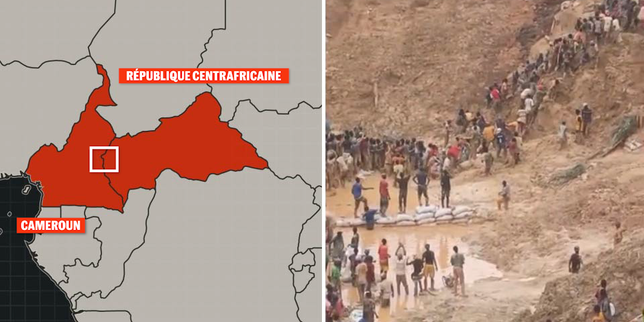
The ground beneath the artisanal gold mining site in Zamboye, western Central African Republic, did not just fail; it entombed a generation of desperate laborers when a catastrophic landslide triggered a massive shaft collapse, leaving more than one hundred miners dead. Official figures initially fluttered between differing casualty estimates before settling on a grim reality that exposed the fatal vulnerabilities of unregulated mineral extraction. Among the dead were dozens of local workers alongside foreign nationals from neighboring Cameroon and Chad, transforming a remote provincial tragedy into a regional humanitarian crisis. This disaster is not an isolated weather anomaly or an unforeseeable act of nature. It is the predictable outcome of an extraction economy built on systemic neglect, skyrocketing global metal values, and absolute state absence.
The Anatomy of a Man-Made Disaster
To understand why the Zamboye pit collapsed, one must look below the surface at the rudimentary mechanics of artisanal gold mining in the region. Miners do not use engineered shoring, reinforced timber frames, or modern geotechnical monitoring. Instead, they dig deep, vertical shafts by hand, descending dozens of meters into unstable earth using little more than hand tools, buckets, and sheer endurance.
During the rainy season, water seepage quietly saturates the surrounding soil layers, turning earthen walls into ticking clocks. When the walls finally yield, there is no evacuation warning system. There are no reinforced safety niches. The shafts become vertical coffins within seconds.
Local infrastructure compounds the horror. Because these sites operate far from major urban centers, emergency response teams do not exist in any meaningful capacity. Heavy lifting equipment, professional rescue units, and medical triage facilities are virtually absent near the western border zones. Families and fellow miners often spend days digging through mud with bare hands, trying to pull bodies from the wreckage while authorities in Bangui issue reactive statements and announce temporary site closures.
Economic Desperation Meets Global Greed
The macroeconomic drivers behind these tragedies are straightforward. The Central African Republic remains trapped in cycles of extreme poverty and institutional fragility, leaving ordinary citizens with few viable pathways for formal employment or survival. When global gold prices surge on international markets, the local incentive structure skews violently toward high-risk extraction.
Thousands of itinerant workers flock to informal camps like Zamboye, driven by the promise of quick cash that can buy food and pay school fees. Foreign networks often finance these operations informally, buying up gold dust well below market value while avoiding taxes, safety regulations, and environmental oversight.
The state collects virtually nothing in sustained fiscal revenue from these underground networks, and in return, it provides zero protection or oversight. It is a cynical bargain. The government turns a blind eye to illegal operations during boom times, only to step in with temporary bans and expressions of national mourning after the earth caves in.
The Regional Spillover and Cross-Border Realities
The demographic breakdown of the victims at Zamboye reveals an uncomfortable truth about Central African mining camps. They are transnational hubs of economic migration. Out of the dozens confirmed dead, a significant portion hailed from Cameroon and Chad, crossing porous borders in search of a livelihood.
This mobility creates unique diplomatic and humanitarian challenges. Bodies must be identified, repatriated across international borders, and handed over to grieving families who live miles away from the collapse site. Neighboring governments are left to manage the psychological and financial fallout of industrial accidents that occur entirely outside their territorial jurisdiction, highlighting the urgent need for a coordinated regional framework on artisanal mining safety.
Beyond the Ban
Following the disaster, the Ministry of Mines and Geology ordered the immediate suspension of activities at the Zamboye site until further notice. A judicial investigation was promised to determine accountability.
History suggests these measures will offer cold comfort. Blanket bans on artisanal sites rarely stop extraction; they simply push the workforce further into the shadows, shifting operations to even more remote, unmonitored locations where safety standards are non-existent. Without structured formalization, access to basic credit, and enforceable engineering standards for small-scale miners, the next collapse is only a matter of time. The earth in western CAR will wait quietly for the next heavy rain, and the markets will continue to demand the gold
Over 100 Miners Killed after a Gold Mine Collapses in the Central African Republic
This video report provides on-the-ground news coverage and visual context regarding the fatal artisanal mine collapse in the Central African Republic.
http://googleusercontent.com/youtube_content/1