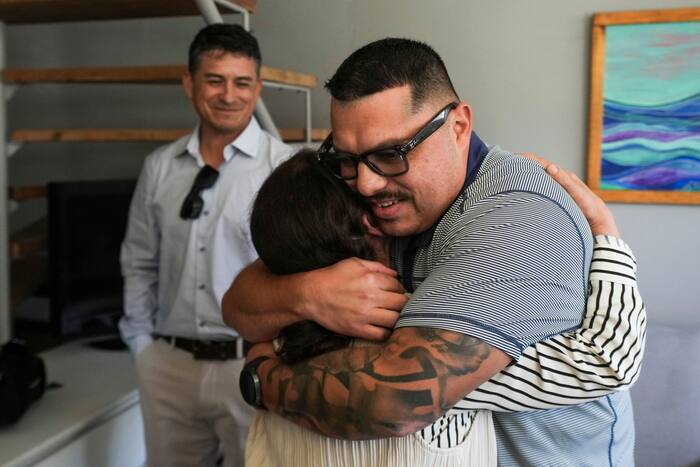
Forty years after hospital staff told a young Chilean mother her newborns had died, DNA testing confirmed her two stolen children were alive and raised thousands of miles away, exposing the bureaucratic machine behind Augusto Pinochet's illegal adoption network.
The reunion is not an isolated miracle. It is the latest breach in a state-sanctioned silence that lasted nearly half a century. Between 1973 and 1990, an estimated 20,000 Chilean babies were taken from low-income mothers, indigenous women, and political dissidents and placed into foreign homes across the United States, Sweden, France, and the Netherlands. The mechanism was brutally simple. Mothers gave birth in public hospitals, were sedated or separated from their infants immediately after delivery, and were handed forged death certificates while their living children were funneled through private lawyers and social workers to adoptive parents abroad.
Most media coverage treats these reunions as pure human-interest triumphs. That framing misses the structural crime. When a mother meets her forty-year-old son or daughter in a Santiago airport terminal, the tears are real, yet the paperwork that tore them apart often remains legally intact.
How the Hospital Pipeline Operated
To understand how two children from the same mother could vanish into the international adoption market without triggering an investigation, you have to look at the hospital ward as an administrative assembly line. During the military dictatorship, public maternity wards operated with minimal oversight and absolute institutional authority. Doctors, midwives, social workers, and civil registry clerks worked in tandem.
A typical extraction followed a repeatable sequence. First, medical staff targeted vulnerable mothers—often unmarried, impoverished, rural, or young women lacking legal representation. During labor or immediately postpartum, the mother was given heavy sedatives. When she woke up, a nurse or physician informed her that the infant had suffered fatal complications.
No body was ever shown. Hospital administrators claimed that public health protocols required immediate burial in a common grave to prevent infection, or that the remains had already been disposed of by municipal services. Grieving mothers left the hospital empty-handed, carrying either no paperwork at all or a falsified death certificate signed by a compliant physician.
Meanwhile, the infant was transferred to a private nursery or temporary shelter. Within weeks, a separate paper trail emerged. Social workers filed abandonment declarations asserting the biological mother had surrendered the child or vanished. Family court judges rubber-stamped the decrees, stripping maternal rights without notifying the woman whose name appeared on the original birth log.
Consider a hypothetical scenario illustrating the dual-ledger trick used by corrupt facilitators. In Ledger A, maintained at the public maternity clinic, Baby Boy X is recorded as stillborn at 4:15 AM, closing the medical file. In Ledger B, filed forty-eight hours later at a suburban civil registry office, an infant of the exact same age and description is registered as a foundling left on the steps of a parish church. Once Ledger B existed, the child became legally adoptable on the international market.
Why Foreign Adoptive Parents Rarely Questioned the Paperwork
The demand side of this equation operated in Western Europe and North America, where declining domestic birth rates and legalized abortion reduced the number of infants available for adoption in the 1970s and 1980s. Prospective parents in Stockholm, Paris, Amsterdam, and New York looked to Latin America.
Chilean intermediaries marketed these children aggressively. Accredited adoption agencies in Europe and private attorneys in the United States received dossiers complete with stamped judicial decrees, medical clearances, and sworn affidavits testifying that the biological mothers had willingly relinquished custody. To an adoptive family in Sweden or California, the documentation looked unimpeachable. It carried the official seals of Chilean courts and the signatures of licensed professionals.
Money changed hands at every stage, though rarely under the label of a purchase price. Foreign agencies and parents paid substantial fees for legal representation, translation services, foster care stipends, administrative processing, and charitable donations to orphanages. Those sums—often thousands of dollars per placement—represented small fortunes in a Chilean economy battered by structural shock therapy and currency devaluations.
Some foreign officials noticed anomalies. Diplomatic cables and internal reviews from the era occasionally flagged unusually high volumes of infant exits from specific Chilean provinces. Yet Cold War geopolitics and a general deference to official court documents kept the pipeline open. Western governments viewed international adoption as a humanitarian act rescuing children from Third World poverty, a narrative that discouraged forensic scrutiny of how those children actually became available.
The Investigative Breakthrough That Broke the Silence
For decades, mothers who suspected their children were alive hit a wall. When they returned to hospitals requesting birth logs, clerks told them the archives had been destroyed in floods, fires, or routine purging. Judges dismissed their complaints for lack of physical evidence. Without a body or a birth certificate, a mother could not prove her child had ever existed.
The breakthrough came not from the Chilean state, but from grassroots persistence and commercial consumer genetics. In 2014, journalistic investigations in Chile began uncovering patterns in judicial archives—hundreds of adoption decrees signed by the same handful of judges, processed by the same social workers, and routed through the same international agencies. Around the same time, victim advocacy groups such as Hijos y Madres del Silencio and Nos Buscamos began systematically collecting testimonies from Chilean mothers alongside DNA samples from adult adoptees living abroad.
When commercial autosomal DNA databases crossed paths with nonprofit genetic testing drives, the forged paperwork lost its power. A saliva swab in Seattle or Gothenburg matched a cheek swab in Valparaíso or Santiago with 99.9 percent certainty.
In the case of the Chilean mother reunited with two stolen children after forty years, the discovery followed this exact trajectory. Having lived four decades believing she had lost her children to neonatal mortality, genetic matching revealed that both had survived, grown up in separate adoptive environments abroad, and carried biological markers linking them directly back to her. The reunion shattered the hospital's official lie.
What the Mainstream Coverage Misses About Legal Accountability
Heartwarming reunion videos generate millions of views, yet they obscure a troubling reality inside Chile's judicial system. A special judicial investigation launched in 2018 by Judge Mario Carroza—and later taken over by Judge Guillermo de la Barra—opened thousands of case files involving irregular adoptions during the dictatorship. Despite uncovering widespread evidence of document falsification, unlawful detention of minors, and financial profiteering, criminal convictions have been vanishingly rare.
The legal obstacles are formidable.
Statute of Limitations Traps
Under Chilean criminal law, offenses such as document forgery and abduction of minors carried strict statutes of limitations unless prosecutors could classify them as crimes against humanity, which are imprescriptible under international law. Defense attorneys for retired doctors, nurses, and social workers argued that their clients were motivated by financial greed or misguided paternalism rather than political persecution, attempting to sever the crimes from the Pinochet regime's state terrorism apparatus.
The Death of Key Perpetrators
Forty years is a long time in forensic accounting. Many of the physicians who signed false death certificates, the judges who issued rapid-fire abandonment decrees, and the lawyers who brokered foreign placements have died. Survivors face aging defendants who claim memory loss or insist they merely followed standard administrative procedures of the era.
Identity and Citizenship Limbo
Even after a DNA match confirms biological kinship, adult adoptees face a bureaucratic maze to reclaim their original Chilean identity. Their foreign birth certificates and passports are tied to their adoptive names and birthdates—dates that were frequently altered by weeks or months to obscure the
Inside the Stolen Children Pipeline of Pinochet’s Chile
news
When a Chilean mother recently embraced two adult children she had not seen in over four decades, the reunion looked like a rare triumph of human endurance. It was not. That emotional airport or living room moment represents the final, agonizing step in uncovering a state-sponsored human trafficking network that operated under General Augusto Pinochet’s military dictatorship between 1973 and 1990. Thousands of infants were systematically taken from poor, Indigenous, and politically targeted mothers—often told their babies had died at birth—and sold to wealthy families in the United States and Europe through complicit doctors, social workers, judges, and clergy.
Most coverage stops at the tears. Journalists love a clean narrative arc where trauma resolves with a hug and a DNA match. Yet focusing solely on the miraculous reunion obscures the cold, bureaucratic machinery that made the theft possible in the first place, and the staggering institutional resistance that still prevents thousands of other families from finding their kin.
The Architecture of a State-Run Baby Market
To understand how a mother loses two children and waits forty years to learn they are alive, you have to look at the mechanics of Chilean hospitals and courts during the 1970s and 1980s. This was not a series of isolated rogue kidnappings. It was an industrialized pipeline.
Under the guise of combating poverty and political subversion, operatives within Chile’s public health system and the national child welfare agency—the Servicio Nacional de Menores (SENAME)—targeted vulnerable women. If a mother was unmarried, impoverished, Indigenous Mapuche, or suspected of left-wing sympathies, her newborn became a commodity.
The playbook rarely varied. A woman would give birth in a public clinic, often heavily sedated. When she woke up, nurses or doctors informed her that the infant had died of respiratory failure or sudden complications. Hospital staff routinely refused to show the body, claiming sanitary protocols required immediate burial in a mass grave. In reality, the healthy newborn was already in the hands of a middleman.
Social workers and Catholic priests frequently acted as the primary recruiters and brokers. They identified "unfit" mothers, pressured women into signing blank documents they could not read, or simply forged relinquishment papers. Juvenile court judges then rubber-stamped international adoption decrees in record time, bypassing basic legal verifications. Foreign couples, largely from the United States, Sweden, France, Germany, and Italy, paid between $5,000 and $20,000 per child—a fortune at the time—believing they were rescuing orphans from third-world destitution.
Why Two Children From the Same Mother Was Not a Coincidence
The case of a single mother losing two separate children to this network highlights a particularly predatory aspect of the system: repeat targeting. Once a woman was flagged in local social service registries as poor or marginalized, she remained under surveillance by community clinics and church-affiliated charities.
Consider a hypothetical scenario illustrating how this worked on the ground. A twenty-year-old domestic worker in Santiago or Valdivia delivers a baby boy in 1978 and is told he died. Three years later, pregnant again, she returns to the same municipal health network because she has no private insurance. Her medical file already carries the notations made by the previous social worker. The network knows she lacks the legal literacy, financial means, or political protection to demand an autopsy or hire a lawyer. The second child vanishes into the exact same administrative black hole.
In the eyes of the perpetrators, these women were invisible. During Pinochet’s regime, questioning state authorities—even a public hospital administrator—carried the implicit threat of arrest, torture, or disappearance. Silence was enforced by terror, and grief was weaponized to keep mothers compliant.
The Economics and Ideology Behind the Thefts
While money greased every gear of this operation, ideology provided the justification. The Pinochet junta viewed extreme poverty not merely as an economic condition, but as a breeding ground for Marxism. Removing children from impoverished Chilean homes and placing them with conservative, middle-class families in North America and Western Europe served a dual purpose. It generated hard foreign currency for corrupt officials and private intermediaries while "improving" the social fabric by erasing the children's working-class or Indigenous roots.
International adoption agencies in receiving countries played an active, if sometimes willfully blind, role. During the late 1970s and 1980s, declining birth rates and the wider availability of contraception and abortion in the West created a sharp drop in domestic infants available for adoption. Demand surged. Agencies in the U.S. and Europe competed aggressively for international pipelines, rarely auditing the paperwork coming out of Santiago or Temuco.
When adoptive parents received official Chilean court documents stating that a child had been abandoned by an unknown mother, they had little reason to suspect fraud. The state itself had laundered the kidnapping into a legal transaction.
How Grassroots Sleuths Outpaced the Chilean Courts
If you are waiting for the Chilean justice system to solve these cases on its own, do not hold your breath. While Chile opened an official judicial investigation into irregular adoptions in 2018—identifying more than 20,000 suspicious cases between the 1950s and 1990s—prosecutions have moved at a glacial pace. Many key perpetrators, including judges, doctors, and priests, have died without ever facing a courtroom. Others hide behind expired statutes of limitations or claim they acted out of Christian charity to save children from malnutrition.
The real breakthroughs have come from private citizens and non-profit organizations armed with consumer DNA kits.
Groups like Nos Buscamos in Chile and Connecting Roots in the United States recognized early on that paper trails in Chilean archives were either destroyed, falsified, or locked behind bureaucratic red tape. Instead of waiting for judges to subpoena hospital ledgers, they turned to genetic genealogy. By collecting saliva samples from thousands of searching Chilean mothers and distributing free DNA test kits to adult adoptees abroad, these organizations bypassed the state entirely.
The math is brutal but effective. When an adoptee in Seattle or Stockholm uploads their DNA to a commercial database and matches with a first cousin in southern Chile, researchers work backward through family trees until they pinpoint the exact biological mother. In almost every confirmed match, the paperwork held by the adoptive family tells a completely fabricated story—claiming the mother abandoned the child at a police station or signed away rights willingly—while the mother’s medical records in Chile show she was told her baby died.
The Complicated Reality of a Forty-Year Reunion
Public imagination tends to sanitize what happens after the DNA match confirms the truth. The reality is far messier, and acknowledging that complexity does not diminish the tragedy—it honors it.
For the biological mother, finding out her children survived shatters forty years of internalized grief. Many women spent decades lighting candles at empty graves, battling severe depression, or enduring blame from partners and relatives who doubted their stories about missing newborns. Learning the child is alive brings immediate relief, quickly followed by rage at the stolen decades.
For the adult children, the discovery often triggers an existential crisis. Raised in comfortable homes in the United States or Europe, speaking English, Swedish, or French, they suddenly learn their entire identity was built on a crime. Some feel an overwhelming sense of guilt toward their adoptive parents, who were frequently victims of the same deception and paid substantial sums believing they were providing a loving home. Others struggle with intense anger at having their language, culture, and heritage stripped away without consent.
When a mother reunites with two children after four decades, they are strangers bound by blood and shared trauma. They often cannot speak the same language without an interpreter. They have no shared childhood memories, no inside jokes, and vastly different cultural reference points. Building a relationship under those conditions requires painstaking emotional labor long after the cameras leave.
Systemic Failures That Persist Today
Even with DNA proof in hand, victims face steep institutional hurdles. The Chilean government launched a national search program in 2023—the Plan Nacional de Búsqueda—aimed at clarifying the fate of those disappeared during the dictatorship, yet advocates point out that stolen adoptees still occupy a legal gray zone.
Consider the glaring gaps that remain unaddressed:
- Lack of Automatic Citizenship Restoration: Many adult adoptees had their Chilean birth certificates annulled or altered during the fraudulent adoption process. Reclaiming Chilean nationality and legal identity requires navigating complex administrative procedures that many cannot afford.
- Restricted Access to Sealed Archives: Hospital registries, ecclesiastical records, and SENAME files remain fragmented. Catholic religious orders and private clinics have faced minimal legal compulsion to open their historical archives to independent investigators.
- Zero Financial Reparations: Unlike recognized victims of political imprisonment or torture under Pinochet, mothers whose children were trafficked receive no state compensation, nor does the government fund the DNA testing or travel expenses required for reunions.
The Unfinished Ledger of the Dictatorship
Every time a DNA database flags a match between a grieving mother in Chile and an adult living thousands of miles away, it exposes the lingering lie that the dictatorship’s crimes ended when democracy returned in 1990. Human trafficking by the state was not a peripheral footnote to Pinochet’s rule; it was a sustained, profitable enterprise that treated poor women’s bodies as raw material and their children as export goods.
Until the Chilean state opens every locked church and hospital archive, funds universal genetic testing for searching families, and strips legal immunity from the surviving brokers who profited from the trade, thousands of mothers will die still believing the lie told to them in a delivery room forty years ago.