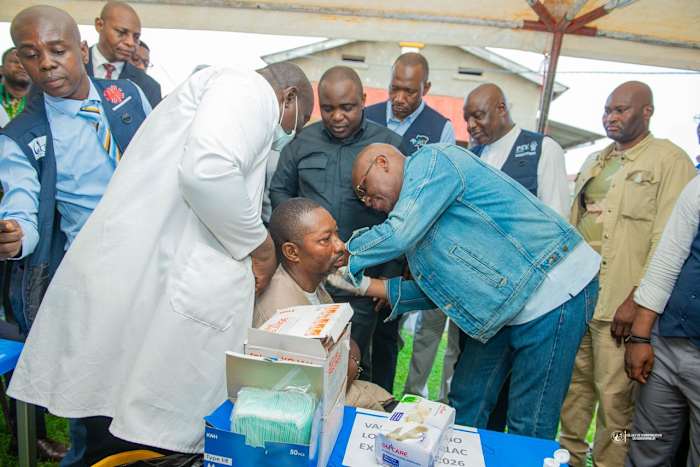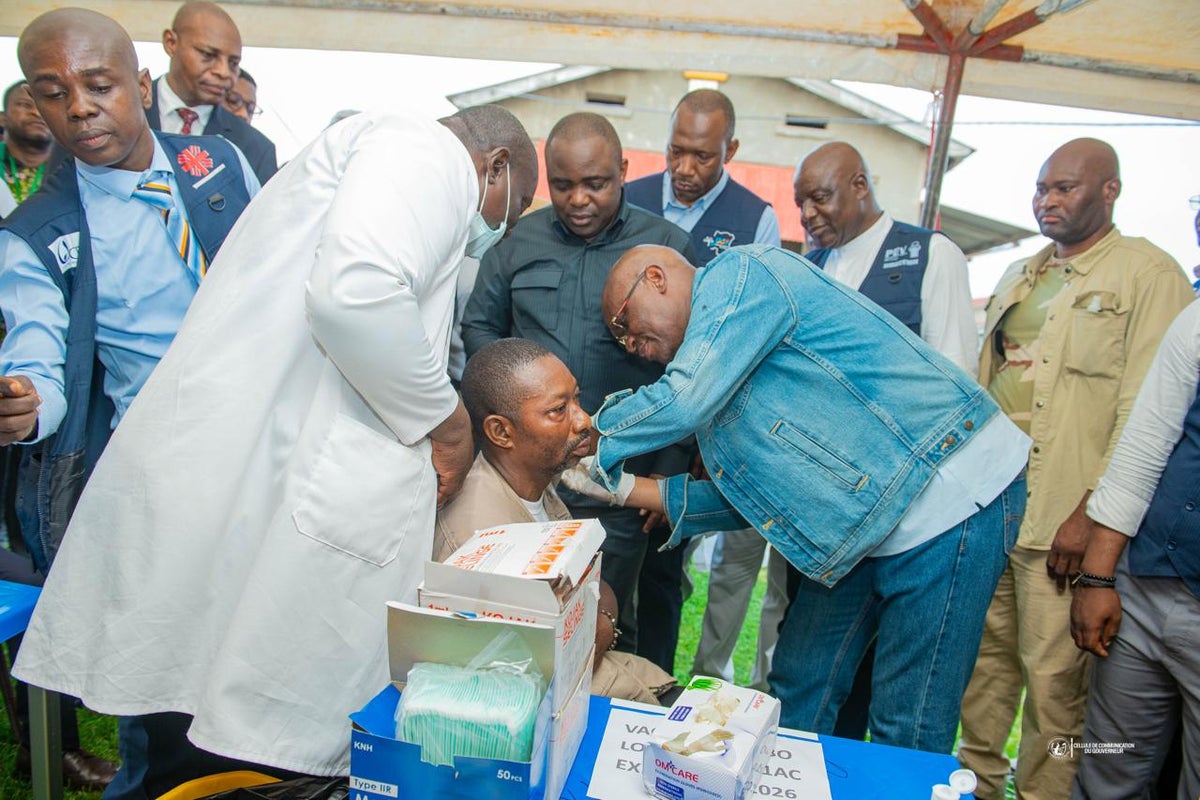
The Democratic Republic of Congo has officially launched an emergency vaccination campaign in Kisangani, deploying over 50,000 doses of the Ervebo vaccine to halt a devastating surge. Yet behind the bureaucratic launch lies a stark and unmentionable operational gamble. The ongoing epidemic is driven entirely by the rare Bundibugyo strain of the virus, while Ervebo was specifically engineered and approved to combat the Zaire strain. Health authorities are deploying a mismatched therapeutic under a compassionate-use framework, effectively crossing their fingers that cross-reactive immunity will hold up against a pathogen moving with unprecedented velocity.
Official figures place the cumulative toll at over 5,700 confirmed cases and roughly 2,700 deaths, translating to a brutal case fatality rate hovering near 48 percent. Epidemiologists on the ground note that these numbers represent only the visible apex of a submerged iceberg. Surveillance teams estimate that true infection counts could be triple official tallies, masked by widespread community distrust, violent regional instability, and an active strike by unpaid local medical workers.
The Science of a Calculated Mismatch
Deploying a vaccine against a viral variant it was never designed to target is an unorthodox move born of sheer desperation. Historically, the Zaire ebolavirus has dominated global headlines, spawning the 2014 West African crisis and several equatorial outbreaks managed via Ervebo. The Bundibugyo species, however, is a different biological beast.
Laboratory models and animal data suggest there may be sufficient genetic overlap between the viral strains to prompt an immune response. Cross-protection is theoretically plausible, but real-world clinical validation does not yet exist.
"We are utilizing every available operational tool while simultaneously running clinical trials to see if this shield actually deflects the blow," noted one senior international health researcher stationed in the region, speaking on condition of anonymity due to policy restrictions.
Of the total vaccine supply entering the country, approximately 20,000 doses are carved out strictly for controlled trials to measure efficacy against the Bundibugyo strain in real time. For the thousands of frontline health workers lining up in Tshopo province, getting the jab is an act of profound faith. They are trading total uncertainty for the slim margin of defense a mismatched vaccine might afford.
Anatomy of an Information Vacuum
Viruses do not move in a vacuum, and neither do epidemics. The explosive trajectory of this outbreak—scaling faster than any recorded predecessor in modern medical history—is fueled as much by sociological friction as it is by viral biology.
Decades of systemic neglect, chronic conflict, and broken promises from centralized authorities have created fertile ground for toxic rumors. In urban centers like Bunia and rural mining hubs alike, a dangerous narrative persists that the disease is a fabricated pretext for political control or international exploitation.
This profound skepticism triggers a fatal behavioral loop. When community members experience early, milder symptoms characteristic of the Bundibugyo strain, they routinely avoid treatment centers. They stay home, seek out traditional remedies, or continue attending massive public gatherings.
- The Silent Spread: Over 95 percent of recent deaths in several hardest-hit zones occurred outside formal treatment facilities.
- The Tracing Breakdown: Contact tracers report tracking only a fraction of expected secondary contacts due to hostility and movement restrictions.
- The Institutional Strain: Scores of local doctors and nurses have contracted the virus themselves, hobbling response capacity at the exact moment demand peaks.
When infected individuals die within their communities without medical oversight, every household funeral becomes a localized superspreader event. The virus exploits traditional burial rites and family loyalty with clinical efficiency, leaving rapid-response teams permanently playing a multi-week game of catch-up against a shifting shadow.
Logistics in a Warzone
Trying to administer cold-chain pharmaceuticals across eastern Congo is an exercise in structural absurdity. The operational theater spans six distinct provinces, stretching from dense equatorial forests to conflict-torn territories controlled by shifting militia groups.
Logistical arteries are frequently severed by ambushes, washed-out infrastructure, and administrative bottlenecks. Compounding these physical barriers is an internal administrative crisis: local healthcare workers tasked with administering the new vaccines have periodically staged work stoppages because months of promised hazard pay have evaporated in transit.
An ultra-cold vaccine requiring precise temperature maintenance cannot easily be deployed via motorbike through active combat zones when the driver hasn't received a salary. International aid agencies have injected over $50 million in emergency funding, but money alone cannot pave roads, silence insurgent artillery, or instantly rebuild institutional trust that took decades to shatter.
The Long Tail of Global Indifference
The international community's sluggish financial and operational mobilization highlights a recurring structural failure in global health security. Pathogens circulating in marginalized Central African provinces rarely command sustained geopolitical urgency until they threaten international travel corridors.
By the time the World Health Organization formally declared the emergency in May—months after epidemiological retrospective analysis suggests the outbreak truly ignited in remote mining camps—the viral network had already rooted itself deeply across dozens of distinct health zones.
Neighboring nations including Uganda, Rwanda, and the Central African Republic have ramped up border screenings and regional coordination summits, deeply aware that porous borders and heavy population displacement make containment a shared regional imperative. Yet prevention at borders is merely defensive theater if the source fire inside Congo continues to burn unchecked.
As vaccination teams fan out from Kisangani into high-risk health zones, the true measure of success will not be found in initial press releases or shipment milestones. It will be tracked in the quiet, unglamorous data points of whether post-vaccination infection curves finally bend downward, or whether the virus continues to outpace human resolve in the heart of Africa.