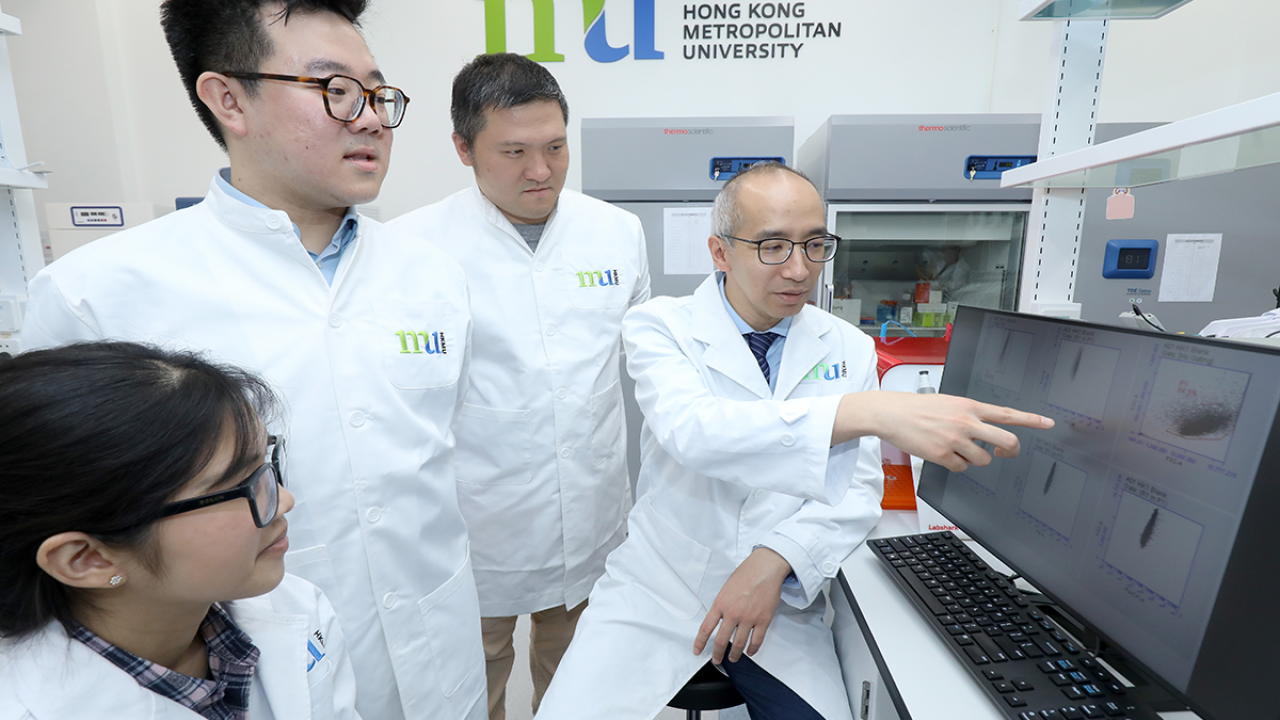
For decades, higher education expansion followed a predictable script. Build a lecture hall, recruit local students, and publish papers that rarely left university library shelves. That era is dead. When institutions like Hong Kong Metropolitan University plant flags across the boundary line—such as establishing its new Shenzhen Research Institute within the Shenzhen Virtual University Park—they are not merely opening branch offices. They are participating in a desperate scramble to secure relevance, funding, and survival within the tightly integrated apparatus of the Greater Bay Area.
The conventional narrative frames these moves as academic altruism. We are told they represent cross-border cooperation, regional harmony, and the smooth flow of brilliant minds. Strip away the institutional press releases, however, and a harsher economic reality emerges. Hong Kong's public-facing universities, particularly self-financing or hybrid institutions, face tightening domestic demographics, flat local funding, and an urgent mandate to tap into mainland municipal budgets.
Opening a research base in Shenzhen is expensive and politically delicate. It requires navigating two entirely distinct bureaucratic ecosystems, aligning research output with national economic strategies, and proving that an imported campus can actually compete with domestic mainland powerhouses. Why take the risk? Because staying put is a slow slide into irrelevance.
The Funding Shift and the Mainland Gravitational Pull
To understand why institutions are rushing northward, follow the capital. Hong Kong higher education has long relied on government subventions and tuition streams, but the real growth engine for applied technology now sits across the boundary line.
When the Shenzhen Research Institute secured its initial municipal backing—including early funding packets from agencies like the Science, Technology and Innovation Bureau of Shenzhen Municipality—it signaled a structural shift. Mainland municipal governments do not hand out Renminbi to fund abstract ivory-tower theories. They fund specific, commercializable outcomes. They want hardware prototypes, software integration, biotech applications, and advanced materials that can feed directly into regional industrial clusters.
For an institution like HKMU, traditionally rooted in professional and distance education, pivoting toward high-stakes applied research is a massive cultural overhaul. Faculty members accustomed to teaching modules must now adapt to the merciless pace of commercial tech transfer. Winning provincial grants means competing against tier-one mainland universities that have decades of local manufacturing relationships already locked down.
Navigating the Commercialization Bottleneck
The primary danger facing cross-border academic outposts is not a lack of initial enthusiasm; it is the valley of death between a lab discovery and a market-ready product.
Setting up shop in a tech hub like Shenzhen exposes Hong Kong institutions to brutal market discipline. Academic papers do not pay the rent on a mainland research facility. If a university cannot translate its computer science or environmental engineering research into patents that local enterprises actually want to license, the institute risks becoming an expensive vanity project.
Consider how this works in practice. A hypothetical research team develops an advanced sensor algorithm in a Hong Kong lab. Without local industry partners to test the hardware, the invention stalls. By embedding themselves within innovation parks alongside mainland firms, these institutes shorten the feedback loop. Engineers can walk across a courtyard, pitch a prototype to a hardware manufacturer, and test the results on a factory floor within hours. That proximity is the entire point of the exercise. Without it, a Shenzhen address is just an expensive postal code.
The Talent Pipeline Paradox
Another critical factor driving these expansions is the battle for graduate-level talent. Hong Kong's domestic talent pool is constrained by population ceilings. Meanwhile, mainland universities produce hundreds of thousands of STEM graduates every year, creating a hyper-competitive environment where post-doctoral researchers are expected to deliver immediate breakthroughs.
Institutions setting up research hubs in the north are positioning themselves as bridgeheads. They hope to attract mainland researchers who want international academic credentials without leaving their home ecosystem, while simultaneously offering Hong Kong students a direct look at mainland industry operations.
Yet, this balancing act is fraught with friction. Administrative compliance, data-sharing protocols, and intellectual property rights across jurisdictions require constant legal maintenance. A single misstep in cross-border data transfer can freeze a joint research project for months. Administrators must act as part-time diplomats, smoothing over regulatory speed bumps that do not exist in single-jurisdiction universities.
Beyond the Ribbon-Cutting Ceremony
The ribbon-cutting ceremonies make for pleasant morning headlines, but the true test of these regional hubs arrives three to five years down the line. That is when municipal grants face renewal, initial startup capital dries up, and boards of directors demand hard metrics. Did the institute spin off viable startups? Did it secure independent, self-sustaining grants from national funding bodies? Did it attract top-tier principal investigators who could work anywhere in the world?
If the answers are affirmative, these cross-border expansions will rewrite the playbook for regional higher education, proving that smaller institutions can punch above their weight by plugging directly into industrial engines. If the answers are negative, these facilities will quietly downsize, serving as cautionary tales of overextension in a shifting geopolitical climate.
The boundary line is no longer a barrier to academic life; it is the testing ground where the future of higher education funding and relevance will be decided.
This video provides visual context and coverage of the official launch event and opening ceremony for the new Shenzhen research facility.