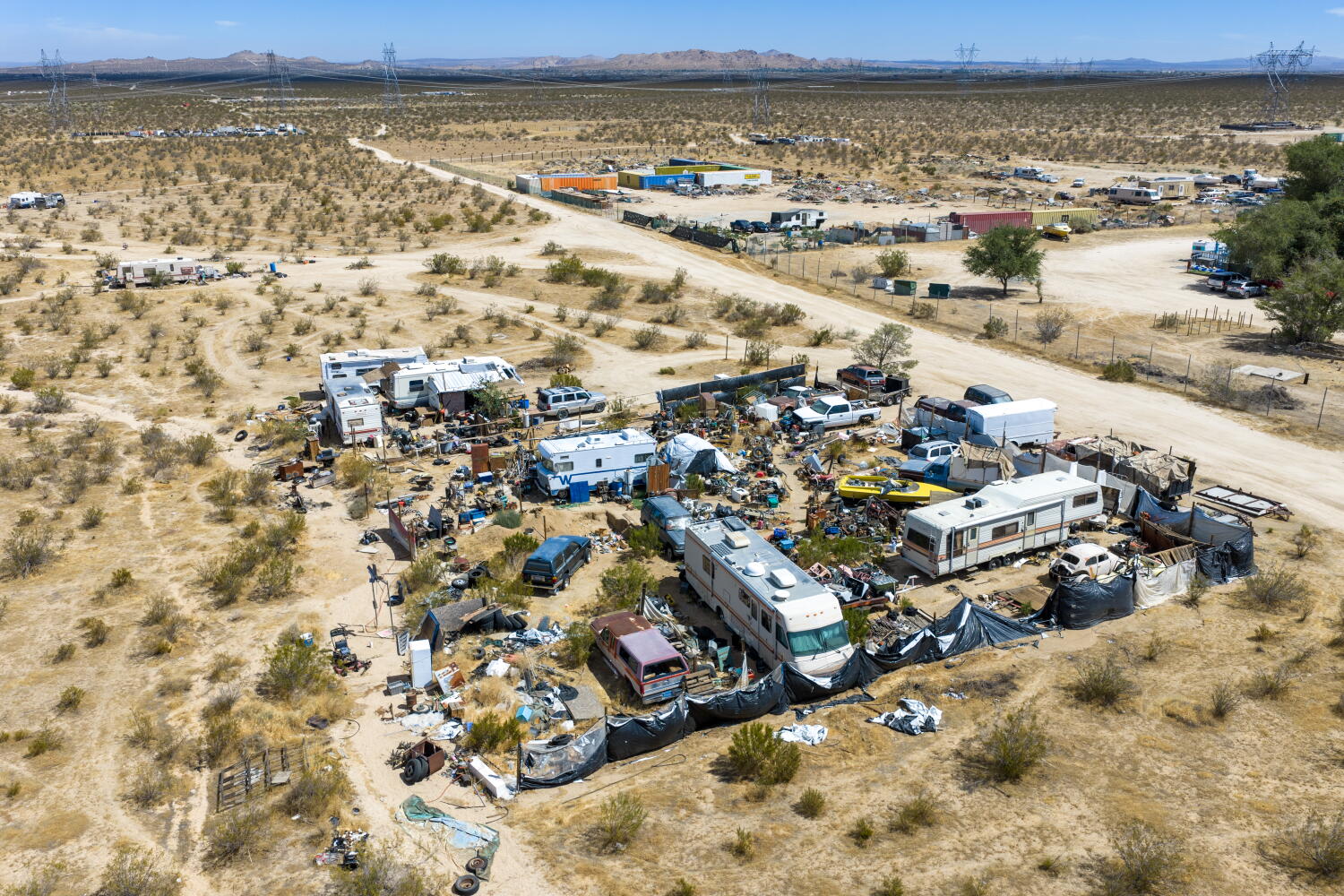
Miles past the asphalt edge of Palmdale and Lancaster, where the Joshua trees thin out and the hardpan of the Mojave Desert takes over, thousands of people are living inside rotting recreational vehicles. They are parked on scrubland without sewer hookups, running water, or electricity lines. This is the Antelope Valley off-grid RV crisis, a sprawling humanitarian blind spot where municipal oversight fractures against vast expanses of sand and federal land management boundaries.
While urban centers in Los Angeles County obsess over sidewalk encampments downtown, a different kind of displacement is happening out in the high desert. People priced out of the traditional housing market buy broken-down motorhomes for a few thousand dollars, drive them deep into unincorporated county pockets, and drop anchor. Local government agencies struggle to track them, official homeless counts routinely miscalculate them, and the surrounding environment absorbs the mounting consequences of unchecked human habitation without infrastructure.
The mechanics of this migration are rooted in harsh economics. Rent burdens across Southern California have pushed families far past their breaking points. When a two-bedroom apartment requires an income that a minimum-wage job or fixed disability check cannot touch, the mobile metal box becomes the final shelter of choice.
The Logistics of Desert Isolation
Living off-grid in the high desert sounds like a romantic return to self-reliance until reality sets in. Temperatures swing wildly, plunging below freezing in the winter and soaring past triple digits in the summer months. An aging Winnebago or Ford motorhome offers virtually no thermal insulation. Generators drone endlessly through the dust, burning through expensive gasoline just to keep a small fan or a medical device running.
Water must be hauled in jugs from gas stations miles away. Sewage presents an even graver crisis. Without working plumbing or access to municipal dump stations—which often charge fees or turn away dilapidated vehicles—grey water and black water routinely find their way directly onto the desert floor.
Local code enforcement officers face an impossible mandate. The Antelope Valley covers thousands of square miles of unincorporated territory. Tracking down illegal vehicle dwellings scattered across private parcels, Bureau of Land Management tracts, and public right-of-ways requires resources that county departments simply do not possess.
Action usually arrives only through the trigger of a complaint. A property owner reports trespassers, or a neighboring rancher documents illegal dumping, and a bureaucratic clock starts ticking. Yet towing a non-operational 30-foot motorhome from deep desert sand requires heavy-duty machinery and specialized contractors. The expense often falls on taxpayers, creating an endless loop of clearance and repopulation.
The Flawed Metrics of Visibility
Counting people who live in motion or semi-permanent desert seclusion remains an exercise in systemic failure. The Greater Los Angeles Homeless Count relies heavily on volunteers driving designated routes on a single night. A rusted motorhome parked five miles down a dirt wash, its windows covered with cardboard and its engine block missing, can easily be mistaken for an abandoned vehicle rather than an occupied home.
This analytical blind spot distorts policy decisions. When official tallies miss the true scale of high desert vehicle habitation, funding for outreach teams, mobile showers, and waste management services fails to match the actual demand.
As urban sweeps in Los Angeles proper intensify, enforcement pushes more vulnerable populations toward the geographic margins. The Antelope Valley has historically served as a pressure valve for the wider county's housing failures. That valve is now jammed. Municipal leaders point to fluctuating annual numbers to argue progress, while residents living near the desert fringes watch the footprint of motorhome clusters expand month by month.
Environmental and Social Collateral
The ecological impact on the Mojave is accumulating rapidly. Fragile desert habitats, home to sensitive species like the desert tortoise, face degradation from persistent human activity. Piles of domestic refuse, discarded building materials, and automotive fluids seep into the soil.
At the same time, the human cost deepens away from public view. Children living in these desert RVs miss school because transportation from remote locations is non-existent. Emergency medical services struggle to locate coordinates when callers have no street address and cell service drops out. A heart attack or severe asthma flare-up miles down a dirt trail can easily turn fatal before an ambulance navigates the grid.
Fixing this crisis requires abandoning the illusion that out-of-sight equals out-of-mind. Until county leadership invests in sanctioned safe-parking infrastructure with basic sanitation, or cracks down on the root causes of regional housing unaffordability, the high desert will remain a dumping ground for the state's systemic failures. The motorhomes will keep rolling past the pavement, seeking silence in a landscape that is running out of room to hide them.