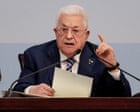
The United States has barred Palestinian Authority President Mahmoud Abbas and key high-level officials from entering the country for the United Nations General Assembly, marking the second consecutive year of absolute travel restrictions. Washington is weaponizing its position as the host nation to choke off direct diplomatic representation on American soil.
The State Department frames these denials under specific statutory provisions, citing a failure of the Palestinian leadership to meet commitments regarding peace with Israel and pointing to actions aimed at internationalizing the conflict through bodies like the International Criminal Court. Yet this ongoing bureaucratic lockout exposes a deeper fracture in international law. Under the 1947 UN Headquarters Agreement, the host country is legally bound to facilitate access for representatives of states and recognized observer entities participating in global governance. By overriding these treaty obligations with domestic visa sanctions, Washington is asserting that geopolitical alignment with its core Middle East strategy supersedes multilateral accommodation. Expanding on this topic, you can find more in: The Brutal Economic Reality Behind Ottawa and Brussels Forging a New Alliance.
For the Palestinian delegation, the physical exclusion forces a heavy reliance on pre-recorded video statements and diplomats already stationed inside New York. This workaround preserves technical attendance figures on the assembly floor while stripping the leadership of physical presence, hallway negotiations, and direct press access. It is a calculated quarantine. It isolates Palestinian representatives behind screens while insulating Washington and its allies from the immediate friction of face-to-face diplomatic confrontation.
Critics across the international community view this precedent with alarm, warning that selective visa enforcement threatens the structural neutrality of the United Nations. If a host government can arbitrarily filter who enters to address the world body based on bilateral grievances, the venue ceases to be a global commons and devolves into an instrument of national foreign policy. Experts at USA Today have also weighed in on this trend.
The strategy achieves a temporary silencing of opponents in New York, but it accelerates the erosion of the diplomatic architecture built in the aftermath of the Second World War. When superpower convenience dictates who gets to speak at the podium, the multilateral order absorbs another blow from which it may not recover.