When the United States orders non-essential diplomats to pack up and leave Saudi Arabia amid Houthi strikes, the headlines frame it as a routine precaution. That framing is lazy. A departure order from Riyadh is not a simple travel advisory; it is an admission that air defense saturation, asymmetric drone economics, and political friction have narrowed the safety margin around American personnel in the Gulf.
Anyone who has watched Middle East crises unfold over the past three decades knows how embassy pullbacks work. They rarely happen over a single stray rocket. They happen when threat analysts see a pattern they can no longer price as low-probability noise.
Why a Diplomatic Pullback Hits Harder Than a Missile
Diplomats are supposed to stay put when the rhetoric heats up. Embassies exist to project calm, keep channels open with host governments, and manage crises on the ground. Ordering staff out signals that Washington believes the risk to soft targets—housing compounds, consulates, transit hubs—has crossed a threshold where cost-benefit math breaks down.
In Saudi Arabia, that math is uniquely complicated. Riyadh is not a peripheral outpost. It is the diplomatic and economic nerve center of the Gulf Cooperation Council, home to major energy infrastructure, massive expatriate communities, and decades of intertwined security agreements with Washington. When Houthi strikes threaten that environment, the ripple effects hit far beyond consular services.
Consider what leaves with a departing diplomat:
- Institutional memory: Junior officers rotate often, while senior specialists carry years of local relationships. Pulling them out slows down real-time coordination with Saudi ministries and intelligence counterparts.
- Public signaling: Markets, regional rivals, and local citizens read an evacuation order as a measure of American confidence in local security.
- Operational friction: Fewer staff on the ground means slower visa processing, thinner reporting from provinces outside the capital, and heavier reliance on remote briefings that miss street-level nuance.
A departure order rarely means an embassy is about to fall. It usually means commanders no longer trust their margin for error against cheap, long-range threats.
The Counter-Argument Nobody Wants to Hear
Not every veteran observer views a drawdown as pure weakness. A contrarian case holds that thinning out non-essential personnel actually sharpens a mission. Strip away administrative weight and family members, and the remaining core can focus on essential security, liaison work, and crisis management without acting as a larger target footprint.
That argument has merit on paper. In practice, it often collides with optics and leverage. Rivals in Tehran and Sanaa do not always parse the difference between "non-essential staff" and a full retreat. To adversaries testing American resolve, empty desks in Riyadh look like a win bought with relatively inexpensive hardware.
The Economics of Cheap Drones Versus Expensive Interceptors
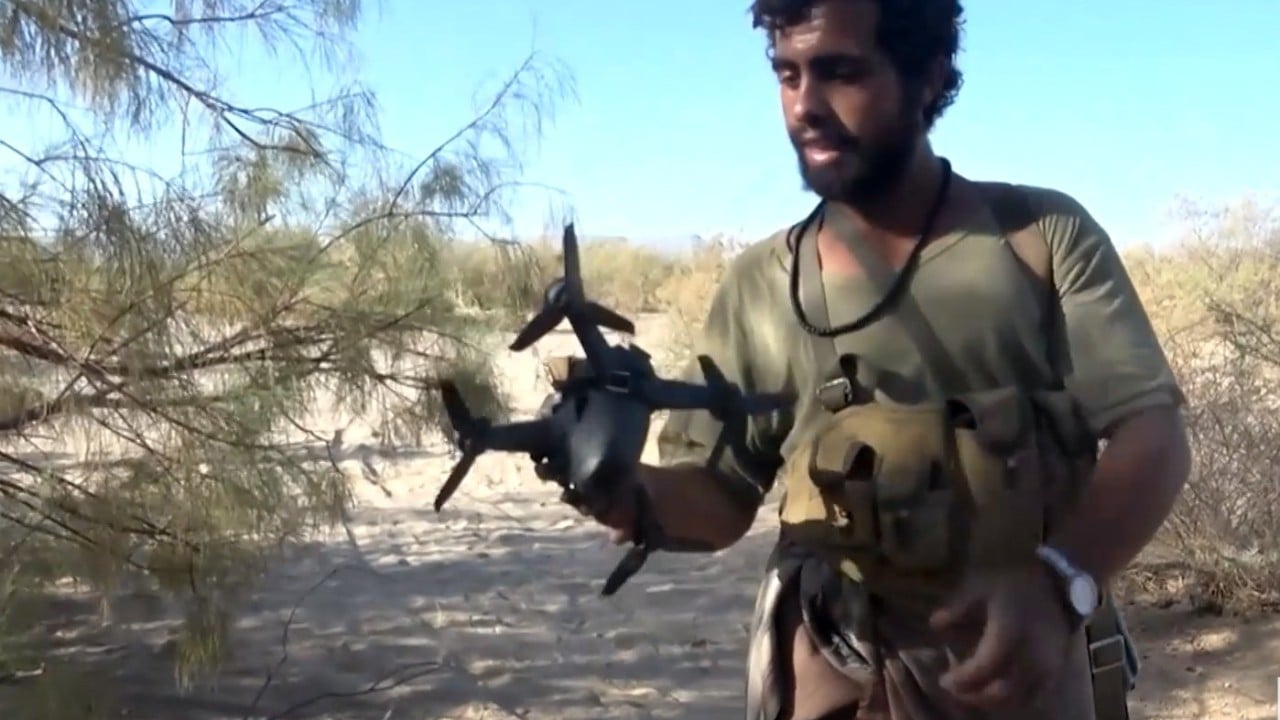
To understand why Houthi strikes force hard choices in Saudi Arabia, look at the balance sheet of modern air warfare. A long-range one-way attack drone or cruise missile assembled from commercial and smuggled components costs a fraction of what it takes to shoot it down. High-end surface-to-air interceptors cost millions of dollars per shot, and production lines cannot replenish magazines overnight.
Air defense is a geometry and math problem. Radars have to spot low-flying objects cluttering the desert floor or coastal approaches. Interceptors have to reach the right altitude and vector before impact. Even a defense network with a ninety percent intercept rate still lets one out of ten targets through. When a barrage includes dozens of drones and missiles, a ten percent leakage rate becomes a serious headache.
To make that mechanism concrete, consider a hypothetical example. Suppose an air defense battery faces a salvo of twenty low-cost drones and two ballistic missiles aimed near an urban or industrial zone. Even if radar tracks every inbound object and interceptors knock down nineteen of the drones and both missiles, that single surviving drone still forces emergency shelter protocols, halts flights, or damages a facility. Multiply that friction across weeks or months, and the cost of defense compounds even when no major base is hit.
Saudi Arabia has spent heavily over the years on layered air and missile defense systems, including Patriot and THAAD batteries alongside local integration efforts. Those systems have intercepted countless threats. Yet no air shield is omnipotent against persistent, distributed launches from rugged terrain in Yemen and across maritime corridors.
| Threat Category | Primary Tactical Edge | Main Vulnerability | Impact on Diplomatic Posture |
|---|---|---|---|
| Long-Range Attack Drones | Low unit cost, long loiter or flight range, low radar cross-section | Slower speed, vulnerable to layered air defense and electronic warfare | Forces frequent shelter alerts and disrupts routine movement |
| Ballistic & Cruise Missiles | High speed or terrain-hugging flight path, harder to intercept late | Higher cost, fewer available per salvo, detectable launch signatures | Raises stakes around high-value compounds and infrastructure |
| Maritime & Regional Spillover | Pressure on shipping lanes and energy markets far from the launch site | Exposed to naval patrols and coalition tracking | Drives broader regional risk assessments and insurance spikes |
What Saudi Arabia and Washington Actually Want
Behind every security alert in the Gulf sits a tug-of-war over regional escalation. Saudi leadership has spent recent years trying to pivot toward economic diversification, domestic stability, and carefully calibrated diplomacy with regional powers, including Iran. Being dragged back into a grinding, high-visibility cross-border exchange with the Houthis runs straight against Riyadh's broader economic ambitions.
Washington faces its own tightrope. The United States wants to protect its personnel, reassure Gulf partners, and keep Red Sea and Gulf shipping lanes open, all while avoiding a sprawling, open-ended ground war in Yemen. Ordering diplomats out of Saudi Arabia is one lever among many—a visible measure to protect people while keeping military options calibrated.
Still, friction between allies is real. Host governments sometimes bristle when foreign partners issue sharp warnings or pull staff before local officials feel the threat warrants it. Publicly, capitals talk about close coordination and shared security. Privately, disagreements over threat assessments, rules of engagement, and intelligence sharing can create strain right when unity matters most.
The Overlooked Red Sea and Energy Link
Most casual coverage treats Houthi strikes on Saudi targets and attacks on commercial shipping in the Red Sea as separate stories. They are not. They are branches of the same campaign, powered by overlapping supply chains, reconnaissance networks, and political aims.
When maritime routes near Bab el-Mandeb and the southern Red Sea grow hazardous, shipping companies reroute around the Cape of Good Hope. Transit times lengthen, freight rates climb, and supply chains feel the squeeze. Even when oil tankers avoid direct hits, higher war-risk premiums and regional tension feed into global energy markets. Diplomats in Riyadh sit right next to the energy and trade crossroads where military pressure turns into economic pain.
How to Read the Next Move Without Getting Played
Crisis coverage thrives on breathless speculation. One day brings talk of imminent escalation; the next brings quiet diplomatic backchannels that cool the temperature without making the front page. Readers who want a clear picture should watch concrete indicators rather than dramatic phrasing.
- Watch flight and movement patterns: Look for sustained changes in diplomatic travel, commercial aviation diversions, and compound security postures rather than one-off alerts.
- Track interceptor expenditure and resupply: Pay attention to reports on air defense readiness, coalition naval deployments, and munitions stockpiles—those constraints shape what commanders can sustain.
- Follow backchannel diplomacy: Watch whether quiet talks with regional intermediaries or Gulf capitals gain traction, since political off-ramps often move faster than military campaigns.
- Separate headlines from hardware: A loud statement or a single drone interception does not automatically mean a wider war; sustained launch tempos and infrastructure hits tell the real story.
Ordering US diplomats to leave Saudi Arabia amid Houthi strikes is a sobering reminder that modern conflict rarely waits for formal declarations of war. It creeps in through cheap drones, stretched air defenses, and quiet risk calculations behind closed embassy gates. Keep your eyes on where the interceptors are firing and who is quietly talking behind the scenes, because that is where the real story of the Gulf is written.