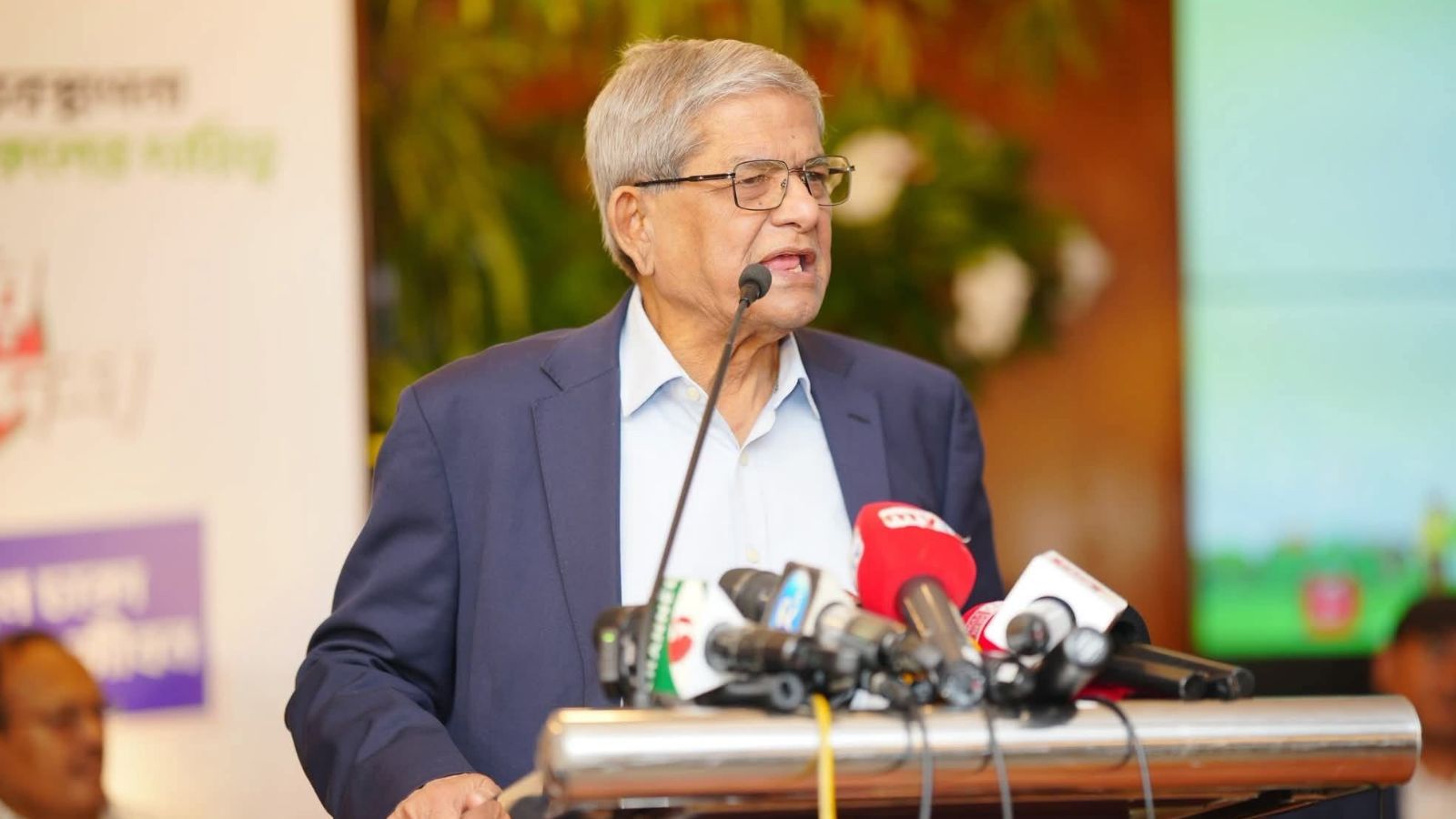
The political architecture of South Asia shifted dramatically when longstanding governance structures collapsed under the weight of mass protests in Dhaka. Amid this transition, veteran politician Mirza Fakhrul Islam Alamgir emerged at the center of national gravity, steering the Bangladesh Nationalist Party through a volatile new era. Observers outside the region often reduce this transition to a simple zero-sum game between opposing political factions. That reduction misses the intricate, high-stakes diplomacy required to stabilize a nation of over one hundred seventy million people while managing tense bilateral ties with New Delhi.
To understand why this political moment carries such weight, one must look beyond standard party rhetoric and examine the structural realities of South Asian trade, security corridors, and public sentiment. When governance undergoes a violent rupture, institutional continuity becomes an urgent priority. You might also find this similar article useful: The Brutal Economic Reality Behind the Last Minute US Canada Tariff Standoff.
The Weight of Historical Animosity
Relations between the Bangladesh Nationalist Party and India have historically been fraught with mutual suspicion. For decades, New Delhi viewed the party through the lens of security concerns and past political alignments, often preferring the stable, predictable tenure of Sheikh Hasina's Awami League. When that dynamic shattered, foreign policy planners in South Block found themselves scrambling to recalibrate their approach toward Dhaka.
Mirza Fakhrul has spent recent months attempting to bridge that historical divide through calculated diplomatic outreach. He has repeatedly emphasized that Bangladesh seeks a relationship with its giant neighbor based on mutual respect and equity, rather than subservience. As highlighted in latest coverage by Reuters, the results are significant.
- Trade dependencies dictate that neither nation can afford a prolonged diplomatic freeze.
- Security cooperation along the porous four-thousand-kilometer border requires constant administrative coordination.
- Public sentiment in urban centers demands a foreign policy that projects national sovereignty without provoking economic retaliation.
This balancing act requires immense political discipline. If the leadership in Dhaka appears too conciliatory, it risks alienating a domestic base that blames New Delhi for propping up the previous administration. If it appears too confrontational, the economic fallout could cripple a recovering supply chain.
Navigating the Domestic Pressure Cooker
Internal stability remains the primary challenge for any administration operating in a post-revolutionary environment. The machinery of state administration was deeply politicized over fifteen years of single-party dominance, leaving behind bureaucratic friction points that slow down policy implementation.
Mirza Fakhrul operates within this complex web not as an authoritarian strongman, but as a seasoned negotiator trying to hold a broad coalition together. Labor unrest in the vital garment manufacturing sector continues to test the government's ability to maintain public order. Meanwhile, radical factions on the fringes attempt to exploit the transitional vacuum to push their own ideological agendas.
The strategy of the Bangladesh Nationalist Party has been to push for institutional reforms while laying the groundwork for an eventual electoral mandate. This requires convincing international investors that the country remains open for business despite the political turbulence.
The Regional Ripple Effect
The geopolitical ramifications extend far beyond Dhaka and New Delhi. Western capitals watch closely to see whether democratic norms can be restored in a strategically vital nation bordering the Bay of Bengal. China, a major investor in infrastructure projects across the region, maintains a watchful eye on how the new administration manages its foreign debt and regional alignments.
Foreign policy analysts often make the mistake of viewing South Asian politics through a rigid ideological filter. In reality, survival dictates pragmatism. The current leadership in Dhaka understands that isolating India is economically impossible, just as maintaining a posture of unequal partnership is politically untenable.
As the country moves toward eventual polls, the test of leadership will not be found in fiery speeches, but in the quiet, unglamorous work of rebuilding fractured institutions, stabilizing the currency, and proving to skeptical neighbors that a diverse political landscape can yield a stable state. The transition is messy, uncertain, and entirely unfinished.