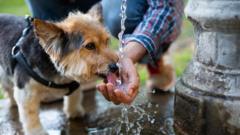
Every summer, the internet fills up with identical, well-intentioned lists reminding pet owners to keep their water bowls full and avoid leaving animals in parked cars. These basic rules are common knowledge by now. Yet veterinary emergency rooms continue to see an influx of animals suffering from severe, often fatal heat stroke in dogs. The reality is that classic warning lists overlook how modern domestic environments, subtle biological traits, and everyday choices can inadvertently put animals at risk.
To protect an animal, a pet owner must look past the obvious traps and recognize the early, easily missed signs of heatstroke in dogs. Identifying a problem early requires tracking shifts in a dog’s behavior and physical state before full physical collapse occurs. Heavy panting that does not slow down with rest, a dark red tongue, thick or sticky saliva, and unusual weakness or disorientation are clear indicators that an animal is struggling to manage its internal temperature. When these signs manifest, the situation has already progressed past mild discomfort into a medical emergency.
Understanding this crisis requires looking at how a canine body handles heat. Humans regulate temperature through skin-wide sweat glands, but dogs rely almost entirely on panting to evaporate moisture from their respiratory tract. When ambient humidity rises or fresh air stops moving, this mechanism fails. The internal temperature can climb past 103°F (39.4°C), quickly approaching the critical 106°F (41.1°C) threshold where cellular damage begins.
The Silent Evolution of Heat Stress
Most diagnostic guides treat heatstroke as a sudden event, like an animal left inside a vehicle on a warm afternoon. While those scenarios remain incredibly dangerous, emergency veterinarians frequently treat dogs that overheat while resting inside a home or during a routine morning walk.
The underlying problem often stems from the domestic environment. Modern homes feature structural insulation designed to trap ambient air, and when air conditioning units malfunction or struggle on high-heat days, indoor spaces can turn into stagnant heat traps. A dog resting on a plush bed or a carpeted floor lacks the ability to shed heat through conduction, which is the direct transfer of warmth from the belly to a cool surface like tile or stone.
Compounding this is the biological variation across breeds. Brachycephalic animals, which include flat-faced breeds like French Bulldogs, Pugs, and Boxers, possess shortened upper airways that structurally limit efficient airflow. For these dogs, even mild physical exertion in warm weather can restrict breathing enough to trigger a rapid spike in body temperature.
Physical fitness and age play equally large roles. An older dog with underlying laryngeal paralysis, an unnoticeable narrowing of the airway common in senior retrievers, cannot pant efficiently enough to stay cool. Similarly, an overweight dog carries a layer of fat that acts as insulation, trapping heat inside the core and forcing the heart to work twice as hard to pump blood to the skin for cooling.
Tracking the Path of Systemic Failure
To understand why quick action is mandatory, it helps to examine what happens inside an animal's body as heatstroke takes hold. The process is a rapid chain reaction that affects multiple organ systems simultaneously.
- Phase One (The Respiratory Struggle): The dog pants with maximum effort. The tongue extends fully, flattening out to maximize surface area, and changes from a healthy pink to a deep crimson or purple. Saliva thickens because the body is running low on water, leaving the mouth looking dry or pasty.
- Phase Two (Vascular Collapse): As the core temperature crosses 105°F, blood vessels dilate completely to push heat toward the skin. This causes a drastic drop in blood pressure. To compensate, the heart rate spikes, and the gums turn a vibrant, bright red.
- Phase Three (Neurological and Gastrointestinal Breakdown): The brain, highly sensitive to heat, begins to swell. The dog may stagger, stare blankly, or fail to respond to its name. At the same time, heat damages the lining of the intestinal tract, which can cause sudden vomiting or bloody diarrhea.
If the internal temperature is not brought down, the final stage involves widespread clotting issues and organ failure, which can lead to seizures, comas, and death.
Flaws in Common Rescue Methods
When a pet owner realizes their dog is overheating, panic often leads to mistakes that can worsen the animal's condition. The most frequent error is trying to cool the dog down too fast.
Using ice water or wrapping an unresponsive dog in frozen towels causes superficial blood vessels to constrict instantly. This creates a paradox: the cold tightens the peripheral veins, trapping the scorching blood inside the core organs and driving the internal temperature higher. Furthermore, ice water can induce shivering, a muscle action that naturally generates more internal heat.
Another common oversight is relying solely on a bowl of drinking water. An industrial fan blowing air across a dry dog does very little, because fans rely on moisture evaporation to cool a surface. If the dog's saliva has already dried up, the moving air cannot lower their skin temperature effectively.
Step by Step Emergency Stabilization
If a dog shows signs of heatstroke, stabilization must begin immediately, well before loading the animal into a car for a trip to the clinic. Every minute spent waiting for professional help lowers the chances of a full recovery.
The Myth of the Quick Recovery
A common misconception is that once a dog stops panting and looks alert, the danger has passed. This assumption ignores the delayed effects of severe heat stress.
Internal organs can experience delayed tissue damage that does not show outward symptoms for 24 to 48 hours. The kidneys, which filter toxins out of the blood, are often damaged during the period of low blood pressure. If this damage goes untreated, it can lead to acute renal failure days after the initial incident.
Similarly, the lining of the gut can become permeable after overheating, letting bacteria enter the bloodstream and potentially causing systemic infections. A dog that survived heatstroke needs a thorough evaluation by a veterinarian, including blood tests to check organ function and clotting factors, even if the animal seems completely back to normal.
Preventing these situations requires looking beyond basic weather reports. High humidity can make a 75°F day feel much warmer to a thick-coated or flat-faced dog than an 85°F day with dry air. Exercise routines should shift to the early morning hours, and dogs should be kept on grass or dirt rather than asphalt, which can easily store heat and burn paw pads.
The responsibility for safety rests entirely on paying close attention to an animal's physical limits. When summer temperatures climb, monitoring a dog's breathing and keeping them in cool, well-ventilated spaces is the only effective way to prevent a common seasonal hazard from turning into a tragedy.