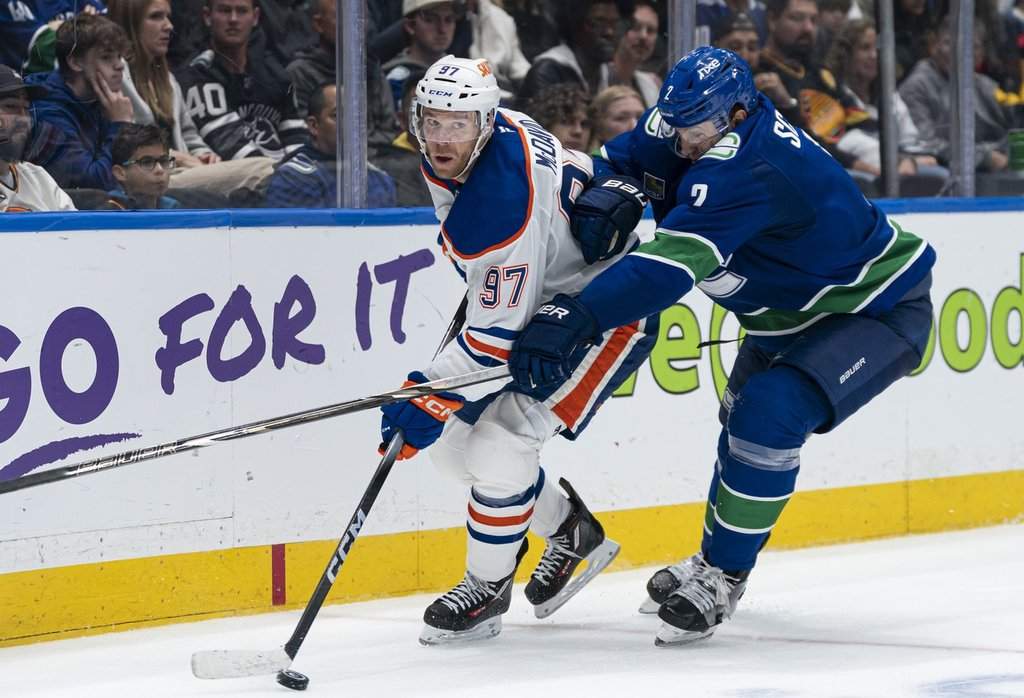
Modern National Hockey League analysis often romanticizes the high-event shootout. When the Edmonton Oilers and Vancouver Canucks lock horns in a flurry of multi-goal swings, chaotic special teams battles, and defensive breakdowns, television networks celebrate the pure entertainment value. Analysts talk about character building, resilience, and offensive explosions. That framing misses the uncomfortable underlying reality. Trading scoring chances like a pair of reckless gamblers is not a sustainable formula for deep playoff success; it is a symptom of systemic structural fragility that championship contenders eventually have to stomp out of their DNA.
To understand why these wild, high-scoring affairs trap franchises in cycles of inconsistency, one must look past the final goal horn and examine the mechanics of risk management. When a team routinely surrenders three-goal leads or requires miraculous multi-point nights from elite tier superstars just to bail out a leaky defensive structure, the warning lights should be flashing in the front office. High-end skill will always mask structural deficiencies during the winter months, but when the ice shrinks in April, structural chaos gets exposed and punished with ruthless efficiency.
The Illusion of Offensive Dominance
Edmonton has spent years refining the art of the offensive avalanche. Powered by Connor McDavid and Leon Draisaitl, the Oilers can obliterate an opponent's game plan in a matter of minutes through sheer velocity and elite vision. Yet, relying on an engine that must score five or six goals a night to secure two points creates an immense margin for error.
Consider what happens when the shooting percentage inevitably normalizes or a hot goaltender locks in. The entire house of cards wob
Inside the Edmonton Oilers and Vancouver Canucks Defensive Collapse
sports
The regular season in the National Hockey League rarely rewards the cautious. When the Edmonton Oilers and the Vancouver Canucks engage in wild, high-scoring affairs, the hockey world reaches for clichés about high-octane offensive talent and structural breakdowns. Those explanations are too easy. They miss the mechanical reality of how modern professional systems fail when elite skaters are asked to carry structural deficiencies nightly.
Edmonton and Vancouver share a common burden. Both franchises possess generationally gifted offensive catalysts who can completely alter the geometry of a match in a single shift. Yet both organizations routinely find themselves trapped in chaotic, wide-open contests that expose glaring vulnerabilities in their back ends. To understand why these games descend into track meets, we have to look past the final goal horn and examine the tactical friction occurring in the neutral zone and along the defensive blue line.
The Cost of Over-Reliance on Elite Transition
Modern offensive generation relies heavily on high-risk, high-reward transitions. When Connor McDavid or Leon Draisaitl attacks through the neutral zone, the entire opposing defensive structure collapses backward to protect the interior. That gravitational pull creates massive pockets of open ice. Edmonton capitalizes on this better than almost anyone, but the byproduct is an aggressive activation of their own defensemen.
When an Edmonton defenseman pinches along the wall to keep a play alive, the margin for error is razor-thin. If the puck squirts past, the recovery window requires elite backward mobility and perfect positional tracking. Without it, counter-attacks materialize with sudden, terrifying speed.
Vancouver faces a similar dynamic under Rick Tocchet’s structure, though through a different tactical lens. The Canucks demand a heavy, structured forecheck designed to suffocate opponents in the offensive zone. When that forecheck misses its timing by even a fraction of a second, the defensive coverage downstream gets stretched out. Wingers lose their tracking responsibilities on the weak side, leaving high-danger scoring areas exposed directly in front of the goaltender.
Goaltending Under Siege
You cannot discuss these wild affairs without addressing the goaltending position. Neither the Oilers nor the Canucks have enjoyed the luxury of serene, low-stress defensive nights. When a team routinely surrenders high-danger chances off odd-man rushes, goaltenders are forced to play reactively rather than positionally.
Reputation often shields structural failure. When a puck ends up in the back of the net after a breakdown that leaves an attacker alone in the slot, the post-game analysis frequently isolates the save percentage. That is a lazy diagnosis. Goaltending in the modern National Hockey League is a downstream metric. It is heavily dictated by the quality of the shots conceded.
When Edmonton or Vancouver gets caught in a frantic back-and-forth game, the shot quality skyrockets. Cross-seam passes become routine because tracking breakdowns force goaltenders to push violently from post to post. Over an eighty-two-game schedule, even the most capable netminders will look ordinary when their defense forces them into desperation mode on a nightly basis.
The Structural Illusion of Depth
Roster construction dictates tactical identity. Both front offices have invested heavily in top-end elite talent while navigating the rigid constraints of the salary cap. That financial reality leaves the bottom six forward groups and the third defensive pairings exposed to high-leverage minutes they are ill-equipped to handle.
Depth scoring is celebrated when a team wins 6-5. Yet, sustainable winning hockey requires a quiet, suffocating brand of defense that grinds opponents down. When depth players are forced into roles that expose their defensive limitations, coaches often shorten their benches. That burns out the top-tier skaters. By the third period of a high-tempo match, fatigue sets in, mental errors multiply, and structural discipline evaporates entirely.
Coaches talk endlessly about consistency and forty-minute efforts. But consistency is not merely a matter of willpower or focus. It is a physical and tactical threshold. If a system demands that your best players skate twenty-five minutes a night while executing high-risk offensive reads, defensive lapses are not anomalies. They are mathematical certainties.
The Path Forward for Contenders
Fixing these recurring defensive collapses requires an uncomfortable pivot. For Edmonton, it means finding the discipline to accept lower-event hockey when protecting a lead. Scoring four goals should be enough to win any game of hockey; when it is not, the problem is not the offense. For Vancouver, it requires maintaining structure even when the forecheck fails to generate immediate turnovers.
The path to a Stanley Cup does not run through nine-goal shootouts in November or December. It runs through the ability to lock down the neutral zone, suppress high-danger chances, and suffocate opponents when the game tightens in the spring. Until these two Pacific Division rivals reconcile their explosive offensive capabilities with hard defensive accountability, they will continue to deliver thrilling theater for the neutral observer while frustrating the analysts who know what it actually takes to win when the games matter most.


