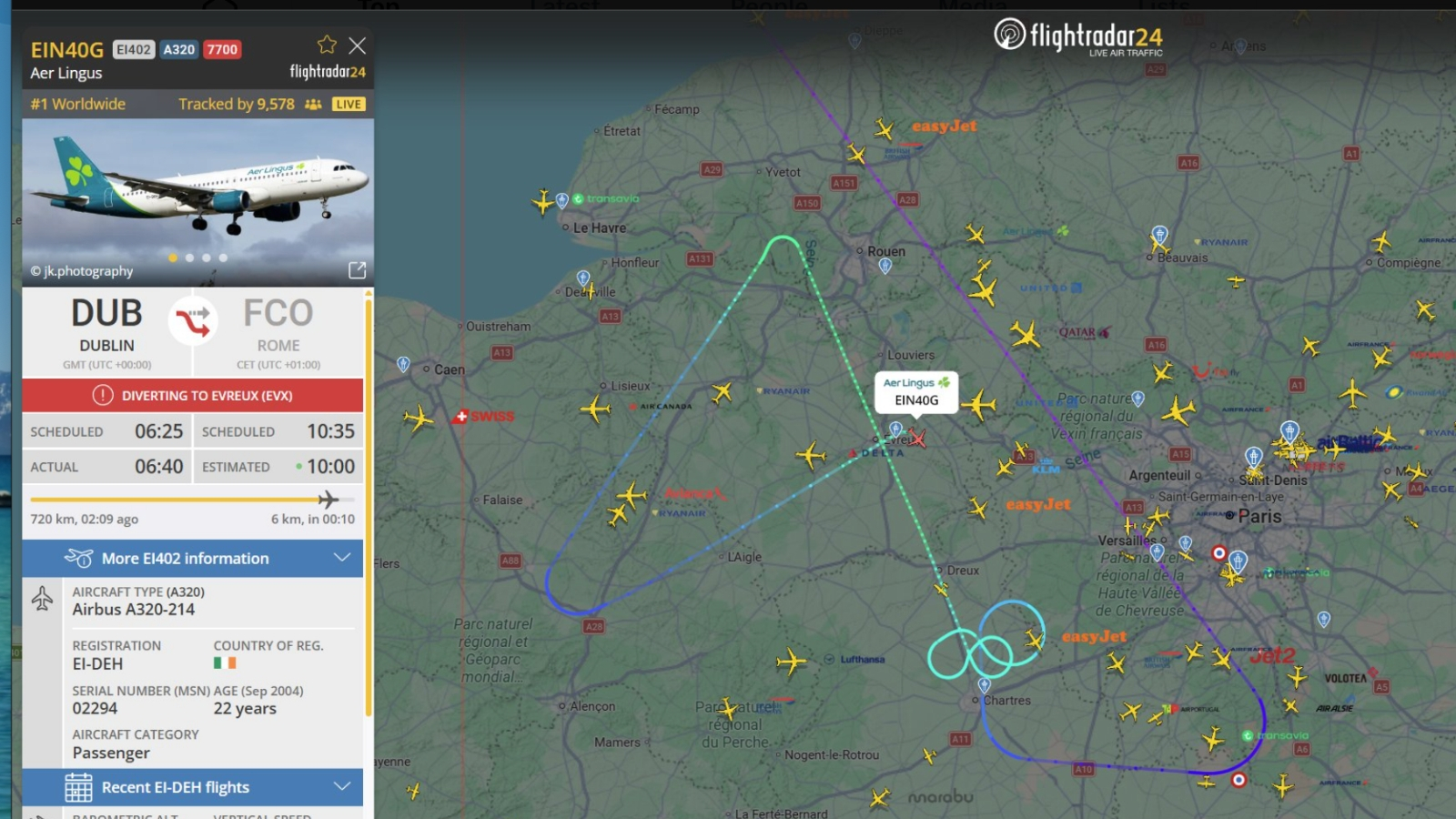
More than ten commercial flights across Europe were forced to divert, ground, or undergo emergency security sweeps following a wave of coordinated bomb threats sent via anonymous digital channels, resulting in zero discovered explosives but millions of euros in operational losses.
Aviation authorities across the European Union treat every communicated threat as credible until physical verification proves otherwise, triggering mandatory ground stops, fighter jet scrambles, and complete passenger evacuations. While mainstream reports focus on the immediate travel chaos at major hubs, the real story lies in the asymmetric economics of modern aviation disruption, where an anonymous actor using encrypted email or spoofed caller IDs can paralyze multi-billion-dollar transit networks for pennies.
The Anatomy of an Aviation Hoax
A bomb threat does not need a physical device to succeed as an act of sabotage. The moment an airline operations center, air traffic control tower, or airport authority receives a message claiming an explosive is aboard a specific tail number, international aviation law removes human discretion from the equation. Under protocols established by the International Civil Aviation Organization and enforced by the European Union Aviation Safety Agency, safety overrides schedule integrity every single time.
The chain reaction begins in seconds.
First, threat assessment teams evaluate the specificity of the message, looking for flight numbers, seat assignments, or routing details that suggest insider knowledge rather than random spam. Even when an email bears the hallmarks of a mass-sent hoax, authorities rarely risk ignoring it when a specific aircraft is airborne. Air traffic control immediately clears a corridor, directing the flight to the nearest suitable diversion airport capable of handling wide-body emergencies and isolating the aircraft on a remote apron far from terminal buildings.
Passengers are then deplaned—sometimes via emergency slides if the threat implies imminent detonation, though more commonly via mobile stairs to avoid the high rate of ankle and back injuries associated with slide evacuations. Once the cabin is empty, specialized bomb disposal units, explosive detection canines, and aviation security officers sweep every overhead bin, cargo hold, and avionics bay. Every piece of checked luggage is pulled from the belly, laid out on the tarmac, and physically matched to its owner before being re-screened.
This process routinely consumes four to eight hours per aircraft.
Why European Airspace Is Uniquely Vulnerable
Europe’s dense, fragmented airspace amplifies the ripple effects of localized security incidents. Unlike domestic flights across the continental United States, a single two-hour flight in Western Europe routinely crosses three or four sovereign jurisdictions, each with its own national police force, military air defense command, and intelligence apparatus.
When a flight traversing French, Belgian, and German airspace receives a threat, military quick-reaction alert jets are frequently scrambled to visually inspect the airliner and escort it to a designated landing zone. The sonic booms generated by supersonic intercepts over populated areas often trigger secondary panics on the ground before the public even knows an aviation incident is underway.
Furthermore, European carriers operate on razor-thin turnaround margins. Short-haul fleets flying Airbus A320 or Boeing 737 variants are scheduled with turnaround times as brief as twenty-five minutes between landing and takeoff. Knocking ten or twelve aircraft out of rotation during peak travel windows does not merely delay those specific passengers. It strands flight crews whose legally mandated duty time limits expire while sitting on remote tarmacs, forcing airlines to cancel subsequent legs across the entire continent for days afterward.
The Asymmetric Economics of Disruption
To understand why these waves of threats keep happening, follow the ledger. The cost of launching a multi-flight bomb hoax is effectively zero, requiring little more than a virtual private network, a disposable encrypted email provider, or automated voice-over-IP dialing scripts. The financial damage inflicted on the aviation sector, by contrast, is staggering.
Consider the direct and indirect expenses absorbed by an airline during a single diversion event:
- Fuel dumping and burn: Wide-body aircraft departing on long-haul routes are often too heavy to land safely immediately after takeoff, forcing pilots to dump tens of thousands of liters of jet fuel or fly holding patterns for hours.
- Crew timeouts and hotel accommodations: Stranded flight crews and hundreds of displaced passengers require immediate hotel blocks, meal vouchers, and rebooking on partner carriers.
- Regulatory compensation: Under EU Regulation 261/2004, while airlines are generally exempt from paying cash delay compensation for "extraordinary circumstances" like security threats, they remain legally obligated to provide duty-of-care essentials—food, lodging, and alternative transport—regardless of fault.
- Airport and air navigation fees: Unscheduled landings at major hubs incur heavy emergency handling charges, parking fees on remote stands, and overtime costs for ground handlers.
A coordinated campaign targeting a dozen flights in a single afternoon easily inflicts upwards of five to ten million euros in direct operational losses across carriers and airport operators. For state-sponsored actors, hacktivist collectives, or extortionists, this represents an extraordinarily efficient method of economic warfare.
Historical Precedents and Shifting Threat Vectors
Aviation hoaxes are as old as commercial jet travel, yet their operational profile has mutated dramatically over the past decade. In the 1970s and 1980s, threats were typically called into airline ticket counters via payphones, allowing investigators to trace physical locations or analyze voice recordings. Today, the threat vector has migrated almost entirely to automated digital infrastructure.
We saw a clear preview of this tactic during the wave of fake bomb threats that targeted dozens of European airports, schools, and transit hubs in late 2023, as well as the mass swatting campaigns that disrupted Indian domestic carriers throughout 2024. In those instances, perpetrators used rotating proxy servers and dark-web email relays to send identical, templated threats to dozens of recipients simultaneously.
Security analysts point out a dangerous secondary effect of this saturation strategy: alert fatigue.
When security teams are forced to respond to ten false alarms in a week, institutional vigilance is tested to its breaking point. Every false alarm drains explosive ordnance disposal teams from other critical duties and dulls the urgency of front-line responders. Yet no aviation regulator can afford to relax screening standards, because the one time a statistically improbable threat proves genuine, the human cost is catastrophic.
What Aviation Security Actually Does Behind Closed Doors
When a threat arrives, intelligence agencies do not treat all messages equally, even if the public only sees the resulting delays. Behind closed doors, threat assessment matrices evaluate linguistic patterns, technical headers, metadata, and geopolitical context within minutes.
If an email originates from a known IP cluster associated with previous mass-hoax campaigns and lacks specific operational details—such as the exact gate number, cargo manifest data, or crew names—security teams may classify it as a low-credibility nuisance. Even then, standard operating procedure in most European jurisdictions mandates a physical search if the aircraft is on the ground, or a precautionary diversion if the language crosses specific statutory thresholds.
In a hypothetical example of how an airline crisis room handles a mid-air threat, the pilot in command is never simply told to panic. Instead, airline security sends a discreet text message via the aircraft’s ACARS (Aircraft Communications Addressing and Reporting System) data link. The flight deck crew coordinates silently with air traffic control to select a diversion field with long runways and dedicated isolation bays, often keeping cabin passengers unaware of the specific nature of the threat until the aircraft is safely on the ground and surrounded by emergency vehicles. Keeping the cabin calm prevents mid-air medical emergencies or passenger interference while the pilots manage a high-workload descent.
The Attribution Problem and Legal Dead Ends
Catching the individuals behind digital bomb threats remains notoriously difficult. Perpetrators routinely route their communications through jurisdictions that do not cooperate with European law enforcement agencies, utilizing encrypted platforms that log minimal user metadata.
Even when Europol and national cybercrime units successfully trace an IP address back to a specific country, cross-border extradition treaties frequently stall prosecutions. If a teenager in a non-extradition state or a state-backed operative in a hostile territory sends the emails, European courts have virtually no mechanism to bring them to trial.
Furthermore, the laws governing aviation hoaxes vary wildly across member states. While communicating false information that endangers the safety of an aircraft in flight is a serious criminal offense under the Montreal Convention, sentencing guidelines and prosecutorial priorities differ from country to country. Airlines occasionally attempt to file civil lawsuits to recover diversion costs from identified perpetrators, yet collecting millions of euros from an unemployed hacker or a foreign shell entity is practically impossible.
What Passengers Actually Need to Know
For travelers caught in the crossfire of an aviation security sweep, understanding the mechanics of the delay prevents unnecessary panic and protects legal rights.
First, if your flight diverts due to a security threat, leave all carry-on luggage behind if instructed to evacuate, and follow crew commands without hesitation. Once inside the terminal, do not expect immediate answers from gate agents; local police assume legal command of the aircraft and passengers the moment the wheels stop, meaning airline staff are legally barred from releasing details until law enforcement clears the scene.
Second, document every expense. Because EU261 cash compensation rarely applies to third-party security threats, your primary financial protection is the airline's mandatory duty of care. Keep itemized receipts for meals, ground transportation, and hotel stays if the airline fails to provide vouchers directly, as carriers are legally required to reimburse reasonable out-of-pocket expenses incurred during extended security delays.
Aviation regulators and cybersecurity firms are currently testing automated email-filtering protocols and intelligence-sharing networks designed to flag known hoax templates before they trigger full-scale airspace shutdowns, yet as long as human safety remains the non-negotiable baseline of commercial flight, a single anonymous message will always retain the power to bring a fleet of jets to a dead stop.