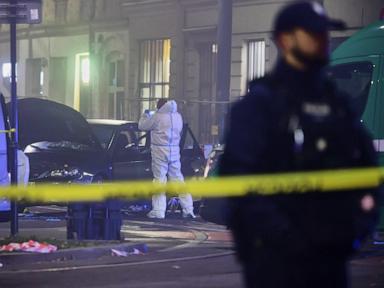
When a long-distance passenger bus overturns on a Croatian highway, killing at least two people and injuring scores more, the official script rarely changes. Emergency crews cut through twisted aluminum in the pre-dawn dark, local prosecutors open an investigation into driver fatigue or excessive speed, and transport ministers offer routine condolences. Yet these recurring tragedies along Southeastern Europe's transit corridors are not isolated strokes of bad luck. They are the predictable outcome of a fragmented regulatory system, brutal cross-border driving schedules, and basic physics that turn high-sided coaches into lethal traps the moment a wheel leaves the asphalt.
Croatia sits at the geographic crossroads of European summer migration and commercial transit. Every year, millions of travelers move along the A1, A3, and A4 motorways connecting Central Europe to the Adriatic coast and the Balkans. The asphalt itself is largely modern, built with heavy European Union infrastructure funding over the past two decades. The danger lies not in the concrete, but in the operational reality of the commercial coaches roaring down it at 100 kilometers per hour.
The Physics of a Top-Heavy Rollover
To understand why a highway bus crash produces such catastrophic casualty numbers compared to a standard passenger car collision, you have to look at basic vehicle dynamics. A modern intercity motorcoach is essentially a towering metal box balanced on a relatively narrow wheelbase. Luggage compartments sit beneath the passenger deck, while thirty to sixty human beings sit elevated three meters above the pavement.
That geometry creates a notoriously high center of gravity. On a straight, dry highway, air suspension systems and electronic stability controls keep the vehicle planted. The trouble begins the instant a driver overcorrects.
Consider a hypothetical scenario common on overnight runs. A driver drifts slightly toward the right shoulder at 3:45 AM. Startled awake, they yank the steering wheel hard to the left, then immediately jerk it back to the right to stay in their lane. That violent pendulum motion generates massive lateral force. Once the coach's tires hit the soft gravel verge or clip a low guardrail, the sheer mass of the upper cabin acts like a lever, flipping the entire chassis onto its side or roof.
When a 15-ton coach rolls, the structural integrity of the roof pillars determines who lives and who dies. European safety standards, specifically UNECE Regulation 66, require bus superstructures to maintain a designated "survival space" during a rollover test. However, regulatory compliance on a factory floor does not account for the kinetic chaos of a high-speed highway slide, where guardrails slice through side windows and unrestrained passengers become projectiles.
The Seatbelt Illusion
Walk onto almost any long-distance bus departing from Zagreb, Vienna, Warsaw, or Belgrade, and you will see three-point or two-point seatbelts installed at every seat. European Union law has mandated their installation on new coaches for years, and passengers are legally required to wear them.
In practice, enforcement is nonexistent.
Unlike commercial aviation, where cabin crew physically verify every buckle before takeoff, a bus driver sits behind a partition focused on the road and ticketing manifests. Once the coach hits the highway, passengers unclip their belts to sleep across double seats, reach into overhead racks, or walk to the cramped stairwell restroom.
During a rollover, an unbuckled passenger sitting on the upper side of the tilting cabin falls straight across the aisle, crashing into the person seated by the opposite window before slamming against the interior roof. Trauma surgeons treating survivors of Croatian and Balkan coach crashes consistently report the same pattern of injuries: crushed chests, severe cervical spine fractures, and blunt-force head trauma caused not by the exterior impact, but by fellow passengers flying through the cabin.
Drivers face a legal gray area. In several jurisdictions, a driver can be fined if a minor is caught unbuckled, yet no driver has the time or authority to police fifty adults during a ten-hour overnight haul. Until bus operators adopt automated seat-sensor alerts—technology that has been standard in basic economy cars for twenty years—the seatbelt mandate remains a paper tiger.
Cross-Border Exhaustion and the Tachograph Loophole
When investigators examine the wreckage of a fatal highway coach crash, the primary suspect is almost always driver fatigue.
European Union Regulation (EC) No 561/2006 sets strict limits on commercial driving hours. A driver cannot exceed nine hours of driving per day (extendable to ten hours twice a week) and must take a 45-minute break after four and a half hours behind the wheel. Every modern coach is equipped with a digital tachograph, a tamper-resistant device that records speed, distance, and driving intervals onto a smart card.
On paper, the system is airtight. On the road, operators find ways around it.
Cross-border routes passing through Croatia often involve transit between EU member states and non-EU neighbors like Bosnia and Herzegovina, Serbia, or Montenegro. Border crossings at peak travel times create massive bottlenecks. A bus can sit idling in a customs queue for four hours in the middle of the night.
Under tachograph rules, creeping forward ten meters every twenty minutes in a border queue does not always register as continuous driving time, yet it completely destroys a relief driver's ability to sleep. Even when two drivers are assigned to a long-haul route—a setup known as multi-manning—the resting driver is expected to sleep either in a cramped, vibrating bunk beneath the floor or upright in a front passenger seat while the coach bounces down the motorway.
The Economics of Cut-Rate Transit
Low-cost bus liberalization across Europe has driven ticket prices down to levels that squeeze operator margins to the bone. Travelers can book a 1,000-kilometer cross-border journey for the price of a modest dinner. That cheap fare comes with hidden operational compromises:
- Tight Turnaround Schedules: Coaches frequently arrive at a coastal depot in the morning, undergo a hasty forty-minute interior sweep, and depart on the return leg that same evening.
- Aging Secondary Fleets: While flagship routes run brand-new coaches with lane-departure warning systems and automated emergency braking, peak summer overflow is often handled by older vehicles leased from smaller subcontractors with inconsistent maintenance logs.
- Driver Shortages: Europe faces a chronic deficit of commercial bus drivers. Experienced operators are retiring faster than they can be replaced, forcing companies to rely on less seasoned drivers navigating unfamiliar mountain passes and coastal wind corridors.
Weather, Asphalt, and the Bura Wind
Geography compounds human error in Croatia. The country's highway network cuts through dramatic limestone karst terrain, plunging from high continental plateaus down to the Adriatic Sea through steep viaducts and long tunnels.
Along the coastal stretches of the A1 motorway, drivers face the Bura—a violent, unpredictable katabatic wind that blasts down from the Velebit mountains toward the sea. Gusts regularly exceed 150 kilometers per hour. Highway authorities routinely close sections of the motorway to double-decker buses and high-sided trucks when the Bura hits, diverting traffic onto winding coastal roads.
Yet sudden microbursts happen before highway sensors trigger a closure. A high-sided coach emerging from the shelter of a rock cut or a tunnel mouth into a crosswind experiences an immediate, violent lateral shove. If the driver is fatigued, distracted, or traveling slightly above the posted speed limit on rain-slicked limestone asphalt, recovery windows shrink to fractions of a second.
Limestone aggregate used in regional road construction also polishes faster under heavy summer traffic than granite-based asphalt. When the first summer rain mixes with accumulated tire rubber and diesel residue, the road surface turns greasy, drastically increasing braking distances for heavy vehicles.
Why Investigations Rarely Spark Systemic Change
Following a deadly rollover in Croatia, the immediate aftermath follows a predictable bureaucratic rhythm. Local police secure the scene. The state attorney's office orders mechanical inspections of the braking and steering systems. If the driver survives, they are often taken into custody on suspicion of causing a traffic accident resulting in death.
What rarely happens is an aggressive forensic audit of the parent company's scheduling algorithms, subcontractor chains, or cross-border labor practices.
When a commercial airliner crashes, aviation authorities ground entire fleets, issue airworthiness directives, and overhaul crew rest regulations across continents. When a bus overturns and kills passengers on a European highway, the legal blame almost always stops at the cab door. Prosecuting an individual driver for falling asleep at the wheel is straightforward. Dismantling a business model built on tight margins, overnight schedules, and unmonitored passenger cabins requires political will that transport ministries rarely muster once the headlines fade.
The Reality for Travelers
Until regulators mandate active cabin seatbelt sensors, enforce genuine off-vehicle rest periods for multi-driver crews, and hold parent transport companies criminally liable for unrealistic schedules, the risk remains squarely on the passenger.
Overnight bus travel across Europe remains statistically safer per kilometer than driving a private car, a fact industry lobbyists repeat after every disaster. That statistic offers zero comfort when a coach leaves the road at highway speed. For anyone boarding a long-distance bus, survival still comes down to two brutal variables: staying buckled in your seat every single minute the wheels are turning, and avoiding overnight schedules where a single tired human being stands between fifty sleeping passengers and a concrete guardrail.