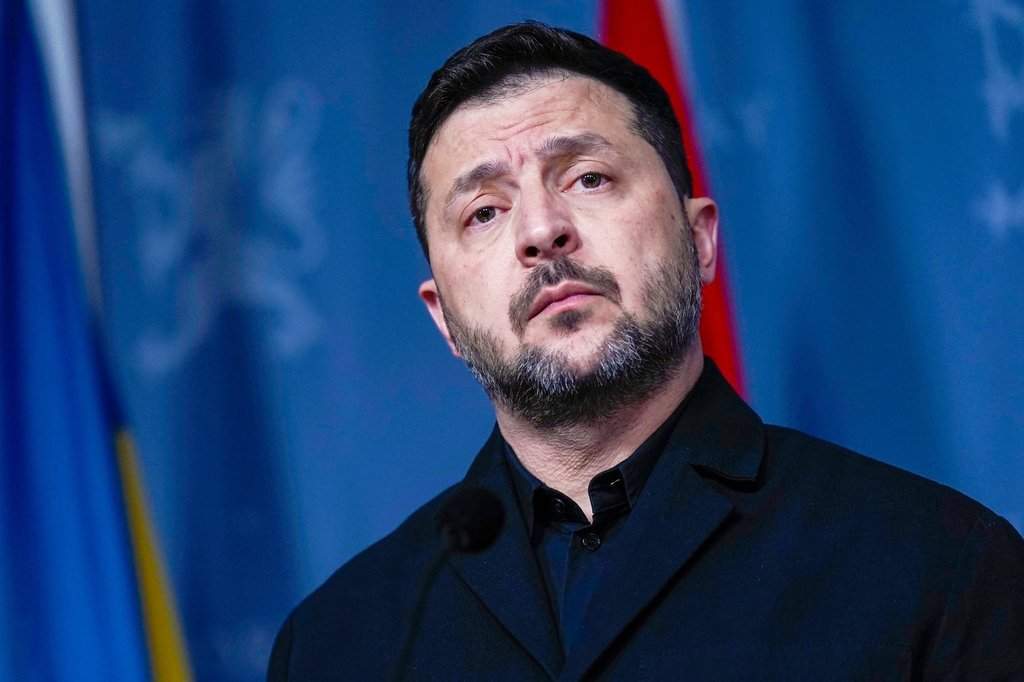
European leaders gathering in Dublin face an uncomfortable reality that diplomatic communiqués rarely capture. While heads of state debate collective security inside fortified conference rooms, hybrid threats—coordinated campaigns of cyberattacks, disinformation, infrastructure sabotage, and economic coercion—are actively eroding European sovereignty below the threshold of conventional warfare. Dublin is not merely a picturesque host city for another high-level summit. Ireland sits at the exact geographic and digital crossroads of Western security, possessing minimal hard military defenses while hosting the transatlantic subsea cables and corporate data centers that keep the European economy running.
The core tension of the Dublin summit comes down to a fundamental mismatch between legal definitions and modern conflict. For decades, European security architecture rested on a binary switch. Either a nation was at peace, governed by civil law and police powers, or it was at war, triggering military alliances and mutual defense clauses. Adversaries have spent the last decade exploiting the vast gray zone between those two states. For a different view, check out: this related article.
The Illusion of the Threshold
Modern statecraft relies heavily on red lines. Yet hybrid warfare is specifically designed to make red lines irrelevant. When an unidentified vessel drags its anchor across a fiber-optic cable on the seabed, or when a state-backed hacking group disrupts a regional hospital network, no tanks cross a border. No missiles enter sovereign airspace.
Military alliances like NATO and institutional frameworks within the European Union struggle to respond because the trigger for collective action remains elusive. Invoking mutual defense clauses over a disrupted power grid or an election interference campaign carries the risk of disproportionate escalation. Adversaries know this. They calibrate every operation to stay just painful enough to destabilize domestic politics, yet just ambiguous enough to paralyze unified retaliation. Related analysis on this matter has been provided by BBC News.
Attribution remains the primary bottleneck. Even when intelligence agencies trace a cyber intrusion or a maritime anomaly back to a hostile capital, proving culpability in a court of public opinion—or to a skeptical coalition of twenty-seven member states—takes months. By the time forensic certainty is achieved, the news cycle has moved on, the political damage is done, and the adversary has already pivoted to a new vector.
Why Deterrence Fails in the Gray Zone
Traditional deterrence works through the threat of overwhelming punishment or the certainty of denial. Neither functions smoothly against asymmetric disruption.
- Deterrence by punishment requires a credible threat of retaliation. If European nations refuse to strike back symmetrically against foreign infrastructure or political systems out of adherence to international law, the adversary faces zero real cost for probing defenses.
- Deterrence by denial requires hardening every potential target. In open, interconnected democracies, the attack surface is effectively infinite. Securing every municipal water plant, railway switch, undersea pipeline, and social media algorithm requires capital and regulatory coordination that no European budget currently supports.
Why Dublin Matters More Than the Communiqué
Choosing Dublin as the backdrop for discussions on European resilience highlights a glaring structural vulnerability within the continent's defense posture. Ireland maintains a longstanding policy of military neutrality, operates outside NATO, and spends a fraction of the European average on defense. For years, this posture worked because geography insulated the island from conventional land invasions.
Geography no longer offers protection. Roughly three-quarters of all transatlantic subsea cables pass through or near Irish waters. These glass fibers carry trillions of dollars in daily financial transactions, sensitive diplomatic communications, and the cloud infrastructure of major American technology firms headquartered in Dublin.
Naval patrols in the Irish Sea and the North Atlantic have repeatedly observed foreign research vessels loitering directly over critical seabed arteries. Ireland lacks the naval sonar capabilities, maritime patrol aircraft, and deep-sea intervention vessels required to monitor or protect the infrastructure lying off its own coast. Consequently, Europe's digital nervous system depends on a regulatory and geographic hub that relies on neighbors for basic maritime surveillance.
The irony is thick. Leaders travel to Dublin to discuss securing Europe against unconventional attacks while relying on infrastructure protected by treaties and naval assets that the host nation formally declines to join.
Anatomy of an Unconventional Campaign
To understand what keeps European interior ministers awake at night, look at how hybrid operations actually unfold. They rarely happen as isolated incidents. Instead, they operate as synchronized pressure campaigns designed to exhaust state capacity and fracture public trust.
Consider a hypothetical scenario illustrating how these vectors converge during a winter energy crunch. First, coordinated bot networks amplify genuine local grievances regarding inflation and utility costs across regional social media channels. Simultaneously, a distributed denial-of-service attack knocks out government energy subsidy portals, creating administrative chaos and long queues at local offices. Days later, an unexplained electrical fire disables a key rail junction moving liquefied natural gas terminals inland. None of these events individually warrants a military response. Together, they manufacture a domestic political crisis, force emergency budget reallocations, and erode voter confidence in incumbent leadership just months before a parliamentary election.
This operational model exploits the institutional silos built into Western democracies.
| Target Domain | Primary Vulnerability | Institutional Blind Spot |
|---|---|---|
| Subsea Infrastructure | Unmonitored international waters and shallow continental shelves | Split jurisdiction between private telecom operators, coast guards, and navies |
| Information Space | Algorithmic amplification of outrage and low media literacy | Free speech protections limit state intervention against foreign state media proxies |
| Critical Energy Grids | Legacy industrial control systems connected to corporate IT networks | Private utility companies prioritize uptime over expensive cybersecurity retrofits |
| Supply Chains | Single-source dependencies for rare earths, pharmaceuticals, and electronics | Trade ministries favor efficiency and low cost over national security redundancy |
Intelligence services see the connections across these domains, yet legal frameworks prevent seamless data sharing between domestic police, foreign intelligence, private infrastructure owners, and military commands. While European bureaucrats debate privacy regulations and cross-border jurisdiction, hostile actors treat the entire continent as a single, unified battlespace.
The Private Sector Frontline
A massive flaw in European crisis planning lies in ownership. Governments do not own the battleground. Private corporations own the undersea cables, operate the telecommunications networks, manage the electrical grids, and run the financial clearinghouses.
When a telecom giant detects anomalous traffic or physical tampering on a subsea line, its first instinct is rarely to call a defense ministry. Its first instinct is to protect shareholder value, avoid regulatory fines, and prevent customer panic. Corporations routinely conceal minor breaches or handle repairs quietly through private contractors rather than exposing vulnerabilities to state intelligence agencies.
Governments, meanwhile, lack the statutory authority to compel real-time threat intelligence sharing across every critical sector without triggering lengthy legal challenges. Public-private partnerships sound reassuring on summit panels in Dublin, yet in practice, they often amount to voluntary working groups with no binding enforcement mechanisms.
The Regulatory Trap
Europe excels at regulation. From data privacy to artificial intelligence governance, Brussels sets global standards through dense legislative frameworks. Yet legislation moves at the speed of committee consensus, while hybrid threats evolve in days.
New directives aimed at hardening critical infrastructure frequently impose heavy compliance checklists on domestic businesses without providing the financial subsidies or technical personnel needed to implement them. Small and medium-sized suppliers—often the weakest link in defense and energy supply chains—simply cannot afford dedicated threat-hunting teams. Compliance becomes a paperwork exercise rather than a genuine defensive upgrade.
The Domestic Fracture
External adversaries cannot create divisions out of thin air. They act as accelerants on existing political fuel. Economic stagnation, immigration pressures, energy transitions, and regional inequalities provide fertile ground for external manipulation.
When European leaders blame foreign interference for every populist surge or street protest, they risk alienating citizens who hold legitimate grievances. Over-attributing domestic discontent to foreign hybrid operations hands adversaries a cheap propaganda victory, making hostile intelligence agencies appear far more omnipotent than they actually are.
Countering information warfare requires domestic political health, not just censorship or fact-checking units. A population that trusts its institutions and sees tangible economic competence is remarkably resistant to external manipulation. Conversely, a population struggling with high living costs and perceived elite indifference will readily consume narratives that blame their government, regardless of where those narratives originate.
The Hard Choices Ahead
Moving beyond rhetorical solidarity in Dublin demands structural shifts that carry genuine political and financial pain. European capitals must confront three realities if they intend to close the gray zone gap.
First, civil-military fusion can no longer remain a taboo phrase in Western democracies. Protecting dual-use infrastructure requires integrating military intelligence, naval surveillance, and cyber defense commands directly with civilian regulators and private utility operators. Neutrality policies and strict separations between domestic policing and national defense must adapt to an era where the home front is the primary front.
Second, Europe needs an active defense posture in cyberspace and maritime domains. Passive resilience—simply absorbing blows and repairing damage faster—is a losing strategy of attrition. Credible deterrence requires demonstrating the capability and political will to impose swift, visible costs on aggressors, whether through targeted sanctions, asset seizures, covert cyber disruption, or diplomatic expulsions.
Third, critical infrastructure protection requires massive public capital expenditure. Leaving the security of transatlantic cables, power transformers, and satellite constellations to market forces guarantees underinvestment. Governments must treat physical and digital redundancy with the same urgency once reserved for concrete bunkers and armored divisions.
The summit in Dublin will inevitably produce declarations of unity, pledges of deeper cooperation, and commitments to shared intelligence. Words, however, do not patrol the seabed, patch zero-day vulnerabilities, or insulate vulnerable power grids from sabotage. Until European capitals accept that peace and war are no longer distinct eras, the continent will remain locked in a conflict it refuses to officially declare.