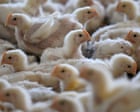
Denmark is pushing the European Union to outlaw fast-growing broiler breeds—widely known across Europe as turbo chickens—after covertly filmed footage from inside Danish poultry sheds triggered national outrage and exposed the brutal biology behind cheap supermarket meat. Led by Denmark’s food and agriculture ministry alongside animal welfare coalitions, the push aims to dismantle a decades-old industrial breeding model that forces birds to reach slaughter weight in roughly five weeks. That single genetic shortcut drives the vast majority of Europe's poultry supply, yet it is colliding head-on with tightening EU animal welfare politics, retail pledges, and cold economic math.
Most shoppers rarely think about the genetics sitting inside a plastic-wrapped tray of chicken breasts. They notice the price tag. For forty years, primary breeding companies have engineered commercial broilers—most famously breeds like the Ross 308 and Cobb 500—to convert grain into breast muscle at astonishing speed. A bird hatched in the 1950s needed roughly three months to hit market weight. Today, a modern commercial broiler reaches two to two-and-a-half kilograms in just 35 to 42 days.
The numbers look brilliant on a spreadsheet. Less time in the barn means lower feed costs, faster flock turnover, and thinner carbon footprints per kilogram of meat. Out on the concrete floor of a commercial poultry house, however, the biology tells a much uglier story.
What Secret Footage Exposed Inside Modern Barns
Undercover investigations inside intensive poultry operations rarely show anything new to veterans of the meat industry, yet they remain devastating when broadcast on evening news. In Denmark, activists from the animal protection group Anima released hidden-camera recordings gathered from conventional broiler farms supplying major domestic and export channels.
The footage documented what happens when a juvenile skeleton is forced to carry an adult body. Birds collapsed under their own chest weight, unable to reach water lines or feeders. Many suffered from hock burns and footpad dermatitis, painful chemical ulcerations caused by sitting for hours in damp, ammonia-heavy litter because standing simply hurts too much. Others displayed the classic signs of cardiopulmonary failure—gasping for air, flipping onto their backs, and dying of sudden heart attacks because their internal organs could not keep pace with muscle accretion.
Public reaction in Denmark was swift, partly because Danish consumers have long been conditioned to view their agricultural sector as a global gold standard for welfare and hygiene. Seeing crippled birds struggling across crowded barns shattered that illusion overnight. Politicians quickly realized that domestic tweaks would not solve the problem.
The Single-Market Trap
Denmark cannot simply ban fast-growing breeds inside its own borders without wrecking its domestic farmers. Under European Union single-market rules, outlawing a specific production method at home does not allow a member state to block imports produced under that exact same method from Poland, Germany, or the Netherlands.
If Copenhagen acts alone, Danish poultry producers face higher feed and housing costs while discount supermarkets simply import cheaper turbo chicken from neighboring countries. Danish barns close, local jobs vanish, and the total number of suffering birds across Europe stays virtually unchanged. That structural reality explains why Denmark's government has taken the fight to Brussels, demanding a bloc-wide phase-out rather than a unilateral ban.
The Hidden Genetics of the Modern Broiler
To understand why turbo chickens dominate global plates, you have to look far upstream from the farm. The global poultry industry rests on an hourglass structure. Millions of farmers raise billions of chickens, yet almost all commercial genetics come from just two multinational corporate groups—Aviagen, owned by the German EW Group, and Cobb-Vantress, a subsidiary of Tyson Foods.
These companies run sophisticated genetic selection programs that have turned the domestic chicken into the most efficient land-based protein machine in human history. Over decades, geneticists selected parent lines for three primary traits:
- Feed conversion ratio (FCR): How little grain is required to produce a single kilogram of live weight.
- Breast yield: Maximizing the white meat prized by Western consumers over dark leg meat.
- Growth velocity: Shrinking the grow-out window so barns can cycle seven or eight flocks per year instead of five.
Efficiency is seductive. From an environmental standpoint, fast-growing chickens require significantly less cropland, water, and fertilizer per ton of meat than slower-growing breeds, cattle, or pigs. When climate policymakers look at agricultural emissions, conventional poultry looks like a triumph of resource optimization.
Yet biology always collects its tax. Selective breeding pushed growth rates to the absolute ceiling of avian physiology. A five-week-old broiler is still biologically a chick—its bones are soft, cartilaginous, and poorly mineralized, while its heart and lungs remain proportionally small. Piling massive pectoral muscles onto that immature frame creates chronic lameness, skeletal deformities, and high mortality rates that farms simply bake into their operating margins as normal shrinkage.
Why Slower Breeds Cost More Than Consumers Think
Switching from turbo chickens to slower-growing genetics—the core demand of the European Chicken Commitment (ECC) backed by major NGOs—sounds straightforward on paper. Replace Ross 308 birds with breeds like Hubbard Redbro or Ranger Classic, give them roughly 49 to 56 days to grow, lower stocking densities so birds have room to move, and add natural light and pecking enrichments.
On the balance sheet, every single one of those changes compounds costs.
| Production Factor | Conventional Turbo Chicken | Slower-Growing Breed (ECC Standard) |
|---|---|---|
| Grow-out period | 35–42 days | 49–56+ days |
| Stocking density | Up to 39–42 kg/m² | Max 30 kg/m² |
| Feed conversion | ~1.5–1.6 kg feed per kg gain | ~1.8–2.0 kg feed per kg gain |
| Flock cycles per year | 7.0–7.5 cycles | 5.0–5.5 cycles |
| Retail price impact | Baseline budget tier | ~25% to 45% higher at checkout |
A bird that lives two weeks longer eats substantially more grain just to maintain its body temperature and basic metabolism before adding a single gram of sellable meat. Lowering stocking densities by roughly a quarter means a farmer produces far less meat per square meter of heated, ventilated barn space.
Take a hypothetical mid-sized broiler operation running four barns in Jutland or Lower Saxony. Under conventional standards, that farm turns over seven flocks a year at high density, spreading mortgage payments, heating bills, and labor across maximum tonnage. Switching to slower-growing breeds instantly slashes annual output by 25 to 30 percent unless the farmer builds new barns—a capital investment few banks will finance without ironclad, multi-year retail contracts.
The Carcass Balance Problem
There is another commercial headache that rarely makes headlines. European shoppers overwhelmingly buy boneless, skinless chicken breast, while legs, wings, and backs are sold at steep discounts or exported to markets in Asia and Africa.
Turbo chickens were specifically sculpted to carry absurdly oversized breasts. Slower-growing breeds have a more natural, balanced anatomy—meaning higher welfare for the bird, but a lower percentage of high-margin white meat per carcass. Processors suddenly find themselves with more dark meat to move and less breast fillet to sell to domestic grocers, squeezing margins across the entire supply chain.
Supermarkets Pledge Welfare While Shoppers Buy Cheap
Denmark actually serves as a living laboratory for how messy this transition gets in the real world. Several major Danish retail chains—including Coop Danmark, Salling Group, and Rema 1000—previously announced plans to phase out fresh turbo chicken from their own-label shelves, and a growing share of Danish fresh poultry has shifted toward slower-growing lines.
Still, look closely at where the rest of the meat goes. Fresh supermarket fillets represent only part of the market. Frozen chicken nuggets, sandwich fillings, ready meals, catering supplies, hospital food, and fast-food menus continue to rely heavily on conventional fast-growing birds—often imported from countries with far looser oversight.
Even inside supermarkets, inflation tested consumer ideals. When European food prices surged over the past several years, shoppers who told pollsters they cared deeply about animal welfare reached straight for the cheapest yellow-stickered poultry on the shelf. Retailers quietly stretched timelines, carved out exceptions for processed foods, and leaned on supplier rebates to keep entry-level chicken affordable.
Poultry processors caught in the middle have grown cynical. They watch corporate sustainability teams sign high-minded welfare pledges in press releases while retail procurement buyers squeeze suppliers over two cents per kilogram behind closed doors.
Brussels Caught Between Farm Protests and Animal Welfare
Denmark's push arrives at a precarious political moment in Brussels. In 2020, the European Commission promised a sweeping overhaul of EU animal welfare legislation under its Farm to Fork strategy—a package expected to tackle caged farming, transport rules, and broiler breeding standards.
Then reality hit. Rising energy prices, fertilizer shocks, war in Ukraine, and massive tractor protests across France, Germany, Poland, and Belgium forced EU leaders onto the defensive. Fearing rural backlash ahead of elections and worried about food inflation, the Commission shelved almost the entire animal welfare package, moving forward only with narrower rules on animal transport.
That retreat left animal welfare rules for broiler chickens stuck under Council Directive 2007/43/EC—a nearly twenty-year-old law that sets loose limits on stocking density based on barn ventilation and mortality monitoring, while saying almost nothing about genetic growth rates.
The East-West Divide in European Poultry
Getting all 27 EU member states to outlaw turbo chickens requires navigating fierce regional economics. Poland has become the powerhouse of European poultry production, exporting massive volumes of low-cost chicken meat across Western Europe. Poultry sectors in Poland, Hungary, and Romania built their competitive edge on modern, high-throughput barns running fast-growing genetics.
For Warsaw or Budapest, a Brussels mandate banning turbo chickens looks less like an ethical awakening and more like Western European protectionism designed to erase Eastern Europe's cost advantage. Northern and Western nations—including Denmark, the Netherlands, Germany, and Sweden—face intense domestic voter pressure to clean up factory farming, yet their own farmers refuse to be regulated out of business while cheaper imports flood across open borders.
Meanwhile, trade policy creates a glaring blind spot. Even if the EU banned fast-growing breeds across all 27 member states tomorrow, European trade negotiators routinely sign import quotas allowing poultry meat from Brazil, Thailand, and Ukraine into the bloc—countries where turbo chickens remain the undisputed industry standard.
What Happens If the Turbo Chicken Era Ends
The debate over turbo chickens exposes a fundamental dishonesty at the heart of modern food politics. Society demands meat that is cheap enough to eat twice a day, environmentally light enough to meet climate targets, profitable enough to keep family farms solvent, and humane enough not to turn stomachs on the evening news.
You cannot have all four at once.
Genetic companies insist they are already breeding healthier birds, pointing to updated selection indexes that weight leg strength, cardiovascular health, and lower mortality alongside growth rates. Those incremental tweaks have reduced some acute skeletal defects compared to twenty years ago, yet they do not change the basic math of hitting slaughter weight in five weeks. A slightly sturdier turbo chicken is still an organism pushed to its physiological redline from the day it hatches.
Denmark’s campaign in Brussels forces European lawmakers to confront a choice they have spent years dodging: either accept higher meat prices, lower consumption, and stricter import mirror clauses to pay for slower-growing genetics, or admit openly that cheap supermarket chicken is built on engineered biological suffering.