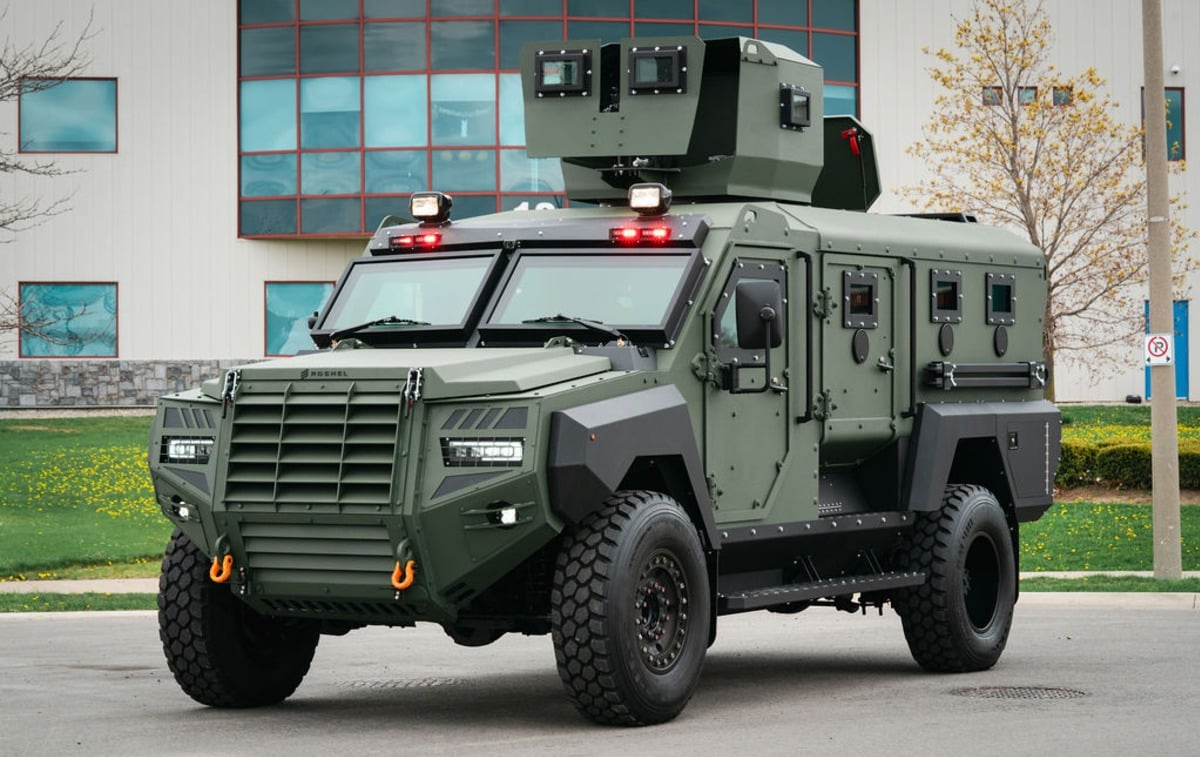
Moldova has finalized a 50 million euro contract to acquire more than 100 armored vehicles from Canadian manufacturer Roshel, a move that quietly shifts the security equilibrium on the edge of the Ukrainian war zone. Financed through a non-refundable grant from the European Union's European Peace Facility, the deal was brokered and signed by the Estonian Centre for Defence Investments on behalf of Chisinau. Deliveries of these tactical platforms are scheduled to finish by May 2027. This represents the single largest modernization effort for Moldova’s National Army since the collapse of the Soviet Union.
To understand why a country with a constitutionally mandated policy of neutrality is importing a massive fleet of Western-designed tactical vehicles, one must look past the official press releases. For three decades, Moldova treated its military as an afterthought, consistently spending less than half a percent of its gross domestic product on defense. The war across its eastern border changed that math overnight.
The Neutrality Loophole
Western diplomats and Moldovan officials frequently repeat a specific phrase when discussing this deal. They call the equipment non-lethal. Under the rules of the European Peace Facility, the funds cannot buy offensive weaponry for neutral states.
The Roshel Senator vehicles arriving in Chisinau will not carry integrated anti-tank missiles or heavy autocannons when they roll off the transport ships. Instead, they provide ballistic protection up to NATO standards and mine-resistant hulls designed to survive improvised explosive devices.
Calling an armored personnel carrier non-lethal is a bureaucratic technicality. In practical military terms, an infantry unit that can move at 100 kilometers per hour inside an armored capsule possesses vastly superior combat readiness compared to an army riding in unarmored, Soviet-legacy transport trucks. The European Union is essentially building the structural framework of a modern infantry force for Moldova, leaving open the possibility that Chisinau can install its own weapon systems later.
Why Estonia Handled the Paperwork
The involvement of Estonia as the purchasing agent reveals the intricate administrative work required to arm Eastern Europe. Moldova lacks the procurement infrastructure, the legal framework, and the institutional experience to manage a rapid 50 million euro international defense contract without triggering domestic corruption investigations or lengthy bureaucratic delays.
Tallinn stepped in to serve as the middleman. The Estonian Centre for Defence Investments has spent the last four years managing massive weapons transfers and purchasing programs for its own military and for Ukraine. By routing the money through Estonia, the European Union bypassed Moldovan red tape and ensured strict financial oversight.
The Rapid Rise of Roshel
The choice of manufacturer highlights a significant shift in global defense production. Ten years ago, a European nation looking for armored cars would likely turn to established defense conglomerates in France, Germany, or the United States. Today, Ontario-based Roshel is winning these contracts because of raw manufacturing speed.
The company scaled up production by building its platforms on heavy-duty commercial truck chassis, specifically the Ford F-550. This strategy avoids the multi-year manufacturing backlogs that plague traditional defense contractors who build military vehicles from scratch. Roshel can build over a hundred vehicles a month because its supply chain relies on commercial automotive components that are readily available.
This model has drawbacks. Commercial parts mean the vehicles require specialized logistics networks for long-term maintenance, and they lack the deep cross-country mobility of tracked or bespoke military platforms. But for a nation facing an immediate security threat on its borders, speed of delivery outweighs textbook military ideals.
Geopolitical Friction in Transnistria
The arrival of these vehicles will cause immediate friction in Tiraspol, the capital of Moldova’s breakaway region of Transnistria. Roughly 1,500 Russian troops remain stationed in the unrecognised enclave, guarding a massive Soviet-era ammunition depot at Cobasna.
For thirty years, the military balance of power favored the breakaway region, which maintained a more active and better-equipped force than Chisinau. A fleet of more than 100 modern armored vehicles completely erases that tactical advantage. While Moldovan Defense Minister Anatolie Nosatii maintains that the fleet is purely for national resilience and border security, Moscow will inevitably view the procurement as an aggressive move to encircle Transnistria.
The long-term challenge for Moldova is not buying the fleet, but keeping it running. The European Union grant covers the initial acquisition, but the domestic defense budget will have to absorb the ongoing costs of fuel, specialized tires, and spare parts for Western engines. If Chisinau cannot sustain these costs, the vehicles will eventually sit idle in motor pools, turning a hard-hitting geopolitical statement into an expensive maintenance liability.
Watch this Moldova police vehicle delivery video to see how earlier iterations of these Canadian armored platforms were integrated into Moldovan security units.


