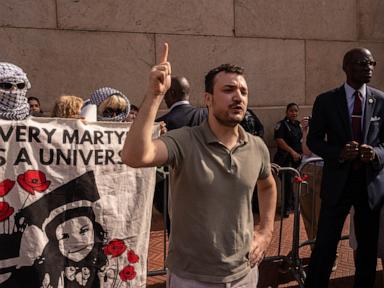
Mahmoud Khalil has petitioned the United States Supreme Court to clear the legal path for a civil lawsuit against the Trump administration over alleged First Amendment retaliation tied to his campus activism and immigration enforcement. Stripped down to its essentials, the dispute tests whether noncitizens and political protesters can hold federal officials personally or institutionally accountable in court when speech and immigration authority collide.
I have spent decades covering courtroom clashes where constitutional rights meet executive power. Usually, reporters treat Supreme Court petitions as dry procedural squabbles over jurisdiction, standing, or statutory bars. That is a mistake. Procedural doors decide whether a constitutional promise has teeth or exists only on paper. Also making news in this space: Uncrewed Casualty Evacuation Economics and Tactical Tradeoffs.
When an activist or student becomes the target of aggressive federal enforcement, the first casualty is rarely the headline. It is the ability to speak without calculating the legal cost months later. A lawsuit seeking damages or declaratory relief is not merely backward-looking payback. It is a deterrent against future abuse, or an invitation to repeat it if the courthouse gates stay locked.
Why Free Speech Claims Hit a Wall in Court
Most people assume that if the government punishes protected speech, the victim can simply sue and let a jury sort out the facts. Reality in federal court is far messier. Sovereign immunity, qualified immunity, statutory channeling rules, and national security or immigration carve-outs often stop a case before discovery even begins. Additional information on this are detailed by Al Jazeera.
Plaintiffs face a steep uphill climb even when the underlying political conduct looks textbook-protected. Courts routinely separate the question of whether speech was constitutionally protected from the question of whether a specific remedy is legally available. A right without a viable civil remedy can feel hollow to the person who paid the price.
Consider a hypothetical example to see how this plays out in practice. Suppose a graduate student speaks at a rally critical of federal foreign policy, and weeks later federal agents initiate harsh enforcement steps against them. Even if the student believes the action was retaliatory, government lawyers will argue that discretionary enforcement decisions are shielded from judicial second-guessing, or that specialized statutory review schemes foreclose ordinary civil suits.
That tension sits right at the heart of the Mahmoud Khalil Supreme Court appeal. Rather than asking the justices to resolve every factual dispute on day one, a petition of this kind forces a threshold question about access to court and the scope of executive immunity when free speech claims are raised.
The Gap Between Constitutional Text and Civil Remedies
The First Amendment states plainly that Congress shall make no law abridging freedom of speech. Yet constitutional text rarely comes with a built-in damages mechanism against federal actors. Over the past several decades, the Supreme Court has grown increasingly reluctant to imply new damages actions where Congress has not explicitly created them.
At the same time, statutory frameworks governing immigration and federal employment or agency action often channel disputes into narrow administrative tracks. Critics of those restrictions argue they create a remedy gap. If a political target cannot seek meaningful judicial review or civil accountability, officials may face little financial or legal friction when targeting unpopular speakers.
Supporters of strict limits counter that exposing executive branch officers to personal suits or broad discovery would chill routine enforcement. They warn that activists could weaponize civil litigation to slow down lawful government operations or force sensitive internal deliberations into public view. Both arguments point to real institutional trade-offs, which is why these cases rarely produce easy consensus.
Executive Power Meets Campus Dissent
Campus protests have long been a pressure cooker for American politics, from Vietnam-era demonstrations to modern clashes over foreign conflicts and university governance. When political rhetoric heats up, administrations of either party face intense pressure to project order and toughness. Under the Trump administration, enforcement rhetoric around campus unrest and immigration has been notably sharp, putting political speech and immigration enforcement on a collision course.
Observers often frame these disputes strictly as left versus right. Having watched administrations across the political spectrum handle dissent, I see a deeper structural pattern. Executives routinely reach for existing statutory tools—visa rules, removal authorities, federal funding levers, or investigative referrals—when confronting disruptive or polarizing movements.
The controversy becomes especially acute when the person involved is not a tenured professor or a lifelong citizen, but someone navigating status, residency, or political scrutiny under federal authority. Legal scholars debate how far First Amendment protections reach in enforcement contexts, and how much deference courts owe to the executive branch when national security, border control, or public order is invoked.
Selective Enforcement and the Chilling Effect
One of the hardest things to prove in court is selective enforcement. Government officials rarely write a memo saying they targeted someone solely because of a disfavored viewpoint. Instead, they point to neutral rules, procedural violations, or broader policy priorities.
Yet in the real world, people pay attention to patterns. If activists see a prominent figure hit with severe consequences after high-profile speech, others may self-censor. A chilling effect does not require every protester to be arrested or sued. It only requires enough uncertainty that people lower their voices, skip a march, or avoid signing a statement.
To understand why this matters beyond a single headline, look at how movement organizing works. Political movements rely on visible speakers and organizers who absorb risk on behalf of quieter participants. When the perceived cost of speaking spikes, participation shrinks, especially among students, international visitors, or early-career organizers who have more to lose.
What the Supreme Court Actually Decides at This Stage
A Supreme Court appeal does not automatically mean the justices will hear full oral arguments or issue a sweeping merits ruling on free speech. Every term, the Court receives thousands of petitions and grants review in only a small fraction. Getting past that gate requires showing either a circuit split, an unsettled question of major national importance, or a clear departure from established precedent.
Even when the Court takes a case, the questions presented are often narrow. The justices might focus on a specific jurisdictional bar, a pleading standard, or how prior immunity precedents apply to a particular claim. A ruling on a threshold issue can still be monumental because it determines whether the lawsuit survives to the evidence-gathering stage.
Discovery is where hard truths usually surface. Emails, text messages, internal policy guidance, and decision timelines can either corroborate a retaliation claim or show legitimate, non-retaliatory reasons for government action. Without surviving early dismissal motions, a plaintiff never gets that look under the hood.
Why Precedent Cuts Both Ways
Legal commentators love to predict how a bench will rule based on ideological labels, yet judicial precedent in immunity and access-to-court cases resists neat boxes. Some conservative jurists have expressed skepticism toward expansive judge-made immunities or have scrutinized how administrative power is exercised. Meanwhile, liberal jurists often favor broader avenues for constitutional accountability while sometimes differing on specific statutory limits.
The Supreme Court also weighs institutional consequences over long horizons. A rule that makes it easier to sue federal officials over politically charged actions could invite a wave of retaliatory litigation whenever power changes hands. Conversely, a rule that forecloses review almost entirely risks leaving constitutional boundaries unenforced in high-stakes settings.
That balance is why seasoned litigators treat Supreme Court petitions with measured realism. A win at the cert stage is a hurdle cleared, not a finish line crossed. A denial of review leaves lower-court rulings intact without necessarily validating every rationale behind them.
The Broader Stakes for Dissent and Accountability
Zooming out from the courtroom docket, this clash highlights a fundamental question about democratic resilience. How much friction should exist when the government uses coercive power against vocal critics? In a healthy constitutional system, disagreements over policy are supposed to be settled through argument, elections, and law—not by intimidating opponents or insulating officials from basic legal checks.
At the same time, governance requires real authority. Agencies must enforce laws consistently, and courts cannot turn every policy dispute into a sprawling civil trial. Pretending the line between lawful enforcement and unlawful retaliation is always bright does a disservice to anyone trying to understand the law.
Gray areas abound in real life. Speech can overlap with conduct, campus rules can clash with protest tactics, and administrative procedures can move on tracks that look suspicious from the outside even when legally permissible. Honest reporting requires acknowledging those complexities rather than flattening every development into a cartoon.
Practical Takeaways for Watchers Following the Case
If you are tracking this litigation, ignore the loudest social media hot takes and watch the specific legal questions framed in the briefs. Pay attention to what threshold hurdles the lower courts relied on, and whether the government argues that the claim is barred before any factual record on intent is developed.
Watch also how lower courts handle similar First Amendment claims involving federal agencies across the country. Consistency—or the lack of it—across federal appellate circuits is often the strongest signal of whether the justices feel compelled to step in.
Ultimately, the fight around Mahmoud Khalil and his push to sue the Trump administration is a test of whether constitutional rights remain enforceable when politics turns personal and the stakes are highest. Keep your eyes on the courthouse doors, because whoever controls whether the case goes forward shapes the rules of political risk for everyone who speaks up next.