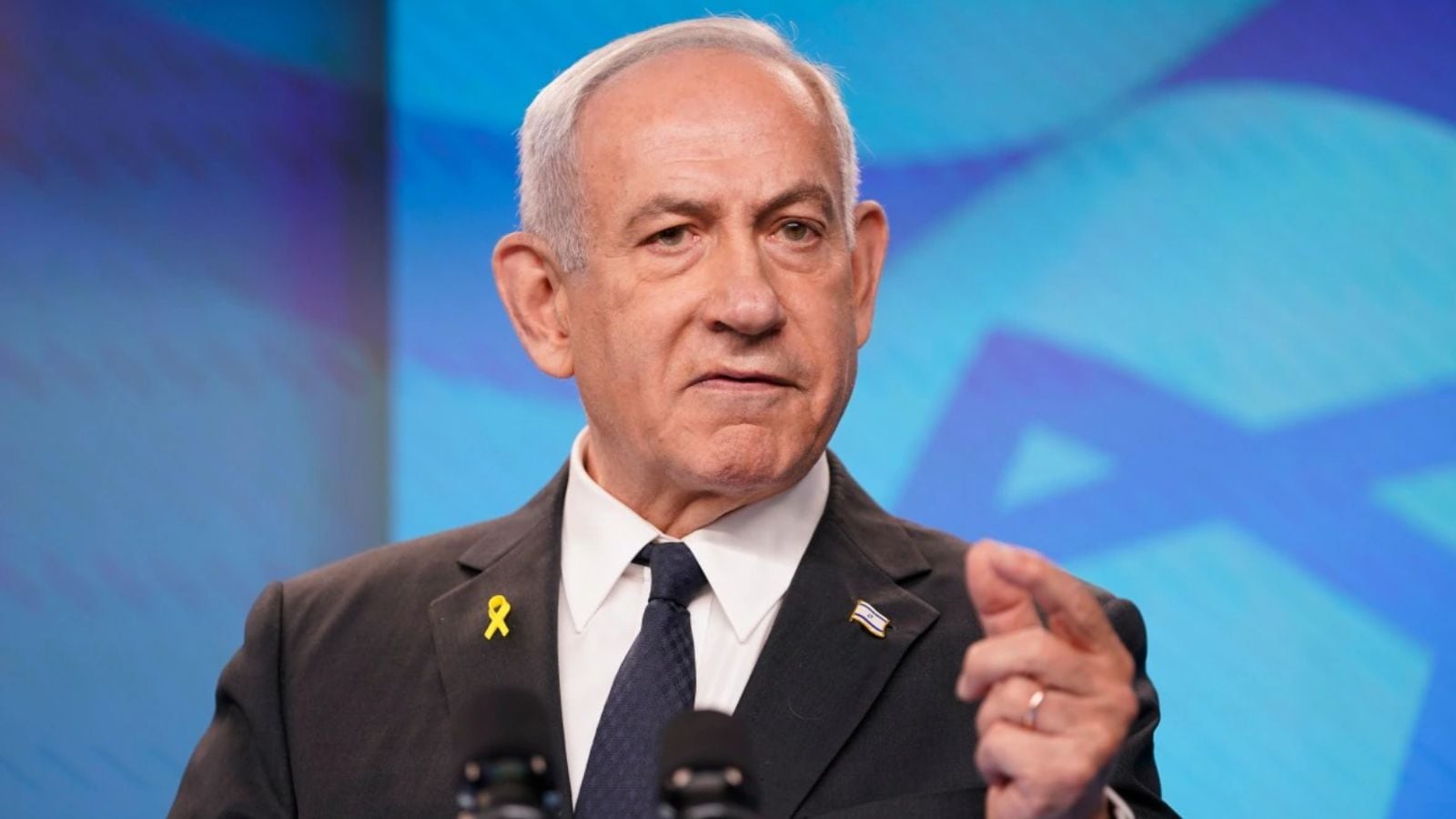
Israeli Prime Minister Benjamin Netanyahu has ordered the military to expand its control to 70 percent of the Gaza Strip, directly violating the terms of the US-brokered ceasefire agreement signed last October. Speaking at a leadership academy conference in an occupied West Bank settlement, Netanyahu confirmed that Israeli forces have already moved past agreed boundaries to occupy 60 percent of the territory, up from the initial 53 percent stipulated by the truce. This systematic expansion shatters the fragile peace framework, pushing nearly two million displaced Palestinians into an even smaller, unsustainable coastal pocket and threatening a total collapse of regional diplomacy.
The announcement exposes a stark reality. The ceasefire, engineered by Washington to transition into a permanent end to the war, is being hollowed out from the inside.
Moving the Yellow Line
To understand how the peace process unraveled, one must look at the physical mechanics of the October ceasefire. The agreement established a strict demarcation boundary known as the yellow line. Under these terms, Israeli troops were required to pull back and hold roughly 53 percent of the Gaza Strip, leaving the remaining areas under Palestinian administration while negotiators hammered out the details of Hamas disarmament and eventual Israeli military withdrawal.
The withdrawal never happened. Instead, the Israeli military began unilaterally moving the concrete blocks that mark the yellow line on the ground, carving deeper into territory reserved for the enclave's civilian population.
Satellite data and military maps provided to international aid organizations tracked this creeping expansion months ago. By March, internal military maps revealed a new orange line, establishing restricted buffer zones that swallowed 64 percent of the strip. Netanyahu’s public declaration of a 70 percent target merely formalizes a strategy that has been quietly executed on the ground for months.
Squeezing the Remnants
The tactical rationale offered by Israeli officials centers on maintaining military pressure. Netanyahu stated that the objective is to press Hamas from all sides to force compliance with the stalled second phase of the truce. The targeted killings of senior militant figures, including the recent assassination of Mohammed Odeh, the new head of Hamas’s armed wing, are framed by Tel Aviv as necessary surgical actions to dismantle the group's leadership.
The strategy relies on a compounding chokehold. By shrinking the physical space available to both civilians and the remaining insurgent factions, the Israeli defense establishment believes it can force a total capitulation.
However, this approach ignores the human topography of Gaza. Shifting the military line means forcing millions of people who have already fled multiple ground offensives into a minuscule fraction of an already devastated territory. The infrastructure in these remaining zones is virtually non-existent, turning the southern coast into a dense encampment vulnerable to disease, starvation, and ongoing crossfire.
The Disablement of American Leverage
Washington finds itself in a familiar, deeply compromising position. The Biden administration heavily invested its diplomatic capital into securing the October truce, framing it as the foundational architecture for long-term regional stability. Netanyahu’s open defiance of these boundaries reveals the limits of American leverage over Tel Aviv.
The breakdown follows a clear pattern of diplomatic inertia:
- Phase One Success: The initial phase successfully facilitated the exchange of the final hostages held by Hamas for detained Palestinians.
- Phase Two Stagnation: Progress froze completely when negotiations turned to the permanent disarmament of Hamas and the total withdrawal of Israeli forces.
- Unilateral Readjustment: Seizing on the political deadlock, Israel began expanding its footprint, banking on the calculation that Washington would not risk a public rupture by enforcing the original treaty boundaries.
The diplomatic cost is severe. By failing to hold its ally to the literal lines drawn in the agreement, the United States loses its status as a credible guarantor of future peace deals in the eyes of regional power brokers.
The Voluntary Migration Blueprint
While the official line from the Prime Minister’s office focuses on security buffers, other elements within the Israeli cabinet are far more explicit about the long-term objective of territorial expansion. Defense Minister Israel Katz recently alluded to plans that extend far beyond simple counter-terrorism operations, openly discussing the implementation of "voluntary migration" policies for Gaza’s population.
From an analytical standpoint, the expansion to 70 percent control functions as the structural mechanism to achieve that goal. When a territory is rendered physically uninhabitable and its population is systematically penned into unviable micro-zones, migration ceases to be voluntary in any meaningful sense. It becomes an inevitability driven by the absolute absence of alternatives.
This structural pressure explains why the hard-line audience at the West Bank conference interrupted Netanyahu's speech with chants of "100 percent." The Prime Minister did not reject the premise; he merely urged patience, advising them to take the territory in order.
The Threat of Endless Low-Intensity War
The fiction of the October ceasefire is laid bare by the casualty figures. Since the truce ostensibly took effect, more than 900 Palestinians have been killed in ongoing air strikes and skirmishes, alongside the losses of four Israeli soldiers. The conflict has not stopped; it has merely changed its operational rhythm from high-intensity maneuvering to a grinding war of attrition.
Hamas has used the ongoing territorial encroachment to justify its refusal to disarm, calling the moving of the yellow line an explicit attempt to impose new facts on the ground by force. This creates a perfect loop of escalation. Israel seizes territory to apply pressure, Hamas cites the land seizure to dug in its heels, and Israel uses that resistance to justify the next advance.
The immediate casualty of this strategy is the concept of a negotiated settlement. If international treaties can be redrawn via the unilateral relocation of concrete barriers on the ground, there is no structural incentive for any faction to return to the negotiating table. The expansion toward 70 percent control signals to the region that the conflict will not end with a signature on a document, but with the total physical dominance of the stronger power.