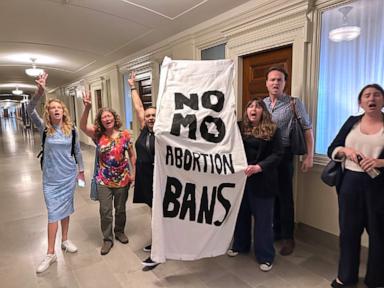
Missouri voters are once again stepping into the voting booth to decide the legal fate of abortion, reproductive healthcare, and bodily autonomy through Amendment 3. If you are looking for the bottom line, here it is. This ballot initiative seeks to enshrine a fundamental right to reproductive freedom directly into the Missouri Constitution, effectively overturning the state's near-total abortion ban while allowing lawmakers to regulate or restrict the procedure after fetal viability.
That is the surface-level explanation you will find on standard election guides. It is accurate, yet entirely insufficient. To understand what is actually happening in Jefferson City and across the Show-Me State, you have to look past the standard talking points and examine the machinery of direct democracy, the legal ambiguity baked into constitutional amendments, and the relentless institutional tug-of-war between citizen-led ballot initiatives and a supermajority legislature determined to neutralize them.
The Mechanics of Reproductive Freedom on the Ballot
Missouri became the first state in the nation to enforce a near-total abortion ban minutes after the U.S. Supreme Court overturned Roe v. Wade in June 2022. The trigger law, signed years earlier, banned the procedure at every stage of pregnancy with a narrow exception only for medical emergencies, making no allowances for cases of rape or incest.
Amendment 3 is the direct counter-strike to that statutory reality. Unlike a standard bill passed by lawmakers, a constitutional amendment alters the foundational legal document of the state. Once ratified by a simple majority of voters, the legislature cannot simply repeal it during the next legislative session.
The text of the measure establishes that the government shall not deny or infringe upon a person’s fundamental right to reproductive freedom. This definition encompasses decisions about prenatal care, childbirth, postpartum care, birth control, abortion care, miscarriage management, and respectful birthing conditions.
The threshold for restriction is set at fetal viability. Under the amendment, viability is defined as the point in pregnancy when, in the good-faith judgment of a treating healthcare professional and based on the particular facts of the case, there is a significant likelihood of the fetus's sustained survival outside the uterus without the application of extraordinary medical measures. Even after viability, the state cannot prohibit an abortion if the treating physician determines it is necessary to protect the life or physical or mental health of the pregnant patient.
Why the Ballot Language Became a Battlefield
In Missouri, getting an issue onto the ballot is only half the war. The other half is fought in the courts over the exact wording voters will read when they cast their ballots.
Under Missouri law, the Secretary of State is tasked with drafting the ballot summary, a brief, 100-word description of what the amendment actually does. The State Auditor prepares a fiscal note, estimating the financial impact of the measure on state and local governments. Historically, these administrative steps were routine. In modern political warfare, they have become primary weapons of delay and framing.
Supporters of Amendment 3, organized largely under the banner of Missourians for Constitutional Freedom, faced an immediate blockade before they could even legally begin collecting signatures. The Secretary of State’s office initially drafted ballot summaries that critics and subsequent court rulings characterized as partisan and misleading, using loaded terminology rather than neutral legal descriptions. Simultaneously, the Attorney General refused to approve the Auditor’s fiscal notes, arguing that the loss of future tax revenue from unborn children would cost the state billions of dollars.
This administrative gridlock forced a protracted legal battle that reached the Missouri Supreme Court. The high court eventually intervened, striking down the partisan ballot language and ordering the certification of neutral summaries so signature gathering could proceed.
This delay was not an accident. It was a calculated attrition strategy. Every week spent arguing over fiscal notes in appellate courtrooms was a week stripped away from the finite calendar window available to collect over 171,000 valid signatures across six of Missouri’s eight congressional districts. When organizers finally got the green light, they had to deploy an army of paid and volunteer canvassers to gather more than double the required minimum—submitting over 380,000 signatures—to ensure the measure survived the notoriously strict validation process.
The Untold Financial and Legal Realities
When constitutional amendments are debated in public forums, the rhetoric quickly retreats to moral absolutes. The legal reality, however, lives entirely in the gray areas of statutory interpretation and judicial review.
If Amendment 3 is in effect, it does not automatically erase every abortion restriction currently sitting on Missouri’s books. Instead, it creates a constitutional standard that must be used to dismantle existing laws one by one. Missouri currently enforces dozens of Targeted Regulation of Abortion Providers (TRAP) laws. These include mandatory 72-hour waiting periods, requirements that physicians hold admitting privileges at local hospitals, strict ambulatory surgical center building codes for clinics, and bans on the use of telemedicine for medication abortion.
None of these laws vanish the morning after an election. Clinics and reproductive rights organizations must file lawsuits in state circuit courts, arguing that each individual restriction violates the newly minted constitutional right to reproductive freedom.
Under the language of the amendment, any government infringement on reproductive freedom is presumed invalid. To uphold a restriction, the state must prove that the law is justified by a compelling governmental interest—specifically, improving or maintaining the health of the patient—and that it is achieved by the least restrictive means possible. This is known in constitutional law as strict scrutiny, the highest and hardest legal standard for a government to meet.
Still, litigation takes time and massive capital. Even with a constitutional mandate, rebuilding a clinical infrastructure that was completely dismantled in 2022 requires recruiting physicians, securing malpractice insurance, leasing compliant facilities, and navigating years of state-level legal challenges designed to slow down clinic reopenings.
The Competing Arguments and Overlooked Nuances
To treat this debate as a simple binary between absolute freedom and absolute prohibition ignores the legitimate legal and ethical tensions embedded within the text of the measure.
The Opposition's Core Critique
Opponents of Amendment 3, backed by anti-abortion advocacy groups, religious institutions, and the vast majority of Missouri's Republican leadership, focus heavily on the health exception after fetal viability.
Their legal critique centers on the inclusion of "mental health" alongside "physical health" as a valid justification for a post-viability abortion. Critics argue that because the amendment leaves the determination of health entirely to the "good-faith judgment of a treating healthcare professional," the viability limit becomes functionally illusory. In their view, a broad mental health exception allows abortion up until the moment of birth, stripping the state of any meaningful ability to protect viable fetal life.
Opponents also raise alarms about parental consent laws. Because the amendment grants the fundamental right to reproductive freedom to "every person" without explicitly specifying age thresholds, anti-abortion legal analysts argue it will inevitably be used to strike down Missouri's existing laws requiring minors to obtain parental notification or consent before terminating a pregnancy.
The Proponents' Counter-Perspective
Supporters of the measure argue that the opposition's framing misrepresents both medical reality and the intent of the constitutional text.
Medical professionals point out that abortions later in pregnancy are extraordinarily rare and almost exclusively occur when a fetus is diagnosed with a fatal anomaly incompatible with life outside the womb, or when continuing the pregnancy poses a catastrophic risk to the pregnant patient. Proponents argue that politicians should never be in the business of defining what constitutes a valid medical emergency, citing real-world cases in states with strict bans where hospitals delayed life-saving miscarriage care until patients went into septic shock out of fear of criminal prosecution.
Regarding parental involvement, legal scholars supporting the amendment note that courts routinely interpret fundamental constitutional rights—such as free speech or freedom from unreasonable searches—differently for minors than for adults. They contend that existing parental consent statutes can survive judicial review under the amendment's allowance for laws that advance patient health, though they acknowledge the courts will ultimately have to draw that line.
The Legislative Counter-Offensive and the Future of Ballot Initiatives
The battle over Amendment 3 is inseparable from a much larger structural war happening in Missouri politics. For decades, the citizen initiative petition process has served as a pressure release valve in the state. When the legislature refused to act on popular policies, voters bypassed Jefferson City entirely. Through ballot initiatives, Missourians raised the minimum wage, expanded Medicaid, legalized medical and recreational marijuana, and blocked right-to-work legislation.
In response, state lawmakers have spent years attempting to make amending the constitution nearly impossible. During recent legislative sessions, lawmakers pushed proposals to raise the threshold required to pass a constitutional amendment from a simple majority (50 percent plus one) to a supermajority of 57 percent or 60 percent, or to require a majority vote in a majority of congressional districts.
Those efforts stalled due to internal legislative gridlock, leaving the simple majority rule intact for Amendment 3. However, the hostility toward direct democracy remains entrenched. Even when voters pass a constitutional amendment, the legislature retains control over state appropriations, regulatory agencies, and the judicial appointment process.
Consider how Medicaid expansion played out in Missouri. Voters approved it via constitutional amendment in 2020. The legislature promptly refused to fund it in the state budget, forcing another trip to the Missouri Supreme Court before the state was legally compelled to enroll eligible citizens.
A similar institutional friction awaits Amendment 3. Furthermore, lawmakers retain the power to place their own competing constitutional amendments on future ballots, effectively asking voters to repeal or modify what they just passed, often utilizing cleaner, legislatively drafted ballot summaries that face far fewer procedural hurdles than citizen-led petitions.
What Happens When the Dust Settles
The outcome of Amendment 3 dictates far more than the legality of a medical procedure within Missouri's borders. Missouri is surrounded by eight states, creating a complex regional patchwork of reproductive healthcare access.
To the south and west, states like Arkansas, Oklahoma, and Tennessee enforce strict bans. To the east and north, Illinois and Kansas have become major regional hubs for patients traveling across state lines for care. Clinics in Southern Illinois, just across the Mississippi River from St. Louis, have experienced overwhelming surges in patient volume since 2022, leading to weeks-long appointment backlogs that push patients further into their pregnancies before they can be seen.
Whether Missouri remains a restrictive stronghold or reopens as an access point in the center of the country fundamentally alters the healthcare geography of the entire Midwest. Yet, regardless of the margin of victory or defeat at the ballot box, the legal war is nowhere near finished. A ballot measure does not end a constitutional conflict; it merely establishes the new rules of engagement for the next decade of litigation.