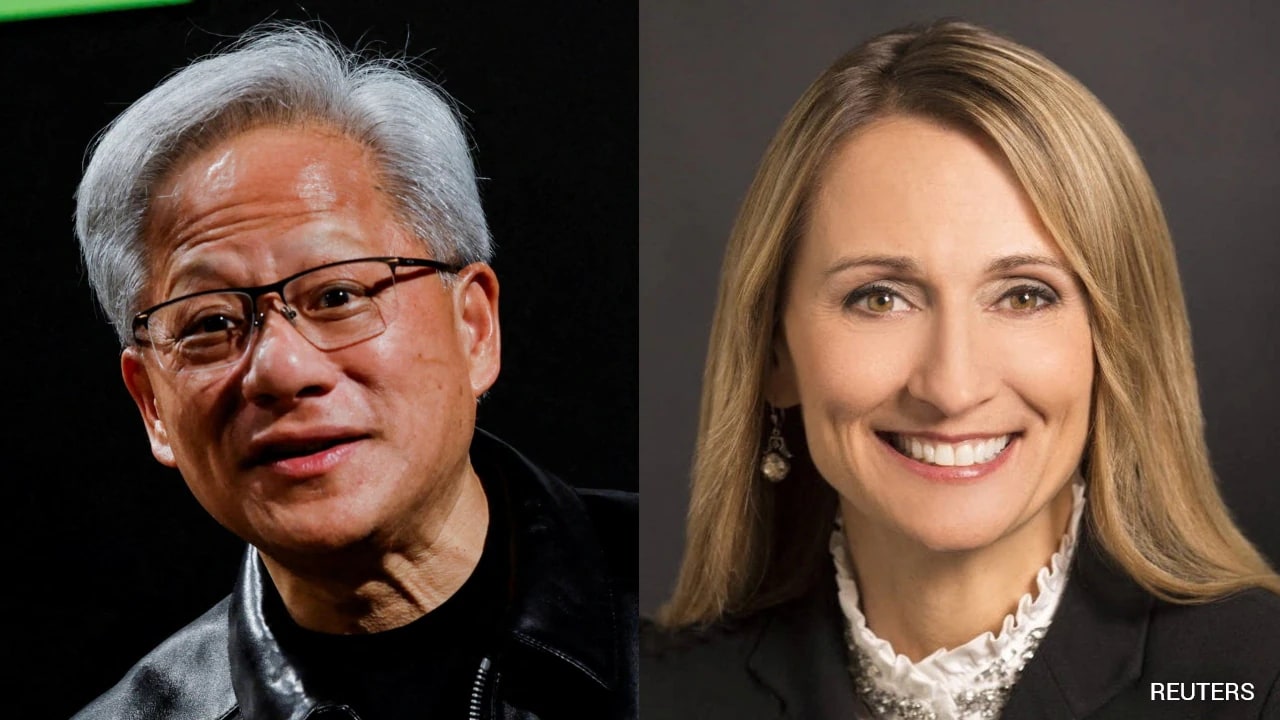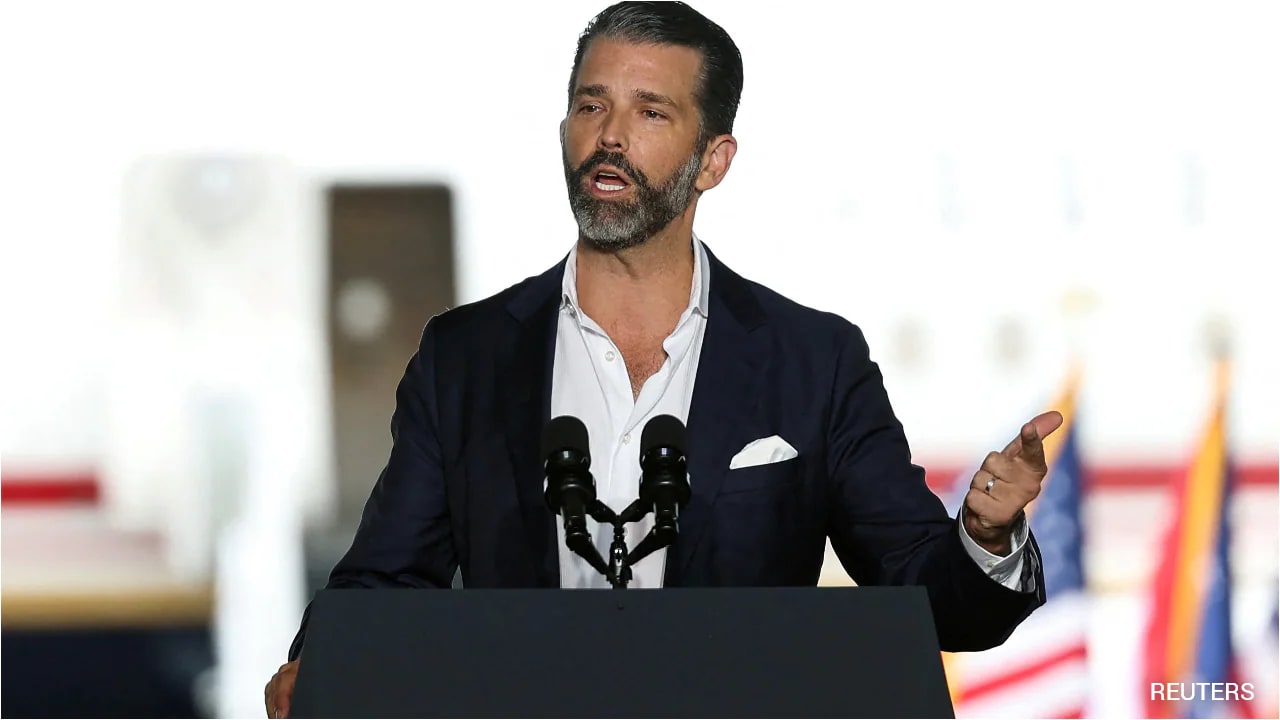
Kalshi has officially severed its advisory relationship with Donald Trump Jr. after financial disclosures and industry reports confirmed he took a direct equity stake in Polymarket, Kalshi’s fiercest rival in the event-contract sector. The termination comes down to a fundamental breach of exclusivity and a massive conflict of interest in a two-horse race for regulatory and market dominance. When a strategic advisor puts capital into the primary competitor operating in the exact same regulatory gray zone, the partnership dies instantly.
To understand why this corporate breakup matters, you have to look at the brutal economics of prediction markets. This is not a polite sector where competitors share market cap and trade pleasantries at conferences. It is a winner-take-all liquidity war. And in early 2025, when Kalshi brought Donald Trump Jr. onto its advisory board, the move was widely understood across Wall Street and Washington as a masterstroke of political positioning.
Kalshi was fresh off a landmark legal victory against the Commodity Futures Trading Commission (CFTC) that allowed it to offer regulated election contracts to American retail traders. Bringing the president’s eldest son into the fold signaled that the federally regulated exchange had direct lines to the incoming administration’s deregulatory apparatus.
Then came the pivot.
The Anatomy of a Liquidity War
In financial markets, liquidity is oxygen. Traders go where the volume is, and volume goes where the spreads are tightest. For the past two years, the prediction market industry has been split down the middle between two completely different operational models.
On one side sits Kalshi. Built from the ground up as a CFTC-regulated Designated Contract Market (DCM), Kalshi operates strictly within the traditional American financial perimeter. Users onboard with standard Know Your Customer (KYC) protocols, fund accounts via traditional banking rails in US dollars, and trade on an exchange subject to federal surveillance. That compliance comes at a steep cost. Every new contract category requires regulatory review, legal overhead is massive, and international users are largely locked out.
On the other side sits Polymarket. Built on the Polygon blockchain and settled in USDC stablecoins, Polymarket bypassed the traditional US regulatory framework entirely during its meteoric rise. Following a 2022 settlement with the CFTC, Polymarket geofenced American IP addresses and focused on global, crypto-native liquidity. During the 2024 election cycle, Polymarket became the de facto global scoreboard, processing billions of dollars in volume while financial news networks cited its odds alongside traditional polling.
For months, Kalshi and Polymarket fought a proxy war over narrative and market share. Kalshi argued it was the safe, legal, onshore venue for institutional capital. Polymarket argued it was the permissionless, uncensored truth machine of the internet.
Donald Trump Jr. was supposed to be Kalshi’s battering ram in Washington. Having him on the payroll meant Kalshi could lobby the CFTC and Capitol Hill with unmatched political capital, positioning itself as the patriotic, American-regulated alternative to offshore crypto casinos.
By taking an investment position in Polymarket—whether directly through venture vehicles or via aligned crypto-focused funds—Trump Jr. blew up that entire thesis. You cannot champion the regulated onshore monopoly on Tuesday and fund the decentralized offshore insurgent on Wednesday.
Why Exclusivity is Non-Negotiable in Exchange Ecosystems
In traditional corporate governance, high-profile advisors frequently sit on multiple boards. A former cabinet official might advise a defense contractor, a private equity fund, and a logistics firm simultaneously without triggering alarms.
Exchanges are different.
An exchange’s sole competitive moat is its order book. If Polymarket captures the marginal institutional market maker, Kalshi’s spreads widen, retail traders leave, and the platform withers. Furthermore, high-level advisors at regulated exchanges are routinely exposed to sensitive, non-public commercial strategies. These include:
- Upcoming Contract Filings: Knowing which novel asset classes—such as specific macroeconomic indicators, corporate earnings, or geopolitical events—an exchange plans to submit to the CFTC before competitors can front-run the regulatory paperwork.
- Market Maker Rebate Structures: Understanding the exact fee schedules and liquidity incentives offered to high-frequency trading firms to keep order books deep.
- Institutional Onboarding Pipelines: Seeing which major retail brokerages (like Robinhood or Interactive Brokers) are preparing to integrate the exchange’s API to distribute event contracts to millions of everyday investors.
If an advisor holds equity in a direct competitor, every strategic boardroom discussion becomes an intelligence leak risk. Kalshi’s leadership had zero choice. Keeping Trump Jr. on the roster after his Polymarket alignment became undeniable would have violated basic fiduciary standards and alienated Kalshi's own institutional backers, including heavyweight venture firms like Sequoia Capital and Paradigm-adjacent crypto investors who poured tens of millions into the platform.
The Shifting Political Winds Around Crypto and Regulation
To understand why Trump Jr. gravitated toward Polymarket despite his existing commitment to Kalshi, look at the broader alignment between the Trump orbit and the digital asset industry.
During the 2024 campaign and into 2025, the Trump family aggressively pivoted toward decentralized finance, launching World Liberty Financial and courting major crypto founders. Within that ecosystem, Polymarket is viewed as a crown jewel of Web3 utility—a rare consumer application that achieved genuine product-market fit without relying on speculative token ponzinomics.
More importantly, the regulatory environment in Washington shifted violently in favor of crypto. Under previous leadership, the CFTC and the Department of Justice treated offshore crypto platforms serving US users via VPNs as hostile actors. In fact, shortly after the 2024 election, federal agents raided the home of Polymarket CEO Shayne Coplan, seizing electronic devices in an investigation into whether the platform was still allowing US-based traders to bypass its geofence.
At the time, that raid looked like a massive win for Kalshi. It validated Kalshi’s expensive, compliance-first strategy. If the federal government was going to crush Polymarket with enforcement actions, Kalshi would inherit the entire American market by default.
That assumption proved fatally flawed.
As the political tide turned toward dismantling aggressive crypto enforcement, the threat of an existential regulatory crackdown on Polymarket evaporated. Instead of being regulated out of existence, Polymarket suddenly looked poised to re-enter the US market legally, potentially acquiring a regulated entity or securing its own CFTC exemptions while retaining its massive global liquidity pool.
For an investor looking at pure upside, backing Polymarket became an asymmetric bet. Kalshi was already valued as a mature, heavily regulated domestic exchange. Polymarket possessed the network effects, the brand recognition, and the crypto-native infrastructure to become a global financial primitive. Trump Jr. followed the equity upside, even if it meant burning his bridge with Kalshi.
The Myth of the Political Moat
Kalshi’s predicament offers a sobering lesson for fintech founders and corporate boards: political proximity is a depreciating asset.
Companies frequently hire politically connected figures under the assumption that proximity to power guarantees regulatory protection. In practice, political allies are loyal to their own capital deployment, not to a vendor’s quarterly KPIs. When a company relies on a political figurehead to serve as a moat against a faster-moving competitor, it leaves itself exposed the moment that figurehead finds a more lucrative alignment.
Consider the structural realities Kalshi now faces without Trump Jr. in its corner.
First, Kalshi must still fight the entrenched state-level gaming regulators. While federal courts cleared the path for election contracts under CFTC jurisdiction, state gambling commissions and tribal gaming authorities have fiercely resisted Kalshi’s expansion into sports-adjacent event contracts. Without a heavyweight political envoy helping smooth over friction in state capitals and federal agencies, Kalshi’s legal bills will continue to climb.
Second, Kalshi has to compete on pure product velocity against a rival that no longer fears Washington. Polymarket’s user interface, instant stablecoin settlement, and permissionless market creation allow it to spin up liquid markets on breaking news within minutes. Kalshi, bound by CFTC self-certification rules and traditional banking clearing times, moves at the speed of federal bureaucracy.
What Actually Drives Prediction Market Dominance
Strip away the political theater, the boardroom drama, and the headlines about celebrity advisors. The winner of the prediction market war will be decided by three cold, mechanical realities that no political endorsement can alter.
- Distribution Partnerships: Retail traders rarely download standalone apps for niche financial products. The exchange that successfully embeds its contracts inside existing, high-traffic brokerage apps—where users already hold cash balances—will capture the casual retail flow. Kalshi holds an early advantage here due to its CFTC license, which makes compliance departments at major brokerages comfortable integrating its API.
- Capital Efficiency: Traders hate dead money. In an event contract that does not settle for six months, locking up cash at zero percent yield is a massive drag on returns. Whichever platform offers seamless yield on posted collateral—whether through Treasury bill pass-throughs on regulated platforms or DeFi yield protocols on crypto rails—will attract the sharpest quantitative funds.
- Market Resolution Integrity: Prediction markets live and die by their oracles—the mechanisms used to determine the final outcome of an event. Kalshi relies on centralized, legally binding contract specifications adjudicated by its own compliance team. Polymarket relies on UMA’s optimistic oracle, a decentralized dispute-resolution system where token holders vote on outcomes. Both systems have experienced high-profile controversies over ambiguous wording, and institutional capital will ultimately flow to whichever resolution mechanism proves most resistant to manipulation.
Kalshi’s decision to terminate Donald Trump Jr.’s contract was clean, necessary, and entirely predictable once the competing investment surfaced. It removes a glaring conflict of interest from the exchange’s governance structure and forces the company to stand on its actual commercial merits rather than borrowed political clout. In a market where liquidity is the only currency that counts, Kalshi no longer has the luxury of playing politics while its biggest rival captures the volume.