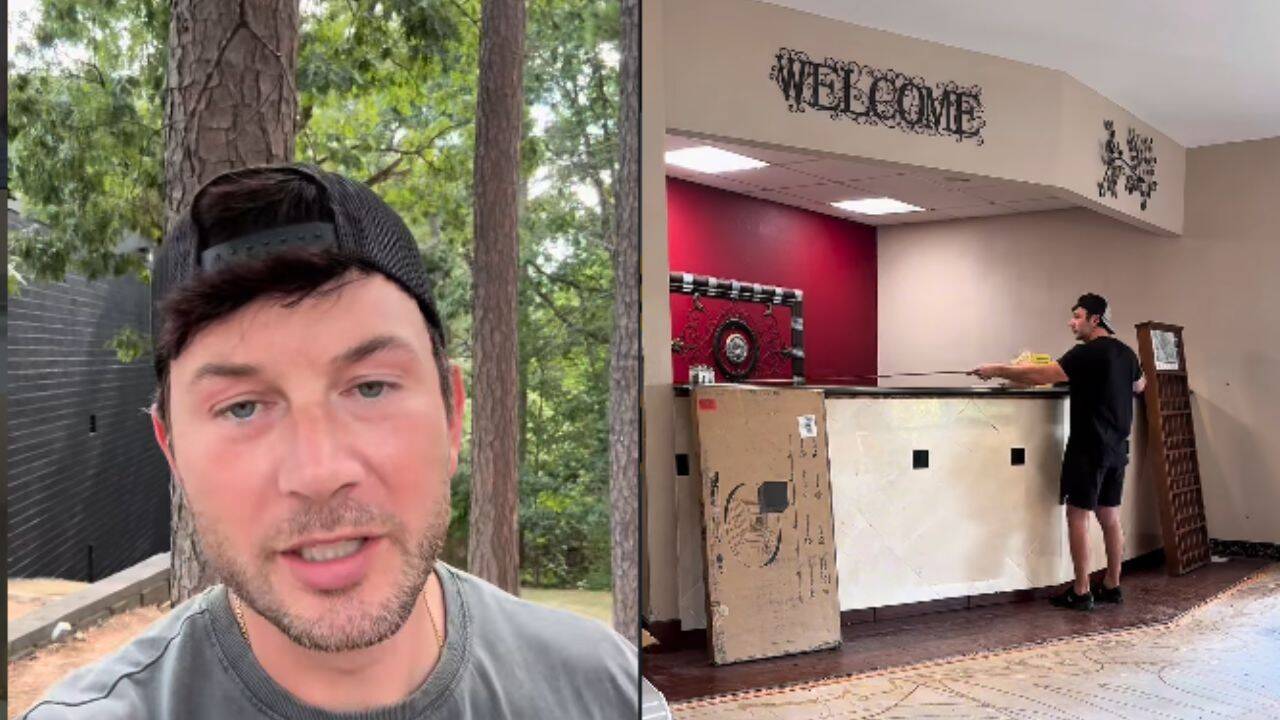
When a thirty-three-year-old entrepreneur named Nakul Jain dropped $2.55 million on an 81-room dilapidated hotel in Eureka Springs, Arkansas, onlookers whispered about madness. Commercial real estate markets were tightening, construction costs remained stubbornly volatile, and historical properties are notorious money pits that swallow budgets whole. Adding another $1.1 million for renovations while personally moving into a construction zone inside the property sounds less like a sound investment strategy and more like an episode of a reality television show destined for foreclosure.
Yet this extreme move exposes a fundamental truth about modern micro-hospitality. Traditional hotel development models are fundamentally broken for independent operators. To survive the crushing weight of modern overhead, high interest rates, and institutional consolidation, young investors are throwing away the corporate playbook. They are trading air-conditioned boardrooms for drywall dust, sleeping on camp beds next to exposed wiring, and managing every square foot with ruthless, hands-on efficiency.
The Anatomy of a Distressed Hospitality Acquisition
Acquiring an 81-room commercial property for $2.55 million sounds like a bargain until you calculate the deferred maintenance. Commercial real estate in historic Victorian towns like Eureka Springs comes with severe structural burdens. Roof leaks rot timber frames over decades. Plumbing infrastructure installed during the mid-twentieth century inevitably fails standard modern codes. Electrical systems struggle to support the heavy power loads required by contemporary guests who travel with laptops, tablets, and multiple phones.
When a property reaches this level of neglect, banks run the other way. Conventional commercial lenders shy away from distressed hospitality assets because standard valuation models rely heavily on trailing income. A neglected hotel bleeding cash has a trailing income of zero. Securing financing requires creative capital stacking, private lending, or massive amounts of liquid cash.
Jain's approach bypassed the traditional red tape of corporate hospitality development by acting as general contractor, financier, and overnight watchman all at once. By sleeping on site, he eliminated security overhead, drastically reduced commute waste, and caught structural issues before they compounded into financial disasters. When a pipe bursts at two in the morning on the third floor, you fix it immediately if your bedroom is on the first floor. Waiting for an off-site property manager to dispatch a plumber costs thousands in water damage before dawn even breaks.
The Arithmetic of the $1.1 Million Overhaul
A budget of $1.1 million spread across 81 rooms averages out to roughly $13,580 per room. In commercial construction, that figure is razor-thin. Major hotel chains routinely spend upwards of $40,000 to $60,000 per key for standard cosmetic refreshes alone. Stretching $1.1 million to cover structural repairs, furniture, fixtures, equipment, and aesthetic modernization requires extreme operational discipline.
Independent operators accomplish this feat by cutting out layers of middle management. General contractors, project management firms, and architectural consultants eat up thirty to forty percent of standard commercial budgets through administrative bloat and markup fees. By managing sub-contractors directly, sourcing materials through wholesale liquidation channels, and performing labor-intensive tasks independently, a solo operator stretches every single dollar twice as far.
+-----------------------------------------------------------------+
|              Traditional vs. Direct-Operator Model              |
+-----------------------------------------------------------------+
| Traditional Hotel Build:                                        |
| [Investor] -> [Project Manager] -> [General Contractor] -> Subs |
| Result: High overhead, bloated timelines, inflated per-key costs  |
+-----------------------------------------------------------------+
| Direct-Operator Model (Jain Approach):                          |
| [Owner-Operator on Site] -> Direct Sub-Contractors & Labor      |
| Result: Minimal administrative waste, maximum cost control      |
+-----------------------------------------------------------------+
This financial model carries a hidden cost. Burnout is absolute. Living inside a dusty, loud, active construction zone destroys personal boundaries. Relationships strain, physical health suffers under the weight of constant particulate inhalation and erratic sleep schedules, and cash flow timing must be meticulously managed to avoid missing weekly payroll for hired tradespeople.
Why Historic Small Towns are the New Frontier
Secondary and tertiary tourism markets are experiencing a quiet renaissance. Travelers fleeing hyper-urban environments are increasingly seeking authentic, slow-paced weekend getaways within driving distance of major metro areas. Eureka Springs, nestled in the Ozark Mountains, draws millions of visitors annually, yet its lodging inventory has historically skewed toward dated motels or archaic bed-and-breakfasts that fail to satisfy millennial and Gen Z design sensibilities.
Big hospitality brands rarely touch towns of this size. Marriott and Hilton prefer scalable suburban business parks or high-density urban cores where corporate loyalty programs dictate occupancy. This leaves a massive vacuum for independent boutique operators to capture high margins by delivering hyper-local charm paired with modern amenities like high-speed fiber internet, keyless smartphone entry, and minimalist Scandinavian aesthetics.
An 81-room property occupies a sweet spot in the hospitality economy. Properties with fewer than twenty rooms struggle to generate enough gross revenue to support full-time staff, forcing the owner into perpetual housekeeping duty. Properties with more than two hundred rooms require institutional management structures and millions in reserve capital to survive seasonal downturns. Eighty-one rooms provide enough scale to absorb a slow Tuesday night while remaining small enough for a single visionary leader to control the guest experience completely.
The Operational Realities of On-Site Stewardship
Living on-site changes the psychology of ownership. When an investor views a property strictly through an Excel spreadsheet from an office in a distant city, properties are treated as abstract asset classes. Maintenance deferrals become line items to be delayed until the next fiscal quarter. Guest complaints become sterile metric points on a customer satisfaction dashboard.
When your kitchen shares a wall with a lobby undergoing framing, every design flaw is intensely personal. If a guest complains about low water pressure in room 304, the owner experiences the pain point directly rather than reading about it in a digital review weeks later. This ultra-close proximity breeds obsessive attention to operational detail.
The strategy is not without glaring vulnerabilities. Local building inspectors can be unforgiving with owner-builders who attempt to bypass bureaucratic hurdles. Supply chain hiccups for custom vanities or specialized tiles can freeze progress for weeks, leaving rooms vacant and bleeding potential revenue during peak tourist seasons. If the renovation budget overruns by even twenty percent, an $1.1 million safety cushion can evaporate overnight, threatening the entire equity position.
The Future of Independent Hospitality
The traditional barrier to entry for hotel ownership was insurmountable for anyone outside of private equity syndicates or generational real estate families. By combining sweat equity, on-site residency, and direct project management, a new breed of independent hotelier is proving that institutional capital is not a prerequisite for scale.
As commercial lending standards remain tight and corporate lodging feels increasingly homogenized, travelers are voting with their wallets. They want character, history, and personality. They want spaces touched by human hands rather than corporate committees.
The success or failure of this $3.65 million gamble in the Ozarks will not just determine the financial fate of one young entrepreneur. It serves as a stress test for a growing movement of decentralized hospitality, proving whether raw grit can still outmaneuver institutional capital in the modern real estate market.