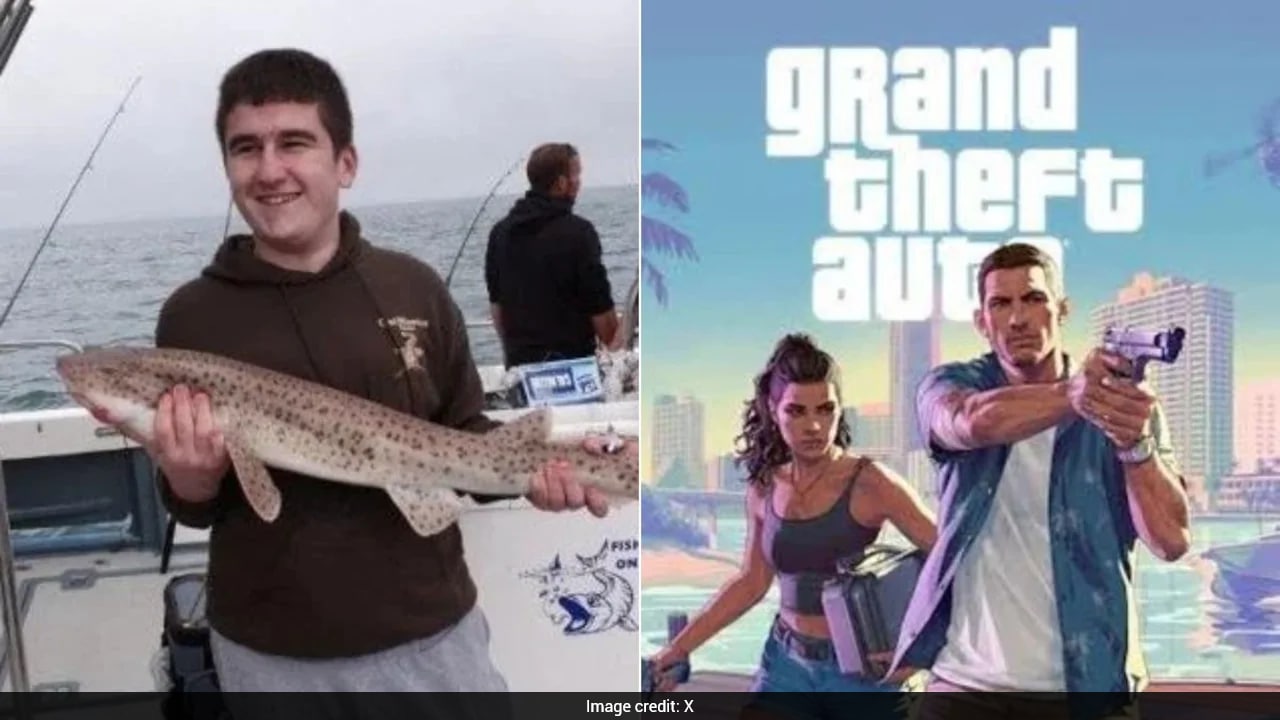
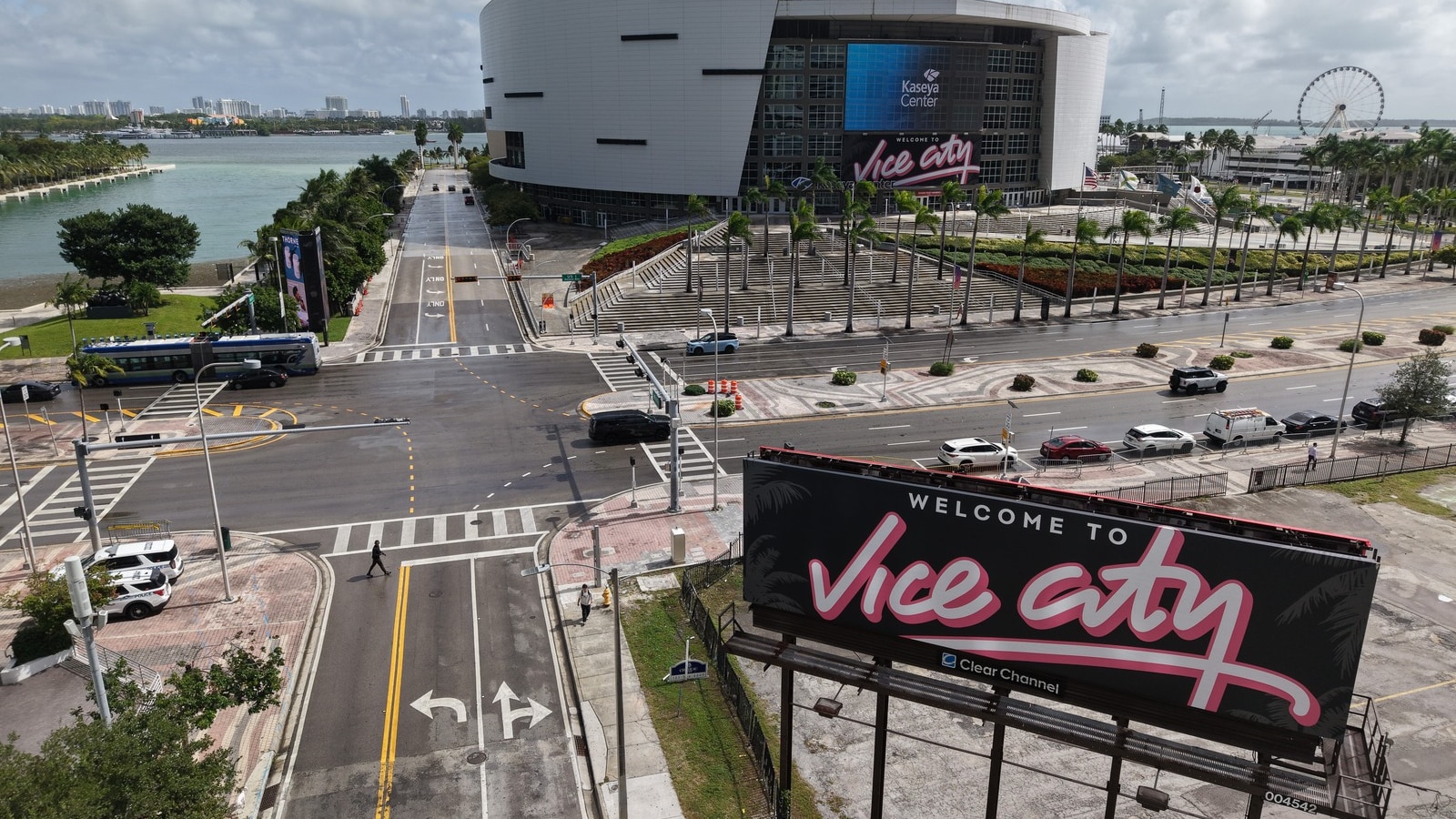
Grand Theft Auto VI is no longer just a video game release. It is a multi-billion-dollar financial event carrying the weight of an entire entertainment sector on its back, built around dual protagonists Lucia Caminos and Jason Duval in the sun-drenched, satire-heavy state of Leonida, a licensed soundtrack that doubles as a music industry kingmaker, and an economic expectation so massive that parent company Take-Two Interactive has staked its multi-year valuation on a single launch window.
Most coverage treats this rollout like a standard countdown to a blockbuster sequel. That misses the actual story. After more than a decade since Grand Theft Auto V redefined what a single entertainment property could earn, Rockstar Games is operating under pressures that did not exist in 2013. Development budgets across triple-A gaming have ballooned out of control, live-service fatigue has set in among players, and Wall Street expects a return on investment that rivals the gross domestic product of small nations.
The Anatomy of a Multi-Billion-Dollar Bet
To understand what is riding on Grand Theft Auto VI, you have to look at the sheer gravity of its predecessor. Grand Theft Auto V did not merely sell well; it broke the traditional lifecycle of entertainment media. By shipping over 200 million units and generating billions more through Grand Theft Auto Online, Rockstar proved that a single interactive world could function as a permanent revenue engine.
That success created a dangerous trap. When your previous product becomes the most profitable single entertainment release in history, anything less than total cultural and financial domination looks like a stumble to institutional investors. Take-Two Interactive's stock price has spent years functioning less as a reflection of its broader portfolio—which includes NBA 2K and Borderlands—and more as a futures market for Rockstar's next release date.
Why Development Costs Have Spiraled
Building an open world in 2026 requires an entirely different industrial scale than it did two console generations ago. In 2013, teams could get away with clever visual shortcuts and lower-density environments. Today, player expectations demand photorealistic lighting, complex non-player character routines, and seamless transitions between indoor and outdoor spaces across massive maps.
Every square block of Vice City and the surrounding Leonida wetlands represents thousands of hours of specialized labor. Lighting artists, physics programmers, audio engineers, and narrative designers have spent years assembling a digital ecosystem designed to hold player attention for the next decade. Industry analysts routinely estimate the combined production and marketing outlay for a project of this scale in the hundreds of millions—potentially crossing the billion-dollar threshold once post-launch infrastructure is factored in.
Consider a hypothetical example of how this math works for a major publisher. If a studio spends $800 million to build and market a flagship title, and takes home roughly $50 per digital unit after platform holders like Sony and Microsoft take their standard 30 percent cut, the game must sell 16 million copies just to break even on initial cash outlay. For most publishers, 16 million copies is a once-in-a-decade triumph. For Rockstar, that number needs to be cleared in the opening weekend before the real profit engine even warms up.
Lucia, Jason, and the Shift in Rockstar Storytelling
For years, Rockstar's narrative formula relied on cynical, hyper-masculine archetypes climbing the criminal ladder through sheer violence and dark comedy. Grand Theft Auto VI deliberately alters that DNA by introducing Lucia Caminos—the series' first female protagonist in the modern 3D era—alongside her partner, Jason Duval.
Drawing obvious thematic inspiration from Bonnie and Clyde, the dynamic between Lucia and Jason represents more than a simple casting choice. It changes the mechanical and emotional pacing of the story. Early footage and verified details confirm Lucia starting her journey inside a Leonida penitentiary, establishing immediate stakes rooted in survival, loyalty, and shared risk rather than abstract greed.
Navigating Satire When Reality Outpaces Parody
Rockstar built its reputation on biting caricatures of American excess, media sensationalism, and corporate hypocrisy. Writing that kind of satire in the mid-2020s presents a unique creative problem. Modern social media culture—especially the specific brand of viral chaos associated with Florida—already operates at a pitch that makes traditional parody look tame.
The trailers for Grand Theft Auto VI lean directly into this friction by mirroring real-world viral clips: rooftop pool parties, highway stunts, wildlife wandering into convenience stores, and frantic livestreamers documenting every bad decision. Rather than inventing absurd scenarios from scratch, Rockstar's writers are holding a mirror up to an algorithmic attention economy where everyone is performing for a camera.
Whether that approach lands without feeling dated a year after launch is one of the biggest creative risks in the project. Internet trends move in days, while triple-A game development moves in years. Locking jokes into a script half a decade before release requires sharp editorial instincts to ensure the humor targets permanent human vanity rather than temporary memes.
The Radio Dial as a Music Industry Powerbroker
In Grand Theft Auto, music is never passive background noise. The in-game radio stations act as the connective tissue of the world, anchoring the time period, regional identity, and emotional tone of every drive down the coast.
For labels, publishers, and independent artists, securing a slot on a Grand Theft Auto VI radio station carries immense commercial value. Unlike a traditional television sync placement that airs once or twice, a track inside a Rockstar title gets heard hundreds of times by tens of millions of players over a ten-year lifespan. Streaming numbers for older tracks featured in previous installments routinely spike years after the game hits shelves.
Licensing Economics and the Vice City Sound
Negotiating music rights for a global juggernaut is notoriously expensive and legally complex. Music rights holders know the financial scale of Grand Theft Auto VI, and licensing fees reflect that reality. Rockstar has to clear both the master recording rights and the underlying publishing rights for every single song, often across multiple territories and for extended terms so the game does not suffer the fate of older titles that had to patch out expired tracks years later.
Setting the game in Vice City and the wider Leonida region also dictates a very specific sonic palette. Expect a heavy emphasis on Miami bass, Latin trap, reggaeton, classic 1980s synth-pop, southern hip-hop, and local Caribbean rhythms. That regional authenticity matters. Players immediately notice when a virtual city sounds like a generic playlist rather than a living cultural hub.
The Live-Service Elephant in the Room
No honest analysis of Grand Theft Auto VI can ignore the shadow cast by Grand Theft Auto Online. While critics and single-player purists celebrate Rockstar for its sprawling story campaigns, the corporate balance sheet tells a much simpler story: recurring digital spending is what turned Take-Two into a Wall Street darling.
Shark Cards—the virtual currency packs used to buy vehicles, properties, and businesses inside Grand Theft Auto Online—generated steady, high-margin revenue quarter after quarter without requiring the company to build a brand-new game from the ground up. This reality creates an inherent tension at the heart of Rockstar's business model.
Balancing Story Integrity With Monetization
Players have grown deeply skeptical of aggressive monetization schemes. Across the industry, live-service titles have stumbled when audiences felt pushed toward microtransactions at the expense of fun or progression. Rockstar cannot afford to alienate its core fanbase at launch by turning Leonida into an overly aggressive storefront.
At the same time, the studio has spent years integrating talent from the roleplay community—most notably acquiring Cfx.re, the team behind the massively popular FiveM and RedM modding frameworks. That acquisition signaled a clear strategic direction. Rather than fighting user-generated servers and custom roleplay communities, Rockstar intends to bring that creative energy inside its own walled garden.
If executed well, official support for custom roleplay economies and creator tools could give the online component of Grand Theft Auto VI a lifespan that dwarfs even its predecessor. Players who want structured heists get them; players who want to run virtual businesses, police departments, or underground racing circuits get official tools to build those experiences without relying on fragile third-party workarounds.
Console Hardware Limits and the PC Delay Strategy
One of the sharpest points of frustration among players remains Rockstar's traditional staggered release schedule. Launching first on PlayStation 5 and Xbox Series X/S while holding back the PC version is not an accidental delay caused by technical hurdles. It is a calculated business strategy perfected over two decades.
By releasing on consoles first, Rockstar accomplishes three distinct objectives:
- Double-dipping revenue: Millions of dedicated fans who own both a console and a high-end PC will buy the game at launch on console, then buy it a second time a year or two later to experience higher frame rates, unlocked resolutions, and modding support on PC.
- Piracy protection: The critical opening months—when full-price unit sales peak—remain insulated from PC cracking groups, ensuring maximum revenue capture during the initial marketing wave.
- Optimization focus: Developing simultaneously for fixed console specifications and thousands of unpredictable PC hardware combinations divides engineering resources during the most stressful final months of production.
This approach also pushes console hardware to its absolute breaking point. Squeezing dense crowds, ray-traced reflections, and long draw distances out of mid-generation console silicon requires aggressive technical compromises, often locking frame rates at 30 frames per second on base hardware. For a vocal segment of the audience accustomed to ultra-smooth performance, that trade-off sparks immediate debate, even if the broader mass market prioritizes visual spectacle over technical benchmarks.
Workplace Culture and the Cost of Perfection
Behind every meticulously rendered reflection on a Vice City puddle sits a human workforce that has historically borne the brunt of Rockstar's perfectionism. During the final stretch of Red Dead Redemption 2 in 2018, reports of 100-hour workweeks forced a reckoning across the studio and the wider games industry.
In the years since, Rockstar leadership overhauled internal management structures, trimmed excessive overtime, and introduced stricter scheduling discipline. Those reforms were necessary, but they came with an unavoidable consequence: games take significantly longer to ship. When you remove unpaid crunch from the production pipeline of a project this complex, timelines stretch from five years to eight or ten.
Even with improved policies, friction remains between executive priorities and rank-and-file developers. Mandates requiring staff to return to physical offices full-time during the final stages of production—driven heavily by security concerns following the massive 2022 development footage leak—triggered pushback from labor groups and employees who had built their lives around hybrid arrangements. Protecting trade secrets worth billions of dollars collided directly with modern workplace expectations.
Why Competitors Are Clearing the Runway
The commercial gravity of Grand Theft Auto VI is so intense that rival publishers actively schedule their entire fiscal years around avoiding it. Nobody wants to launch a $70 action game, RPG, or shooter within three weeks of a Rockstar release.
Marketing budgets simply cannot compete with the organic media coverage generated by a Grand Theft Auto launch. Mainstream news outlets, late-night television, sports broadcasts, and social feeds automatically turn into free advertising channels the moment review embargoes lift. A competing game released in that same window risks total invisibility, losing both media oxygen and consumer wallet share.
This ripple effect extends beyond software into hardware sales. Both Sony and Microsoft rely heavily on Grand Theft Auto VI to drive console upgrades among millions of holdouts who never moved on from their PlayStation 4 or Xbox One systems. For hardware manufacturers facing slowing mid-cycle momentum, Leonida represents the single biggest catalyst left on the calendar to push aging user bases into current-generation ecosystems.
The Verdict on the Industry's Biggest Gamble
Grand Theft Auto VI sits at the intersection of extraordinary creative ambition and ruthless corporate math. Lucia and Jason offer a promising, grounded anchor for a story set in a digital recreation of modern Florida that looks sharper and denser than anything the studio has ever built. The soundtrack will dominate streaming charts, the technical achievements will set new benchmarks for open-world design, and the online infrastructure is positioned to absorb the massive roleplay community into an official ecosystem.
Yet the true measure of this release will not be found in opening-week sales records—those are practically guaranteed by brand momentum alone. The real test begins six months after launch, when the initial spectacle fades and players judge whether the world beneath the neon surface holds genuine staying power without choking on its own monetization demands.