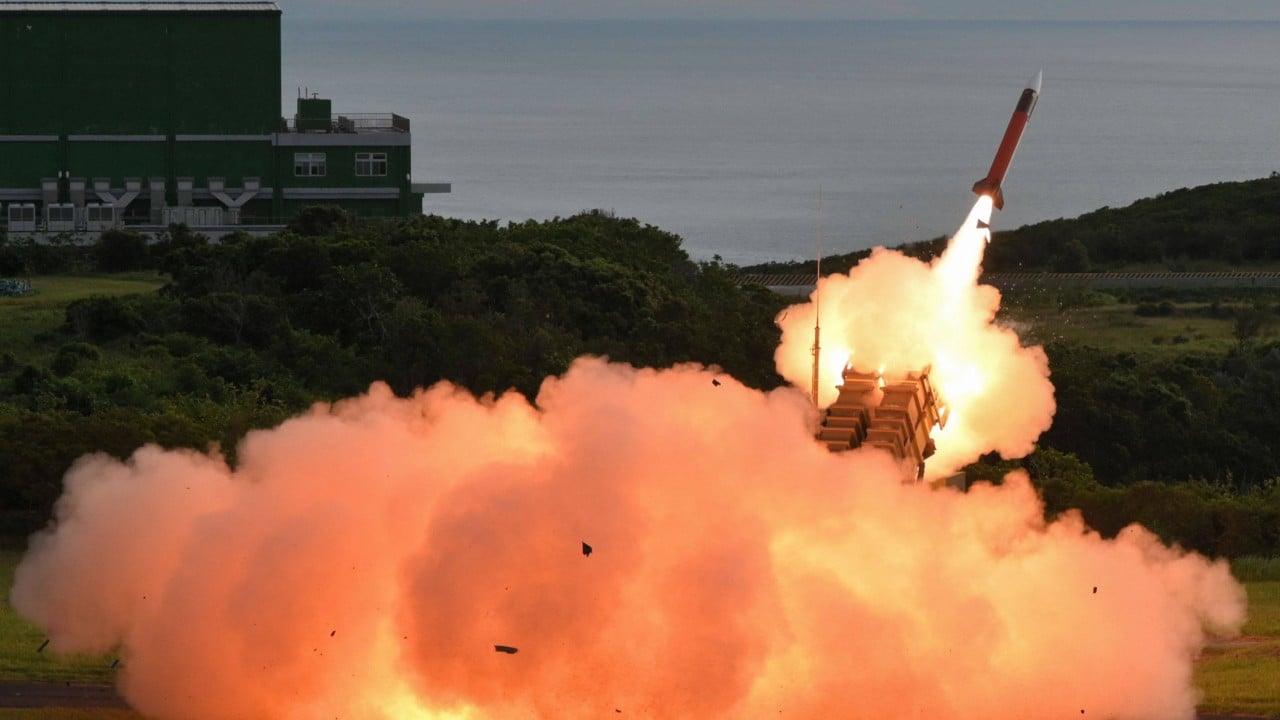
US arms sales to Taiwan are trapped in a tightening vise between Beijing’s diplomatic coercion and Washington’s industrial bottlenecks. When Chinese President Xi Jinping presses President Donald Trump to do "the right thing" on Taiwan, he is not making a polite diplomatic suggestion; he is issuing a direct demand to freeze American weapons transfers in exchange for broader bilateral stability. That demand leaves US defense commitments caught between transactional executive diplomacy, statutory obligations under the Taiwan Relations Act, and a severe manufacturing backlog that has already delayed billions of dollars in promised weaponry.
Diplomatic rhetoric in Beijing rarely relies on accident. In the lexicon of the Chinese Communist Party, doing "the right thing" on Taiwan translates to three non-negotiable demands: halting weapons shipments to Taipei, severing official military-to-military contacts, and publicly opposing Taiwanese independence. Xi’s framing places the burden of regional peace entirely on the White House. By characterizing American defensive support as the primary source of instability in the Taiwan Strait, Beijing attempts to turn routine arms notifications into existential provocations.
For decades, Washington managed this friction through strategic ambiguity. The United States maintained an unofficial relationship with Taipei while selling enough defensive hardware to deter an amphibious invasion, all without formally committing American troops to the island’s defense. That delicate equilibrium is now under unprecedented strain.
The Architecture of Transactional Diplomacy
President Trump approaches foreign policy through the lens of deal-making, leverage, and bilateral balance sheets. Unlike traditional Washington foreign policy hands who view alliances and security commitments as sacred institutional pillars, Trump evaluates international relationships based on tangible returns for the United States.
This worldview creates a distinct vulnerability—and an opportunity—for Beijing. Xi understands that the White House prioritizes trade balances, tariff enforcement, fentanyl precursor crackdowns, and avoiding costly foreign entanglements. By linking cooperation on these domestic American priorities to restraint on Taiwan, Beijing seeks to turn US arms sales into a bargaining chip.
Washington's defense establishment views the island differently. To Pentagon planners, Taiwan is the linchpin of the First Island Chain, a string of archipelagos running from Japan through the Philippines that hems in the Chinese navy. If Beijing controls Taiwan, Chinese submarines and surface fleets gain unrestricted access to the deep waters of the Pacific, directly threatening American bases in Guam and Hawaii.
This divergence creates a quiet tug-of-war inside the American government. On one side sits a White House eager to extract concessions from Beijing without stumbling into a superpower conflict. On the other sits a bipartisan congressional consensus and a defense bureaucracy determined to turn Taiwan into an indigestible "porcupine" bristling with asymmetric weapons.
Statutory Mandates Versus Executive Discretion
A common misconception is that an American president can simply cancel Taiwan’s weapons pipeline with the stroke of a pen. The reality is far more legally entangled.
Under the Taiwan Relations Act of 1979, the United States is legally required to provide Taiwan with arms of a defensive character and to maintain the capacity of the United States to resist any resort to force that would jeopardize the security of the people on Taiwan. While the executive branch initiates Foreign Military Sales notifications, Congress holds oversight authority and regularly uses the annual National Defense Authorization Act to mandate weapon transfers, joint training, and direct military financing.
Yet executive discretion remains immense. The White House controls the timing of notifications to Congress. An administration can slow-walk a major arms package for months—or even years—without ever formally canceling it. Simply withholding formal notification achieves Beijing’s immediate goal of freezing visible support while allowing Washington to claim it has not abandoned its legal commitments.
Consider how this plays out in practice. Suppose the Pentagon approves a major sale of mobile coastal defense cruise missiles. Before those weapons can be contracted, the State Department and the White House National Security Council must sign off on notifying Capitol Hill. If the president is preparing for a high-stakes trade summit with Xi, that paperwork quietly sits in an inbox. No laws are broken. No treaties are torn up. Yet the deterrence clock keeps ticking down.
The Twenty Billion Dollar Traffic Jam
Even if the White House approves every single weapons request tomorrow, Taipei faces a brutal physical reality: the American defense industrial base cannot build the weapons fast enough.
Before a single political concession is made to Beijing, Taiwan is already waiting on roughly twenty billion dollars in backlogged US military hardware. These are not theoretical wish-list items. They are paid-for contracts covering F-16V fighter jets, Abrams main battle tanks, Harpoon anti-ship missiles, and HIMARS rocket launchers.
The causes of this backlog are structural and stubborn:
- Competing Global Wars: American munitions factories have been running at maximum capacity to supply Ukraine with artillery shells, air defense interceptors, and anti-tank missiles, alongside emergency replenishment shipments to Israel.
- Fragile Sub-Tier Supply Chains: Modern precision-guided munitions rely on specialized solid rocket motors, microelectronics, and rare earth castings produced by a shrinking pool of single-source subcontractors.
- Legacy Contracting Rules: Foreign Military Sales contracts require defense primes like Lockheed Martin and RTX to wait until foreign funds are deposited before ordering long-lead components, adding years to production schedules.
When Beijing pressures Washington to halt arms sales, Xi is fighting to stop a pipeline that is already severely clogged. However, the political signal of an intentional slowdown carries far greater weight in Taipei than manufacturing delays. Taiwan’s leadership can weather supply chain bottlenecks if they trust American resolve. They cannot easily survive the perception that Washington is trading away their security for a tariff reduction or agricultural purchase agreement.
The Shift Toward Asymmetric Warfare
The debate over US arms sales is not merely about dollar figures or delivery dates; it is a fierce argument over what Taiwan should be buying.
Historically, Taipei favored high-prestige conventional platforms—advanced fighter jets, large surface warships, and heavy battle tanks. These systems project sovereignty and boost domestic morale. Unfortunately, military analysts largely agree they would be destroyed within the first hours of a People’s Liberation Army missile barrage. China possesses the world’s largest arsenal of land-based ballistic and cruise missiles, specifically engineered to crater Taiwanese airfields and sink naval vessels in port.
Defense strategists in Washington have spent years pushing Taiwan to adopt an asymmetric defense strategy, often referred to as the porcupine doctrine. Instead of trying to match China ship-for-ship or jet-for-jet, Taiwan must invest in vast quantities of mobile, concealable, and lethal systems that can survive a devastating first strike and exact an unbearable toll on an invading force.
What Asymmetric Deterrence Actually Looks Like
- Mobile Anti-Ship Missiles: Truck-mounted Harpoon and indigenous Hsiung Feng launchers hidden in highway tunnels and urban garages, ready to emerge and strike amphibious landing ships crossing the Taiwan Strait.
- Layered Mobile Air Defense: Short- and medium-range surface-to-air missiles, such as Stingers and NASAMS, designed to deny Chinese aircraft and helicopters free rein over the island.
- Unmanned Systems and Loitering Munitions: Swarms of aerial and naval drones capable of blinding Chinese radar networks and harassing landing craft during the chaotic final miles of an amphibious assault.
- Smart Naval Mines: Rapidly deployable sea mines that can choke off Taiwan’s few deep-water ports and suitable landing beaches, turning a swift invasion into a logistical nightmare.
This strategic pivot collides directly with transactional politics. Conventional platforms like F-16 fighter jets generate massive, visible manufacturing jobs in key American congressional districts and carry multi-billion-dollar price tags that look impressive on trade balance sheets. Asymmetric munitions—like naval mines, shoulder-fired missiles, and drones—are cheaper, smaller, and far less politically glamorous.
Furthermore, President Trump has repeatedly argued that Taiwan should pay significantly more for its own defense, even suggesting Taipei should spend up to ten percent of its gross domestic product on military readiness. While Taiwan has steadily increased its defense budget to roughly 2.5 percent of GDP—and committed tens of billions to special defense funds—ramping up to ten percent would require dismantling social welfare programs and fundamentally restructuring the Taiwanese economy.
Why Beijing’s Pressure Campaign Is Escalating Now
Xi Jinping’s insistence that Washington do "the right thing" reflects both growing Chinese military confidence and mounting economic anxiety at home.
Over the past decade, the People’s Liberation Army has undergone the fastest military modernization in modern history. Chinese shipyards launch warships at a pace the United States cannot currently match. The PLA Rocket Force has fielded hypersonic glide vehicles capable of threatening American aircraft carriers far beyond the First Island Chain. Frequent, large-scale military encirclement drills around Taiwan have normalized the presence of Chinese warships and bombers just miles from Taiwan’s coastline.
Yet military strength has not translated into political submission in Taipei. Taiwan’s electorate has repeatedly chosen leaders who reject Beijing’s unification framework, viewing Hong Kong’s loss of autonomy as proof that Beijing’s "one country, two systems" promise is hollow.
Simultaneously, China faces structural economic headwinds: a protracted real estate crisis, local government debt, youth unemployment, and demographic decline. A full-scale amphibious invasion of Taiwan remains the riskiest military operation imaginable—one that could trigger global economic collapse, crippling Western sanctions, and potential defeat if the United States intervenes.
Because war carries catastrophic risks for the Chinese Communist Party, Xi prefers to win without fighting. Pressuring the American president to choke off US arms sales is the centerpiece of this strategy. If Beijing can convince the people of Taiwan that Washington is an unreliable partner willing to sacrifice them for a bilateral deal, political resistance on the island could fracture from within.
The Three Paths Ahead for Washington
Where US arms sales go from here depends on how the White House resolves the clash between immediate diplomatic deals and long-term strategic deterrence. Three distinct trajectories are taking shape in Washington.
The first path is quiet restraint. To preserve a fragile trade truce or secure Chinese cooperation on global crises, the White House could temporarily pause notifications of high-profile weapons packages. Instead, Washington would rely on less visible Presidential Drawdown Authority transfers—pulling older equipment directly from existing US military stockpiles—and low-profile training missions. This approach avoids provoking Beijing’s public wrath while keeping minimal support flowing, though it risks eroding deterrence if Beijing interprets restraint as weakness.
The second path is transactional escalation. The White House could aggressively push Taiwan to purchase massive quantities of American defense hardware as a condition for continued US security backing. Under this model, arms sales become an explicit protection fee. While this satisfies domestic demands that allies pay their own way and boosts American defense exports, it risks saddling Taiwan with expensive legacy systems that do little to stop an amphibious invasion, all while worsening the existing delivery backlog.
The third path is industrial integration. Rather than relying solely on finished weapons shipped from American factories, Washington and Taipei could accelerate co-production agreements. By licensing American defense technology so Taiwanese factories can manufacture ammunition, drones, and missile components domestically, the United States bypasses its own manufacturing bottlenecks and reduces the diplomatic friction of every individual arms notification.
Beijing views co-production as an even greater red line than traditional arms sales, because it builds permanent military self-sufficiency inside Taiwan. Every step Washington takes to harden Taiwan’s defenses triggers a sharper reaction from Xi, narrowing the diplomatic runway for both capitals.
The Illusion of a Grand Bargain
At the heart of Xi’s message to Trump lies the seductive illusion of a grand bargain: Washington steps back from Taiwan, and Beijing delivers trade concessions, diplomatic cooperation, and peace in the Indo-Pacific.
History offers little evidence that appeasing territorial demands produces lasting stability. For Beijing, Taiwan is not a commercial dispute to be settled with tariffs or soy purchases; it is an ideological imperative tied directly to the legitimacy of the Chinese Communist Party. Halting US arms sales would not satisfy Beijing’s ambitions. It would simply convince Chinese planners that the window of opportunity to seize the island at an acceptable cost has finally opened.
Washington’s dilemma is unforgiving. Maintaining robust arms sales invites relentless diplomatic retaliation, economic friction, and the constant risk of military miscalculation in the Taiwan Strait. Scaling them back to appease Beijing invites something far worse: the quiet dismantling of deterrence across the entire Western Pacific, leaving American allies from Tokyo to Manila wondering who gets traded away next.


