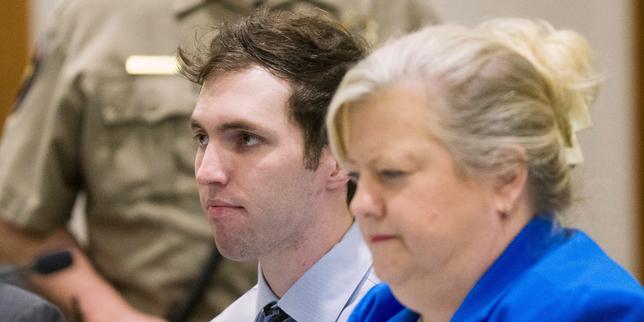
The political violence gripping the United States reached a crucial legal turning point when a Utah judge ruled that Tyler Robinson must stand trial for the assassination of conservative activist Charlie Kirk.
District Judge Tony Graf made it clear during a tense preliminary hearing in Provo that prosecutors presented overwhelming evidence linking the twenty-three-year-old defendant to the rooftop shooting. With a potential death sentence hanging in the balance, the case moves forward into a high-stakes trial that promises to expose deep ideological fractures.
The Evidence That Sealed the Decision
Prosecutors didn't hold back. Utah County prosecutor Ryan McBride walked the court through a mountain of physical and digital footprints left behind during the September attack at Utah Valley University. Authorities recovered the rifle used to fire a single fatal round into Kirk's neck from more than four hundred feet away. DNA matching Robinson was found directly on the trigger.
Beyond forensics, investigators mapped out a digital trail of messages on Discord and texts sent to Robinson's romantic partner. Prosecutors argued these communications revealed a premeditated plan and pointed toward a clear motive. Testimony from housemates and associates indicated that Robinson expressed deep regret after the fact, admitting privately to his involvement before authorities moved in.
Judge Graf spent hours reviewing dozens of pages of notes before ruling from the bench. He noted that the positioning of bystanders near the canopy area created a clear, reckless danger, satisfying the strict legal threshold required to pursue aggravated murder charges. Robinson promptly pleaded not guilty to all counts after the decision.
Defense Strategy and the Fight Over Capital Punishment
Defense attorneys didn't try to prove Robinson wasn't on the roof. Instead, they focused entirely on chipping away at the aggravating factors that elevate the charges to capital punishment territory.
Staci Visser and the defense team argued that the state was trying to force a standard murder into an aggravated framework. They emphasized that a single bullet struck one specific victim in an elevated position, claiming zero evidence showed that anyone else in the crowd of three thousand was actively targeted or placed in immediate physical jeopardy. They pushed back against the state's narrative regarding political animus, arguing that assumptions about what was inside the defendant's head shouldn't dictate a potential death sentence.
That legal defense ultimately failed to convince the bench. Judge Graf ruled that the inherent risks of firing a high-powered rifle toward a crowded public venue justify moving forward with the most severe charges available under Utah law.
What Happens Next in the Courtroom
The case now shifts toward trial preparations. Security around the courthouse remains exceptionally tight, reflecting the massive public interest and volatility surrounding the proceedings. Erika Kirk and other prominent figures connected to Turning Point USA continue to demand full accountability as the legal machinery grinds forward.
Expect defense counsel to file pre-trial motions challenging specific pieces of forensic data and digital evidence admissibility. Meanwhile, the prosecution will spend the coming weeks solidifying their narrative around political motivation to keep the death penalty viable before a jury. Monitor upcoming court docket updates for scheduling announcements on motion hearings and jury selection dates.