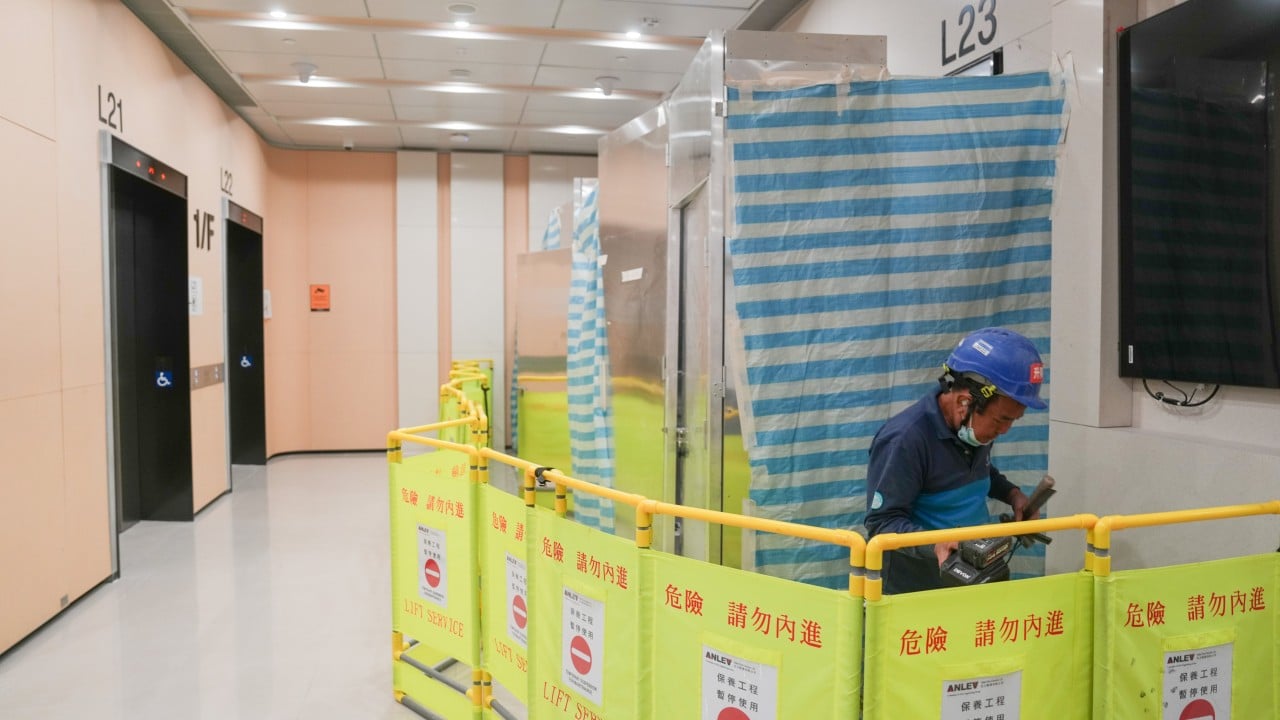
Hong Kong lawmakers are demanding a sweeping, independent inquiry into the Hospital Authority's elevator maintenance contracts following repeated mechanical failures at public medical facilities, including the high-profile incident at Kwai Chung Hospital where a lift plummeted with staff inside. Legislators across the political spectrum argue that isolated contractor penalties fail to address systemic flaws in lowest-bid procurement, outsourced safety inspections, and aging healthcare infrastructure. Rather than treating these mechanical breakdowns as singular vendor errors, lawmakers want auditors to examine every active lift contract across Hong Kong’s public hospital clusters to prevent a fatal mass-casualty event.
The immediate catalyst was terrifying. A staff elevator at Kwai Chung Hospital dropped several floors, injuring hospital workers and triggering an emergency suspension of the contractor responsible for the unit. Yet anyone who has tracked Hong Kong’s infrastructure management over the past twenty years recognizes a familiar pattern. A mechanical failure occurs. The Hospital Authority expresses deep concern. The Electrical and Mechanical Services Department (EMSD) launches a localized technical probe, suspends the specific vendor from bidding on new tenders for a few months, and the news cycle moves on.
Lawmakers are finally refusing to accept that script. During Legislative Council health panel sessions, representatives pointed out that a hospital elevator is not an office building lift. When a lift fails in a commercial tower in Central, commuters are late for meetings. When a lift fails in an acute-care public hospital, surgical teams are trapped, crash carts cannot reach cardiac arrest patients, and immobile residents are stranded during emergencies.
Why Lowest-Bid Procurement Creates Hidden Mechanical Debt
To understand why these failures keep happening, you have to follow the tender documents. Public bodies in Hong Kong operate under strict financial accountability rules designed to prevent corruption and overcharging. In theory, awarding contracts to the lowest compliant bidder protects taxpayers. In practice, especially in labor-intensive technical trades like vertical transportation, it triggers a race to the bottom.
Elevator maintenance is an unforgiving business. A modern hospital lift operates almost continuously, twenty-four hours a day, carrying heavy gurneys, diagnostic equipment, and dense crowds. Components wear out faster under this duty cycle than in residential high-rises. Proper upkeep requires preventive maintenance—replacing steel cables, brake pads, and electronic sensors before they reach failure thresholds.
When contractors slash their margins to win multi-year Hospital Authority tenders, the math stops working. Overhead costs for certified engineers, genuine OEM replacement parts, and mandatory safety testing remain fixed. To turn a profit on a razor-thin bid, a subcontractor faces intense commercial pressure to stretch maintenance intervals, rush through on-site inspections, or rely on reactive repairs rather than proactive component replacement.
Consider a hypothetical scenario to see how this plays out on the ground. Imagine a technician assigned to inspect twelve hospital lifts during a single eight-hour shift. Factoring in travel time between buildings, security sign-ins, and waiting for clinical staff to clear a busy service elevator, the technician might have less than twenty-five minutes per shaft. In twenty-five minutes, you can wipe down a sensor, check the oil level, and sign a logbook. You cannot thoroughly inspect hoisting ropes for microscopic wire breaks or test emergency braking governors under simulated load conditions.
The Structural Flaws in Outsourced Oversight
Regulatory oversight in Hong Kong relies heavily on self-certification backed by periodic government audits. Under the Lifts and Escalators Ordinance, registered lift contractors employ Registered Lift Engineers (RLEs) and Registered Lift Workers (RLWs) who are legally responsible for certifying that an installation is safe for public use. The EMSD acts as the overarching regulator, conducting risk-based spot checks and investigating incidents after they happen.
This regulatory model assumes two things. First, that the engineer signing the safety certificate has complete operational independence from commercial pressures. Second, that the government regulator has enough manpower to catch corner-cutting before steel cables snap or brakes slip.
Both assumptions strain under real-world conditions. Hong Kong faces a chronic, well-documented shortage of skilled lift technicians and licensed engineers. The work is physically demanding, carried out in hot, cramped machine rooms and dark shafts, often during overnight hours when hospital traffic slows down. Younger workers increasingly avoid the trade, leaving an aging workforce stretched thin across tens of thousands of lifts citywide.
When an industry suffers from a severe labor crunch while simultaneously operating under aggressive price competition, supervision erodes. Senior engineers end up signing off on inspection reports compiled by junior technicians they barely had time to shadow. Meanwhile, EMSD inspectors—who must oversee more than 70,000 lifts across Hong Kong—can only physically audit a fraction of the city's vertical transport network each year.
The Double Standard Between Commercial and Clinical Spaces
Walk into a Grade-A commercial skyscraper in Admiralty or Kowloon Station, and the elevators run with whisper-quiet precision. Property developers in the private sector view vertical transportation as a core asset value driver. They pay premium rates for direct manufacturer maintenance contracts, real-time IoT predictive monitoring, and dedicated on-site technicians who know every quirk of the machinery.
Public hospitals operate in a different universe. Built decades ago and subjected to relentless patient volume, many Hospital Authority facilities run on legacy mechanical systems that have been patched, retrofitted, and pushed well beyond their original design lifespans. While Hong Kong has poured billions into its ten-year hospital development plans, funding for mundane back-of-house infrastructure—like service lifts, chillers, and electrical switchgear—rarely commands political glamour until something breaks.
Lawmakers pressing for a wider investigation have highlighted this exact disparity. They argue that the Hospital Authority’s internal facility management teams lack the specialized engineering depth to audit complex lift maintenance logs effectively. When a hospital administrator receives a signed certificate from a registered contractor stating a lift is safe, the hospital takes it at face value. Without independent third-party engineering audits commissioned directly by the Hospital Authority, the buyer has no way of knowing whether they are paying for genuine preventive care or expensive pencil-whipping.
What Legislators Are Demanding Now
The push in the Legislative Council goes far beyond punishing the specific company involved in the Kwai Chung Hospital drop. Lawmakers are targeting three systemic reforms that could reshape how public infrastructure is maintained across Hong Kong.
- A Territory-Wide Audit of Hospital Lifts: Legislators want immediate, independent physical inspections of every passenger and service lift operating across all seven Hospital Authority clusters, prioritizing older acute-care facilities and psychiatric hospitals where patients cannot easily evacuate via stairs.
- Procurement Scoring Reform: Calls are growing to overhaul the tender evaluation formula so that technical capability, technician-to-lift ratios, and past safety records carry substantially more weight than the raw bid price.
- Real-Time Telemetry and Digital Logbooks: Lawmakers have questioned why public hospitals still rely on paper logbooks sitting in machine rooms when digital monitoring systems can automatically track maintenance duration, door-cycle counts, and brake wear in real time.
The Counter-Argument From Industry Veterans
Not everyone agrees that dismantling the current contracting framework will solve the problem overnight. Industry veterans and engineering associations point out that tightening tender rules without addressing the underlying labor shortage will simply drive up costs without increasing safety.
If the Hospital Authority suddenly mandates twice as many inspection hours per lift and bars mid-sized contractors from bidding, the market will consolidate into the hands of a few major multinational lift manufacturers. Those firms face the exact same technician shortage as smaller subcontractors. Higher contract prices might fatten corporate margins, critics argue, without magically producing new licensed engineers out of thin air.
There is also the operational reality of running a 24-hour public hospital. Taking an elevator out of service for four hours to conduct invasive brake and governor testing creates immediate bottlenecks in wards that are already operating above 100 percent bed occupancy. Hospital administrators frequently pressure maintenance teams to defer non-urgent shutdowns so clinical operations are not disrupted. Safety corners are not always cut by greedy contractors; sometimes they are trimmed to keep overcrowded wards moving.
Accountability Beyond the Subcontractor
The most uncomfortable question raised by the Kwai Chung Hospital incident is where institutional responsibility ends. Under Hong Kong’s administrative culture, outsourcing a physical service often doubles as outsourcing reputational risk. When a ceiling collapses at a university, or a train derails, or a hospital lift drops, official statements inevitably focus on the frontline vendor’s failure to follow established guidelines.
Lawmakers are signaling that this deflection no longer works. If a public body designs a procurement system that rewards unsustainably low bids, fails to verify whether contracted inspection hours were actually worked, and delays capital upgrades on aging hospital shafts, the governance failure sits inside the boardroom, not just the machine room.
A truly wide-ranging investigation must look at the contracts signed five and ten years ago. It needs to compare the bid prices against actual industry labor costs at the time of award. It needs to cross-reference contractor sign-in logs at hospital security desks against the duration of work claimed on maintenance invoices. If a technician signed into a hospital at 2:00 PM and signed out at 2:45 PM after allegedly servicing four traction lifts, the paper trail will tell the story immediately.
Public trust in Hong Kong’s healthcare system rests on the assumption that a hospital is a place of refuge, not physical peril. Doctors and nurses routinely work grueling shifts under immense pressure to save lives inside those wards. Ensuring that the steel cables carrying them and their patients between floors do not snap is the bare minimum standard of public administration, and lawmakers must force the Hospital Authority to prove it can meet it before another alarm bell rings.