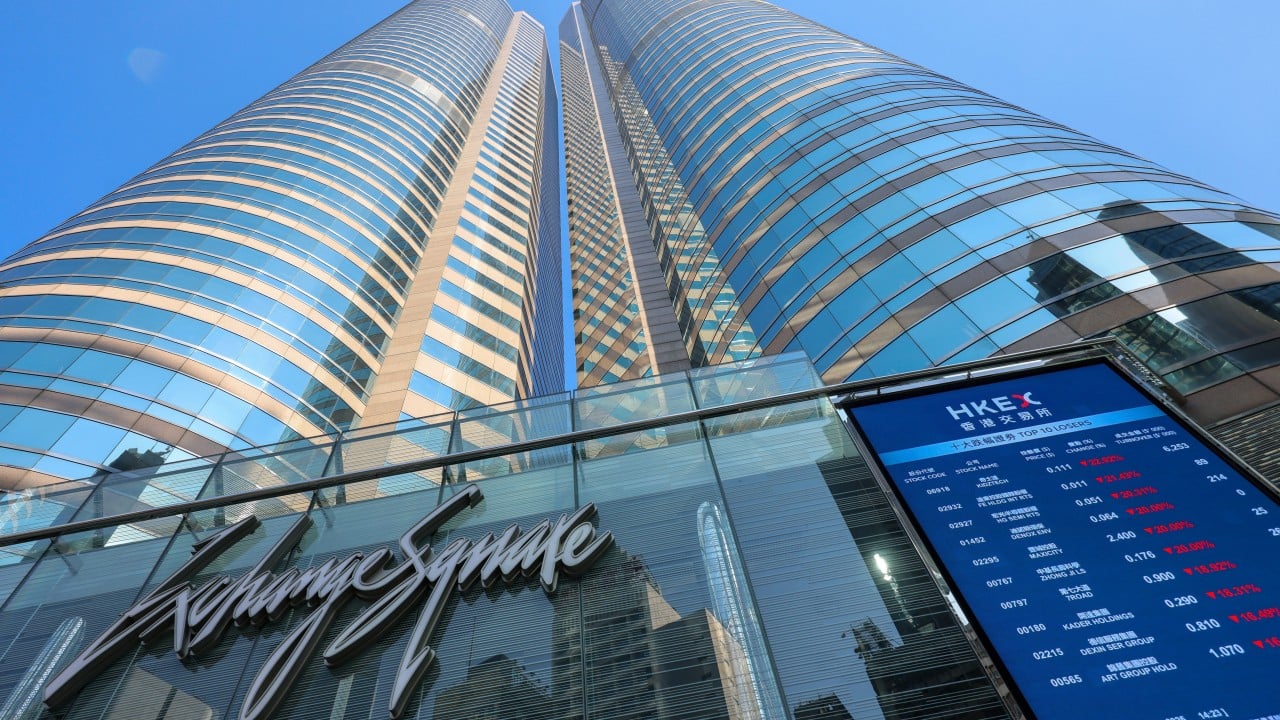
For decades, a listing on the Hong Kong Stock Exchange was a nearly indestructible asset, even when the underlying business had long since rotted away. That era is dead. Regulatory tightening by Hong Kong Exchanges and Clearing Limited (HKEX) and the Securities and Futures Commission (SFC) has fundamentally reversed the math of trading suspensions, causing forced delistings to decisively outnumber trading resumptions for the first time in modern market history. If a listed company fails to maintain viable operations or resolve audit failures within strict statutory deadlines, the exchange now pulls the plug rather than allowing zombie firms to linger in purgatory.
The shift is brutal. It is also long overdue.
For anyone who has covered Asian capital markets over the past twenty years, the old playbook was painfully predictable. A mid-cap or small-cap company—often a mainland enterprise that listed during a boom cycle—would suddenly miss its annual results deadline due to an "auditor resignation" or "accounting irregularities." Trading would be suspended. And then, nothing would happen for three, four, or sometimes seven years. These suspended companies became hollowed-out shells, traded off-market by speculators waiting for a reverse takeover (RTO) or a white-knight restructuring that would inject new assets into the old ticker.
Those days are over because the regulators systematically dismantled the economic incentives that kept shell companies alive.
How the Regulatory Trap Snapped Shut
To understand why delistings now eclipse resumptions, you have to look at the structural changes engineered by HKEX and the SFC over the last several years. Historically, the exchange treated delisting as a nuclear option of last resort, fearing that kicking a company off the board permanently destroyed whatever microscopic recovery value remained for minority retail shareholders.
Shell brokers exploited that hesitation relentlessly. By proposing endless, paper-thin restructuring plans, suspended firms could string the Listing Committee along for years.
HKEX broke that cycle by enforcing strict fixed-period delisting rules. Under the tightened regime (specifically Rule 6.01A of the Main Board Listing Rules), if a Main Board company remains suspended for 18 continuous months—and 12 months for the GEM board—the exchange has the explicit authority to cancel its listing immediately. Extensions are no longer handed out as routine courtesies; they are granted only in truly exceptional circumstances where a resumption is imminent and fully funded.
At the exact same time, regulators attacked the demand side of the equation. Through aggressive revisions to reverse takeover rules and "extreme transaction" definitions, HKEX made it virtually impossible for a private company to bypass the rigorous Initial Public Offering (IPO) vetting process by buying a distressed shell. If you want to inject a new business into a listed shell today, the exchange treats the transaction as a brand-new listing application. You face the exact same financial track-record requirements, due diligence standards, and sponsor liabilities as an IPO.
Why would a legitimate private business pay a multi-million-dollar premium for a tainted, litigation-heavy shell when it faces the exact same regulatory hurdles as a clean IPO? It wouldn't. Overnight, the value of a Hong Kong shell collapsed.
The Anatomy of a Modern Suspension
When a company enters suspension in Hong Kong today, the clock starts ticking with lethal precision. Most suspensions fall into three distinct buckets, and under current enforcement standards, each carries a high probability of ending in permanent removal from the board.
1. The Auditor Walkout and Forensic Quagmire
Every spring, during the March earnings rush, a fresh batch of companies fails to publish audited financial statements. Usually, the trigger is a disagreement between management and external auditors over unverified bank balances, mysterious prepayments to obscure suppliers, or questionable property valuations.
In the past, management could simply hire a smaller, more compliant accounting firm to sign off on the books a few months later. Today, the Accounting and Financial Reporting Council (AFRC)—Hong Kong's independent audit regulator—has teeth. Auditors know their licenses are on the line if they rubber-stamp murky mainland assets. When a Big Four or reputable mid-tier firm resigns citing unresolved audit issues, the company is immediately hit with resumption guidance from HKEX. This guidance almost always requires an independent forensic investigation, an internal control review, and the publication of all outstanding financial results.
Completing a credible forensic audit across multiple jurisdictions takes time. Finding a new auditor willing to take on a high-risk client takes even longer. By the time the company untangles its own books, the 18-month deadline has often expired.
2. The Sufficiency of Operations Test
Perhaps the most lethal weapon in the regulator's arsenal is Listing Rule 13.24, which requires a listed issuer to carry out a business with a sufficient level of operations and assets of sufficient value to warrant its continued listing.
Many legacy firms survived for years on paper-thin revenue—a tiny trading desk here, a handful of leased properties there—just enough to claim they were "operating." HKEX no longer tolerates tokenism. If a company's core business collapses and it attempts to survive on minuscule side ventures or passive investments, the exchange suspends trading on the grounds of insufficient operations. Once suspended under Rule 13.24, proving you have rebuilt a genuine, sustainable business within 18 months is an uphill battle that very few distressed management teams win.
3. Debt Defaults and Creditor Gridlock
The prolonged slump in mainland China's real estate and consumer sectors has fed directly into Hong Kong's delisting pipeline. When heavily leveraged developers or industrial conglomerates default on offshore dollar bonds, winding-up petitions quickly follow in Hong Kong's High Court.
Trading halts. Restructuring talks drag on across competing classes of onshore and offshore creditors. Because court-supervised schemes of arrangement rarely move at the speed required by HKEX's listing division, the 18-month regulatory guillotine frequently drops while bondholders are still arguing over haircuts.
The Collateral Damage Nobody Wants to Talk About
Regulators frame this wave of delistings as a vital cleanup operation—a necessary pruning of dead wood to protect Hong Kong's reputation as a premier international financial center. Institutional investors largely agree. Global pension funds and sovereign wealth managers have zero interest in a market cluttered with illiquid, governance-challenged micro-caps.
Yet there is a stark, uncomfortable gray area in this enforcement drive that rarely makes it into official press releases: minority retail investors are the ones taking the total loss.
When a company is delisted in Hong Kong, its shares do not vanish, nor does the company necessarily dissolve. It simply becomes an unlisted public company. For a retail investor holding shares in a brokerage account, however, the practical reality is a total wipeout. There is no centralized over-the-counter (OTC) bulletin board in Hong Kong with meaningful liquidity. Once the ticker disappears from the HKEX screen, retail shareholders are trapped in an illiquid asset with zero price discovery, minimal financial disclosure obligations, and virtually no practical way to exit.
Critics of the rigid 18-month rule argue that rogue controlling shareholders actually benefit from forced delisting in certain scenarios. Consider a hypothetical example: imagine a founder who has quietly siphoned cash out of a listed company through related-party transactions. Under the old system, keeping the listing alive meant enduring continuous regulatory scrutiny and disclosure requirements. Today, if the company simply stalls on its forensic audit until the 18-month clock runs out, HKEX cancels the listing—effectively freeing the controlling shareholder from public market oversight while leaving minority shareholders stranded with worthless paper.
The regulators are well aware of this moral hazard. To counter it, the SFC has ramped up enforcement actions under Section 214 of the Securities and Futures Ordinance, seeking court orders to disqualify delinquent directors and force controlling shareholders to compensate minority investors directly. Still, litigation moves at a glacial pace compared to the swift mechanical certainty of an HKEX delisting notice.
Why Market Liquidity Makes Recovery Even Harder
Even when a suspended company manages to fix its internal governance, replace its board, and satisfy every item on HKEX's resumption checklist, it faces a brutal reality upon returning to the market.
Liquidity in Hong Kong's mid- and small-cap tiers has dried up. Over the past several years, trading volume on the exchange has become heavily concentrated in the top tier of mega-cap tech, financial, and state-owned enterprises. For a small-cap firm emerging from a 15-month suspension, there is no natural institutional bid waiting on day one.
Without institutional interest, raising fresh equity—often a mandatory condition of a debt restructuring or resumption plan—becomes nearly impossible without massive dilution. Existing shareholders are frequently wiped out by 90% or more through punitive open offers or deep-discount placings just to get the stock trading again. In many cases, the surviving company is so starved of capital and investor attention that it drifts right back toward trouble within two years.
What Comes After the Purge
The divergence between delistings and resumptions is not a temporary statistical anomaly caused by a single bad economic cycle. It represents a permanent structural reset of what it means to be a public company in Hong Kong.
For decades, the city's market operated on a high-volume, wide-net model: let hundreds of smaller firms list, tolerate lax post-IPO governance, and let the market sort out the winners from the shells. That philosophy failed the test of modern institutional standards. Confronted with intense competition for global capital and strict scrutiny over corporate governance, Hong Kong's regulators chose quality and credibility over sheer headcount.
The market is shrinking in terms of total listed entities, and the transition is painful for restructuring advisors, distressed-debt speculators, and trapped retail investors alike. Yet the message to every boardroom in the region is unmistakable. A Hong Kong listing is no longer a permanent trophy you can leave gathering dust on a shelf—if you stop running a real, auditable business, the exchange will take the keys back.