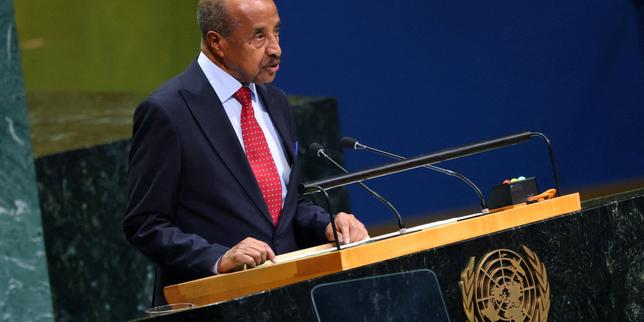
When Asmara petitioned the United Nations Security Council to condemn what it branded an explicit declaration of war by Addis Ababa, it did not merely mark another diplomatic flare-up in the Horn of Africa. It signaled the catastrophic unraveling of an opportunistic, fragile alignment that once bound two bitter adversaries. Prime Minister Abiy Ahmed and President Isaias Afwerki forged a hasty, backroom bromance in 2018 primarily to crush a mutual political enemy, the Tigray People's Liberation Front (TPLF). That common objective culminated in the devastating 2020-2022 Tigray war.
Once the TPLF was battered and the Pretoria Agreement was signed in November 2022, the foundational glue of that pact evaporated. Today, the region stands on the precipice of a third catastrophic conflict, driven by deadlocked geopolitics, unyielding domestic pressures, and a desperate quest for sovereign maritime access along the Red Sea.
The Anatomy of a Fractured Alliance
To understand how two neighbors transitioned from joint military operations to reciprocal threats of an all-out invasion, one must examine the severe structural pressures bearing down on the Ethiopian federal state. Prime Minister Abiy’s administration faces compounding internal security challenges, stubborn economic constraints, and a persistent political legitimacy deficit. Landlocked since Eritrea's formal secession and independence in the early 1990s, Ethiopia views its lack of sovereign port access as an existential bottleneck on long-term national development.
In late 2023 and onward, Addis Ababa’s rhetoric shifted markedly toward securing a Red Sea gateway by any means necessary. This ambition transformed foreign policy from cooperative regional diplomacy into aggressive maritime posturing. For Asmara, which fought a brutal decades-long war for its own independence and guards its territorial integrity with an iron fist, any external coveting of its coastline is interpreted as a clear and present danger.
Mutual suspicions intensified sharply as sporadic border skirmishes and alleged troop infiltrations escalated across the northern frontiers. By framing Ethiopia's ambitions and subsequent military maneuvers as an aggressive push toward its sovereign borders, Eritrea took its case to international platforms, urging the Security Council to enact deterrent measures under Chapter VII provisions. Meanwhile, Addis Ababa countered by invoking Article 51 of the UN Charter, notifying the international body that it was acting strictly in self-defense against what it termed an Eritrean incursion.
Strategic Miscalculations and Legal Fallacies
The diplomatic sparring at Turtle Bay masks a dangerous reality on the ground. Both governments are playing high-stakes domestic politics where externalizing blame is a tested survival mechanism.
For the Asmara regime, maintaining a permanent state of national mobilization has historically served as the primary instrument for social control and internal consolidation. A threatened external aggression validates the long-standing governing philosophy that the nation remains a beleaguered fortress.
For Addis Ababa, adopting a hardline stance against perceived encirclement rallies nationalist sentiment across fractured ethnic lines. However, this strategy carries catastrophic structural risks. Re-engaging in open-ended hostilities with Eritrea would not solve Ethiopia's internal economic woes or its myriad domestic insurgencies. Instead, it risks merging localized conflicts into a multi-front conflagration that could destabilize the entire East African seaboard.
International monitors note that the current diplomatic deadlock lacks the robust mediation architecture required to defuse tensions. The African Union, which midwived the fragile 2022 cessation of hostilities, finds itself politically constrained and financially stretched. Western capitals, deeply distracted by compounding geopolitical crises in Eastern Europe and the Middle East, have largely defaulted to low-level diplomatic hand-wringing rather than exercising hard leverage to force restraint.
The Regional Spillover Threat
A renewed war between Addis Ababa and Asmara would not remain a localized border dispute. The porous borders and complex network of proxy alliances spanning Sudan, South Sudan, and Somalia mean that any major escalation would trigger a domino effect.
Regional actors are already quietly realigning their diplomatic and security portfolios to hedge against worst-case scenarios. Gulf states and external powers with strategic interests in the Bab el-Mandeb strait and the wider Red Sea corridor view these rising tensions with deep alarm. Commercial shipping lanes, already vulnerable to asymmetric disruptions, cannot absorb the shock of a wider regional war involving major riparian states.
The appeals lobbed at the UN Security Council are unlikely to yield immediate enforcement action given the deep divisions among permanent members. As diplomatic channels narrow and troops remain massed along disputed frontier zones, the margin for error shrinks daily. The underlying grievances—unresolved territorial lines, deep-seated historical trauma, and clashing visions for regional dominance—continue to fester without an inclusive framework for dialogue.
The path forward demands a fundamental recalibration from leadership in both capitals, moving away from zero-sum brinkmanship before a structural miscalculation permanently shatters the fragile peace of the entire Horn of Africa


