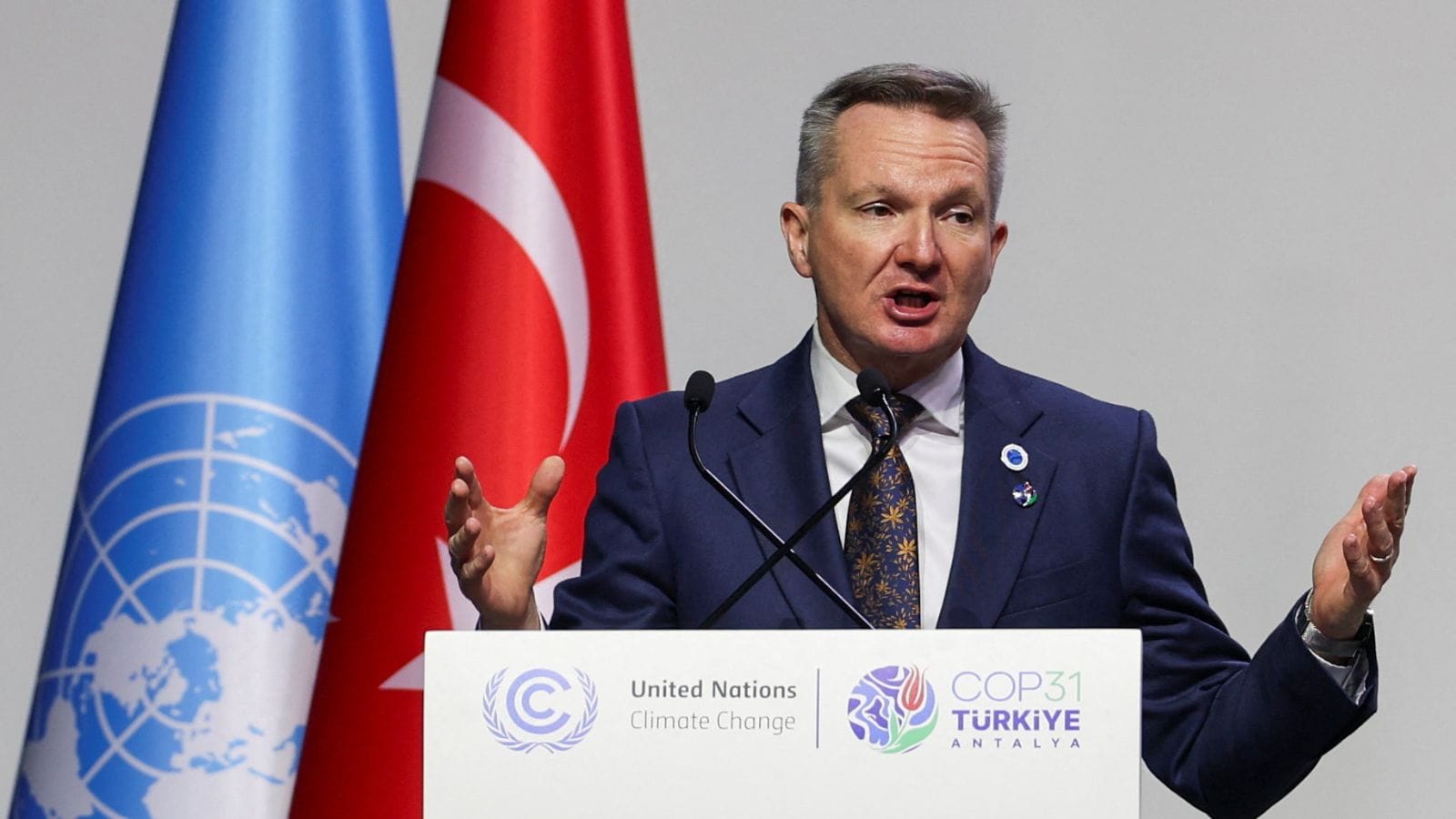
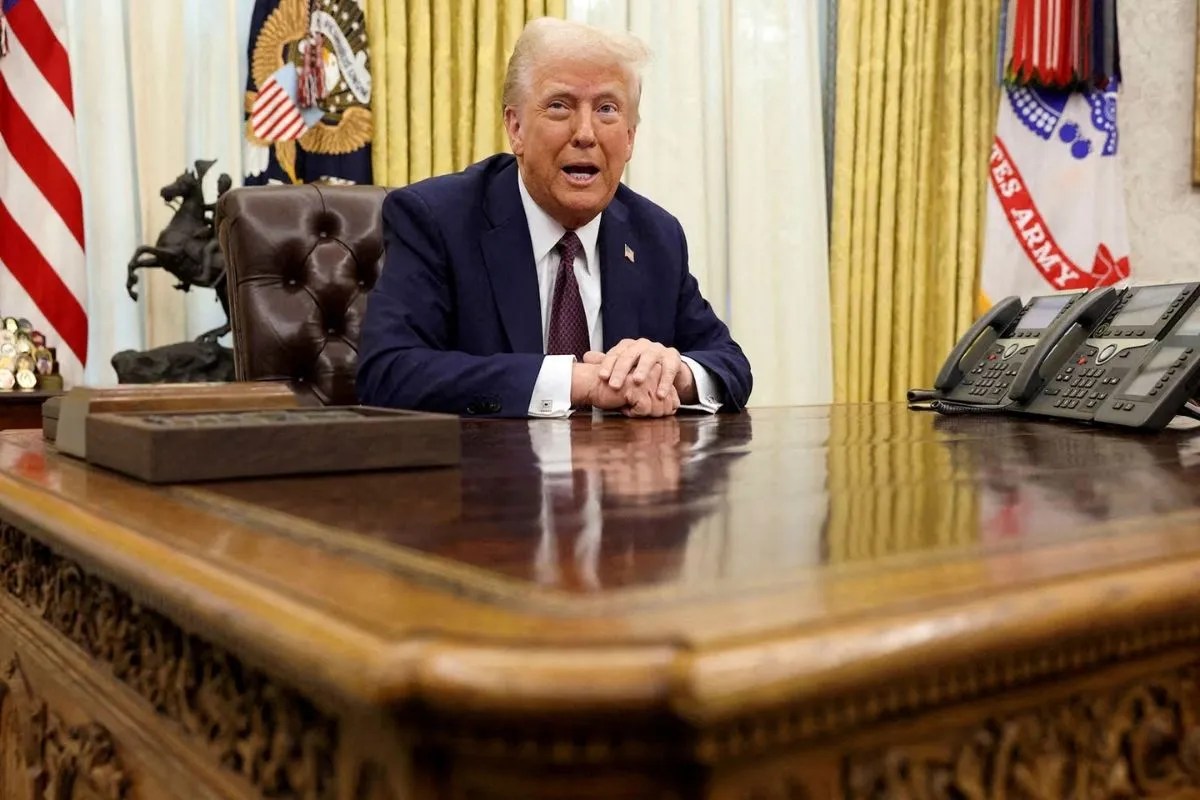
Tehran's latest warning of catastrophic retaliation against American assets in the Middle East is not routine diplomatic bluster. It represents a calibrated shift in deterrence posture triggered by heightened U.S. military deployments, tightening economic chokeholds, and direct warnings exchanged through backchannels. Simultaneously, Canberra has broken ranks with traditional lockstep messaging, quietly pressuring the Trump administration to pull back from the brink because a full-scale conflict in the Persian Gulf would instantly sever Australia's energy lifelines and drag its defense forces into an unwinnable theater.
Surface-level coverage treats these twin developments as isolated headlines. They are not. They are symptoms of a collapsing deterrence framework where miscalculation is no longer an abstract risk, but an operational probability.
The Mechanics of Tehran's Asymmetric Doctrine
To understand why Iranian military commanders are using the word "catastrophic," you have to look past the podium rhetoric and examine the hardware sitting in hardened underground facilities across western Iran. Tehran knows it cannot win a conventional force-on-force engagement against a U.S. carrier strike group or fifth-generation stealth bombers. It does not intend to try.
Instead, the Islamic Revolutionary Guard Corps (IRGC) relies on a doctrine of horizontal escalation and saturation warfare. The math is brutally simple. Modern air defense interceptors—like the Patriot PAC-3 or the naval SM-6—cost millions of dollars per round and take months to manufacture. Low-cost loitering munitions and medium-range ballistic missiles cost a fraction of that and can be launched in simultaneous swarms from mobile transporter-erector-launchers.
When Tehran threatens catastrophic consequences, it is signaling three specific operational capabilities:
- Strait of Hormuz Interdiction: Roughly one-fifth of the world's petroleum liquids pass through this narrow chokepoint. Using sea mines, fast-attack craft, and coastal anti-ship cruise missiles, Iran does not need to defeat the U.S. Navy to crash the global economy; it only needs to make commercial maritime insurance prohibitively expensive.
- Regional Base Saturation: Tens of thousands of American personnel are stationed across installations in Iraq, Syria, Kuwait, Qatar, Bahrain, and the United Arab Emirates. Many of these bases sit within a 15-minute flight time of Iranian ballistic missile batteries, leaving minimal warning windows for personnel to reach hardened shelters.
- Proxy Activation: Through the Axis of Resistance—spanning Hezbollah in Lebanon, the Houthis in Yemen, and various militias in Iraq and Syria—Tehran maintains the ability to open multiple fronts simultaneously, stretching U.S. logistical and intelligence bandwidth to its breaking point.
This is not a bluff designed purely for domestic consumption. Military planners in the Pentagon recognize that even if 90 percent of an incoming Iranian missile barrage is intercepted, the remaining 10 percent hitting critical infrastructure, desalination plants, or troop barracks would inflict mass casualties and trigger domestic political demands in Washington for an even larger ground or air campaign.
Why Canberra Hit the Panic Button
While Washington weighs the optics of maximum pressure and military readiness, Canberra is looking at shipping lanes and fuel reserves. Australia's sudden diplomatic intervention urging the Trump administration to de-escalate stems from cold, hard national self-interest rather than ideological pacifism.
Australia is an island nation with a glaring strategic vulnerability: liquid fuel security. Following the closure of several domestic refineries over the past decade, Australia relies heavily on imported refined fuel, much of which originates from or transits through Asian hubs fed by Middle Eastern crude. Supply chains are long, fragile, and operate on just-in-time delivery models.
If a shooting war erupts between the United States and Iran, the Strait of Hormuz closes. Global crude prices would spike overnight, potentially crossing $150 a barrel within days. For Australia, the fallout would be immediate and severe:
- Domestic Fuel Rationing: Australia has historically struggled to maintain the International Energy Agency's mandated 90-day net import oil reserve, with a significant portion of its emergency stock held in transit on the high seas or stored in the U.S. Strategic Petroleum Reserve.
- The AUKUS Distraction: Canberra has staked its multi-decade defense strategy on the AUKUS security pact, pouring hundreds of billions of dollars into acquiring nuclear-powered submarines to deter Chinese expansionism in the Indo-Pacific. A protracted U.S. war in the Middle East would siphon American naval assets, munitions stockpiles, and political focus away from the Pacific theater at the exact moment Australia needs Washington anchored in Asia.
- Alliance Entrapment: Under the ANZUS treaty, Australia faces immense pressure to contribute naval frigates, surveillance aircraft, or special forces to U.S.-led coalitions. Canberra's political leadership remembers the domestic backlash and strategic drain of the 2003 Iraq invasion, and there is zero appetite in Parliament for another open-ended Middle Eastern entanglement.
By pressing the White House behind closed doors—and increasingly through public diplomatic channels—Australian officials are trying to remind Washington that alliance solidarity does not mean writing a blank check for regional destabilization.
The Dangerous Illusion of Controlled Escalation
The central flaw in current Washington policy is the belief that military pressure can be dialed up or down like a thermostat to force diplomatic concessions. History proves otherwise. Coercive diplomacy works only when the target state believes that compliance is safer than resistance.
Right now, the leadership in Tehran views capitulation under intense American pressure as an existential threat to regime survival. When a government believes that backing down will lead to internal collapse or external decapitation strikes, deterrence flips into desperation.
Consider how miscalculation unfolds in real time. A U.S. destroyer operates in tight quarters in the Persian Gulf. An IRGC fast-boat squadron conducts aggressive maneuvering. A radar lock occurs, or a warning shot is fired. Within seconds, local commanders operating under tightened rules of engagement make irreversible decisions. Once the first missiles fly, neither side can afford to look weak, locking both capitals into an escalatory spiral where every strike demands a larger counter-strike.
The Trump administration's preference for unpredictable leverage—keeping adversaries guessing about where the red lines actually lie—collides directly with Iran's rigid ideological and military red lines. Ambiguity in crisis management does not breed caution; it breeds paranoia.
What Washington and Tehran Are Both Misreading
Every major intelligence failure in modern history shares a common root: mirror-imaging, or assuming your adversary thinks, calculates risk, and values outcomes the exact same way you do. Both Washington and Tehran are currently trapped in this cognitive blind spot.
Washington's Blind Spot
American strategists frequently assume that severe economic pain and the threat of overwhelming aerial bombardment will inevitably force Tehran back to the negotiating table on U.S. terms. This overlooks how the Islamic Republic has spent over four decades building a resistance economy specifically engineered to survive sanctions and isolation. The ruling establishment has repeatedly demonstrated a willingness to let its civilian population absorb staggering inflation and currency collapse rather than surrender its regional forward-defense doctrine or ballistic missile program.
Furthermore, bombing Iranian nuclear or military infrastructure does not erase institutional knowledge. You can collapse a centrifuge hall with bunker-busting munitions, but you cannot bomb away the scientific expertise of thousands of engineers. Strikes would almost certainly guarantee that Tehran abandons the Nuclear Non-Proliferation Treaty entirely and makes a covert sprint for a deliverable weapon as its only reliable insurance policy.
Tehran's Blind Spot
Conversely, Iranian planners routinely underestimate the domestic political velocity inside the United States once American blood is spilled. Tehran often calculates that it can calibrate a strike—hitting equipment rather than personnel, or targeting peripheral bases—to impose costs without triggering an all-out American war.
That threshold is razor-thin. If an Iranian missile malfunctions, or if air defenses fail to intercept a salvo aimed at a compound housing U.S. contractors and service members, the resulting casualty count would strip the White House of any diplomatic off-ramps. Regardless of who sits in the Oval Office, a mass-casualty event inflicted on U.S. forces triggers an overwhelming, bipartisan demand for devastating retaliation that no president could politically survive ignoring.
The Quiet Scramble for Off-Ramps
Behind the public threats and naval deployments, a frantic diplomatic shadow game is underway. Australia's intervention is part of a broader, quieter push by U.S. allies—including European capitals and Gulf Arab states—who stand directly in the line of fire.
Countries like Saudi Arabia and the United Arab Emirates, despite their deep historical rivalries with Tehran, have spent the last several years actively repairing diplomatic ties with Iran. Crown princes in Riyadh and Abu Dhabi understand that their gleaming skyscrapers, oil export terminals, and economic diversification plans are completely exposed to regional warfare. They have quietly communicated to Washington that they will not allow their airspace or bases to be used as launchpads for offensive strikes against Iran, terrified that they will bear the brunt of Tehran's immediate retaliation.
Oman and Qatar remain the primary conduits for indirect messaging between Washington and Tehran. Through these channels, diplomats are attempting to establish basic guardrails:
- Deconfliction Hotlines: Ensuring direct military-to-military communication channels remain open in the Persian Gulf to prevent accidental clashes between naval vessels and drones.
- Proportionality Boundaries: Signaling clearly what specific actions—such as the death of American personnel or the mining of international shipping lanes—cross the threshold into full-scale war.
- Freeze-for-Freeze Frameworks: Exploring quiet, unwritten understandings where Iran halts high-level uranium enrichment and reins in regional militia attacks in exchange for an easing of strict enforcement on oil export sanctions.
None of these mechanisms solve the underlying structural hostility between the United States and the Islamic Republic. They are temporary pressure valves designed to buy time and prevent an accidental conflagration.
The reality facing policymakers in Washington, Tehran, and Canberra is stark. Deterrence only holds when both sides possess a clear, face-saving exit route, and right now, the exits are rapidly closing.