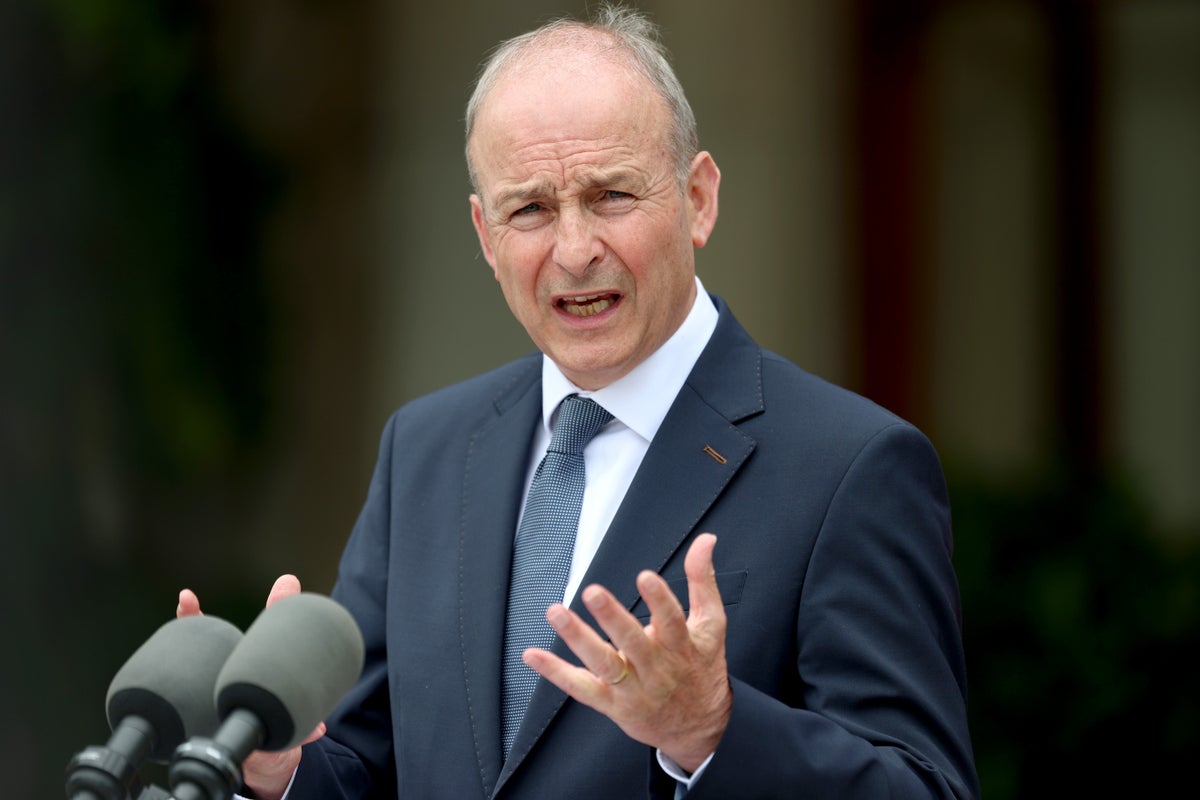
Ireland is rewriting the baseline of its civic identity. Under sweeping new proposals brought forward by the government, the standard residency requirement for naturalization is set to jump from five years to eight years, fundamentally altering how foreign nationals integrate into Irish society. Taoiseach Micheál Martin and Justice Minister Jim O'Callaghan have framed the overhaul as a necessary harmonization with wider European Union standards, aimed at managing surging application volumes and ensuring civic readiness. Yet, beneath the political talking points lies a much sharper legislative pivot. This shift introduces formal language testing, mandatory civics examinations, strict economic self-sufficiency thresholds, and the complete exclusion of time spent under temporary protection schemes from counting toward naturalization.
For decades, Dublin maintained a relatively open door regarding naturalization pathways compared to continental heavyweights. That era is officially closing. As the political establishment responds to shifting domestic pressures and European migration pacts, the mechanics of becoming an Irish citizen are turning from an administrative formality into a high-hurdle test.
The Mechanics of the Eight-Year Wait
The core engine of this policy change is time. Pushing the mandatory residency window from five years to eight years does more than simply delay an administrative stamp. It fundamentally recalculates a migrant's life trajectory.
Consider a hypothetical example. A software engineer arrives in Dublin on a critical skills permit, rents an apartment, pays income tax, and starts a family. Under previous regulations, that individual could look forward to applying for naturalization after five years of legal reckonable residence, gaining the right to vote in general elections and securing long-term political stability. Under the proposed framework, that same worker must now anchor their life for nearly a decade before even submitting an application.
Justice Minister Jim O'Callaghan defended the timeline publicly by pointing out that neighboring jurisdictions maintain similar or even stricter multi-year prerequisites. Germany requires eight years, while other European states stretch the timeline much further. But critics, including a coalition of migrant rights organizations and civil liberties groups, argue that comparing Ireland's housing-constrained, high-inflation economy to continental models misses the operational reality on the ground. Administrative processing delays in Dublin are already notorious. Adding three extra years to the statutory minimum creates an extended period of civic limbo.
Furthermore, the legislation introduces a rigid cutoff mechanism. Applicants sitting at four years and ten months of residency when the new law commences will find themselves immediately dragged back by the new threshold. There is no grace period for those who built their plans around the old rules.
Language Tests and Economic Bars
Time is only one variable in the new equation. The government is also introducing mandatory proficiency evaluations in English or Irish, alongside an official civics test designed to measure an applicant's comprehension of state values.
On paper, testing language skills and constitutional knowledge is common practice across Western democracies. Critics point out a glaring administrative contradiction. No strict language examination is required for someone to secure a standard employment permit, pay taxes, or contribute to the economy. The state has long deemed a worker's linguistic capability sufficient for employment, yet suddenly finds it deficient for civic participation.
Economic conditions are also hardening. The legislative framework enables evaluators to assess whether an applicant holds sufficient personal resources to avoid becoming an economic burden on the state. This introduces a precarious vulnerability. A migrant who loses a job during an economic downturn, suffers a medical emergency, or requires temporary housing support could see their path to citizenship derailed. Integration is rarely a linear upward trajectory. By penalizing temporary dips in economic self-reliance, the state risks creating a two-tier society where only the affluent securely anchor themselves to the franchise.
The Temporary Protection Exclusion
Perhaps the most contentious element of the overhaul targets beneficiaries of the European Union's Temporary Protection Directive. Thousands of individuals—predominantly those fleeing the war in Ukraine—have built lives in Irish towns and cities since 2022. Under the new rules, time spent under this specific protection status will not count toward the residency requirements for naturalization.
Taoiseach Micheál Martin addressed this head-on, stating bluntly that temporary protection was never designed to serve as a backdoor pathway to permanent citizenship. While Ireland has punched above its weight per capita in hosting refugees, the political consensus has fractured over long-term demographics.
This exclusion draws a hard administrative line between economic migrants and those displaced by geopolitical conflict. For families who enrolled children in local schools, integrated into community sports clubs, and found employment in local businesses, the message is stark. Their years of physical presence in the country do not exist in the eyes of naturalization law. They must start their clock from zero the moment they transition to an alternative, non-temporary immigration permission.
The Political Calculus Behind the Clampdown
Why make these changes now? To understand the timing, one must look at the shifting political winds across Western Europe. Dublin has faced mounting pressure over public infrastructure, healthcare capacity, and a severe housing crisis. Immigration has morphed from a backroom administrative dossier into a frontline political battleground.
The government points to the successful implementation of the EU Migration Pact as proof that a firmer hand yields results. Overall asylum application numbers have dropped over the past year, and state accommodation costs are beginning to stabilize. Tightening citizenship laws acts as a logical extension of this broader containment strategy. By raising the barriers to entry, the state aims to temper the continuous expansion of its citizen registry and signal to domestic voters that immigration flows are under strict control.
Yet, veteran analysts note a deeper risk. Prolonging the period of political disenfranchisement does not stop people from living and working in Ireland; it simply keeps a massive segment of the tax-paying workforce voteless and unrepresented. When hundreds of thousands of residents spend nearly a decade contributing to the economy without any say in local or national governance, social cohesion fractures.
The legislation moves to the Cabinet table with momentum, backed by a coalition eager to project decisiveness. The administrative architecture of the Irish state is shifting toward exclusion rather than assimilation, replacing a welcoming posture with bureaucratic friction. The long-term cost of this friction will unfold quietly in classrooms, workplaces, and communities across the country.