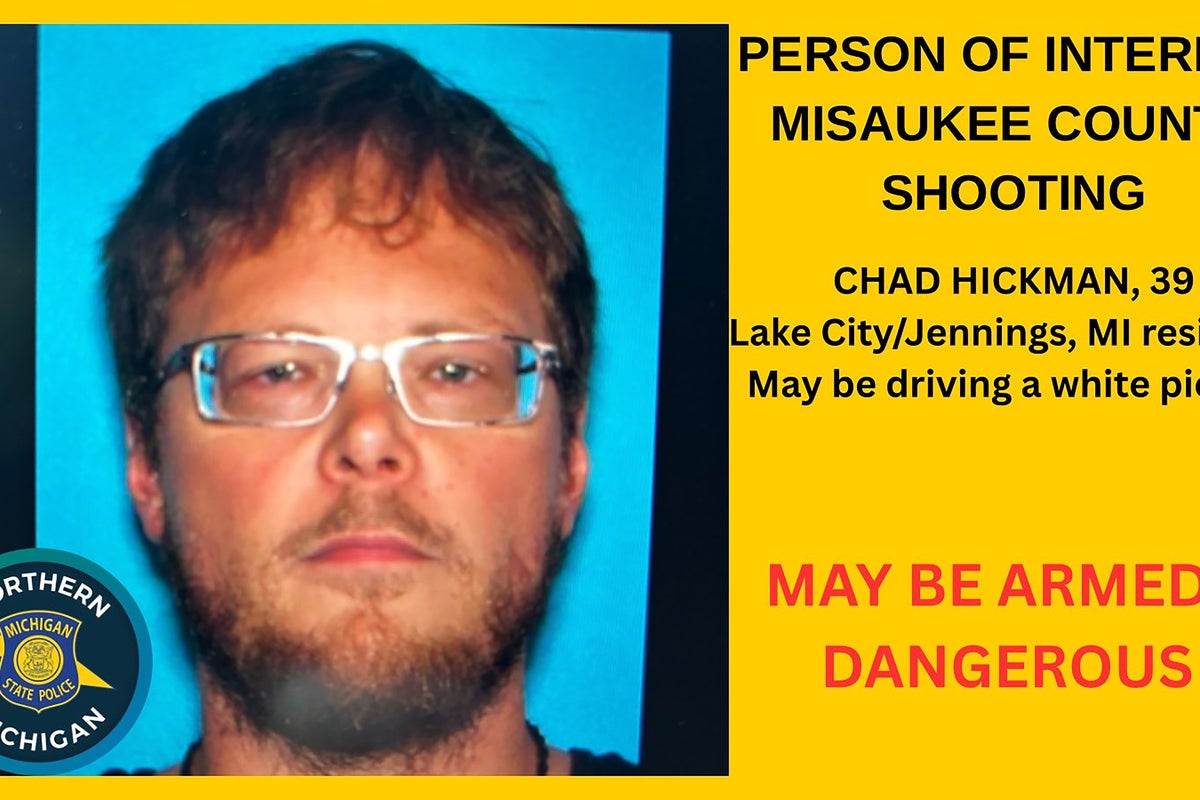
The sequence of violence that left multiple dead across northern Michigan in Missaukee County exposed a chilling reality about the gaps in the criminal justice system. The gunman, identified as 39-year-old Chad Hickman, left a trail of carnage across multiple scenes before his body was found in a wooded area alongside one of his victims. Court records quickly surfaced showing a stark history of domestic violence and a 2024 conviction for fourth-degree child abuse. When an individual with a documented record of violence against children and domestic abuse can cycle through the penal system and re-emerge to execute a mass casualty event, the conversation must move past simple expressions of shock.
Society demands answers regarding how warning signs are managed, evaluated, and ultimately brushed aside by administrative machinery that treats violent behavior as manageable infractions rather than existential threats.
The Anatomy of a Missed Warning
Public safety officials often emphasize the unpredictable nature of sudden violence. Yet, a retrospective look at the perpetrator’s file reveals a predictable trajectory. In 2024, circuit court records indicate that Hickman faced a battery of serious charges, including multiple felonies encompassing first-degree criminal sexual conduct and third-offense domestic violence, alongside several misdemeanor counts.
Those heavy felony charges did not stick in their original form. Through the mechanics of plea negotiations, the prosecution dismissed the felony sexual conduct and assault charges, securing a conviction solely on misdemeanor fourth-degree child abuse and contributing to the delinquency of a minor. The sentence handed down was 365 days in jail.
For career observers of the judicial process, this represents a familiar compromise. Prosecutors frequently lean toward plea agreements to secure a conviction without the friction, expense, and uncertainty of a trial. When dealing with domestic violence and child abuse cases, however, this transactional approach carries catastrophic external costs. A misdemeanor conviction for child abuse reduces a complex, highly dangerous pattern of domestic terror into a bureaucratic statistic. It signals to the offender that severe acts of violence can be discounted, negotiated away, and ultimately survived with minimal structural consequence.
Why Plea Bargaining Fails Domestic Violence Interventions
The legal architecture governing domestic disputes and child welfare is underfunded, overburdened, and structurally ill-equipped to perform long-term risk assessment. Prosecutors operate under heavy dockets. Public defenders push for reduced sentences to spare clients from maximalist statutory penalties. Judges approve agreements based on the paperwork presented in court, rarely possessing the resources to order exhaustive, multi-year psychological evaluations that trace the escalation path of an abuser.
When a perpetrator serves a brief jail sentence and returns to the community, the underlying behavioral pathology remains completely unaddressed. Rehabilitation programs inside local correctional facilities are often superficial, consisting of brief modules that do little to alter entrenched patterns of rage, control, and domestic dominance.
Consider a hypothetical scenario common in rural courtrooms: an offender is arrested on multiple felony domestic counts. The victim, exhausted, isolated, or fearful of retaliation, becomes uncooperative with prosecutors. Facing a trial without a willing primary witness, the state accepts a plea to a lesser misdemeanor charge to guarantee some measure of accountability. The system treats this as a pragmatic victory. In reality, it is a ticking clock. The reduction of a felony charge acts as an official validation that the offender's conduct was less severe than the initial police report indicated.
The Rural Policing Challenge
Geography compounds these systemic failures. Missaukee County and surrounding northern Michigan jurisdictions cover vast, sparsely populated terrain. Law enforcement agencies operate with lean staffing models where a single deputy might cover hundreds of square miles. Response times to remote residential properties can stretch across critical minutes.
When a violent offender with a background of abuse moves through a rural community, neighbors may remain entirely unaware of historical court records. Privacy laws, combined with decentralized record-keeping systems across various municipal, county, and state databases, create informational silos. Local police departments know an individual, but the broader community possesses no mechanism to assess risk.
By the time Michigan State Police responded to the initial residential emergency in Caldwell Township, the window for intervention had slammed shut. The subsequent manhunt mobilized state resources, but it was fundamentally a reactive exercise. Prevention had failed months and years prior, when the legal apparatus decided that a year behind bars was an adequate endpoint for a violent actor.
Rethinking Accountability in the Justice System
The aftermath of the Missaukee County tragedy forces a hard look at sentencing guidelines and risk management protocols. Treating child abuse and domestic violence as lower-tier misdemeanors through plea reductions creates a dangerous illusion of public safety. If the legal system cannot reliably isolate individuals who demonstrate a clear willingness to inflict harm on the most vulnerable members of their households, communities will continue to absorb the devastating impact.
True reform requires abandoning the administrative convenience of routine plea bargaining in cases involving interpersonal violence. Prosecutors must be backed by state resources that allow them to pursue felony charges to trial even when victims recant, utilizing independent evidence and expert testimony to establish a pattern of abuse. Until the courts begin to treat domestic and child abuse convictions as primary indicators of potential mass violence rather than isolated private disputes, these cycles will persist in the shadows until they erupt in public view.
Teen boy among 6 dead including suspect in Michigan shootings; girl survived
This video provides local news coverage and updates regarding the multi-scene shooting investigation in Michigan and the community response.