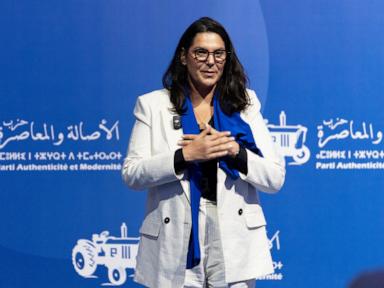
When the provisional tallies flickered across Rabat monitors in the early hours, the Authenticity and Modernity Party (PAM) claimed 97 of the 395 seats in Morocco's House of Representatives. On paper, it was a triumph for the monarchy-aligned formation, pushing aside its primary coalition rivals and setting the stage to anchor the next government. But look past the initial seat distribution announced by the Interior Ministry, and a starker picture emerges. Only 38 percent of registered voters bothered to cast a ballot. That figure represents an alarming slump in civic participation, laying bare a widening chasm between institutional politics and an electorate grappling with persistent economic strain, youth unemployment approaching thirty percent, and deep disillusionment with partisan maneuvering.
Elections are often framed as grand democratic referendums. In reality, they are mechanical exercises governed by arithmetic, patronage networks, and structural design. PAM secured its first-place finish through a well-oiled machine rooted in regional influence and establishment alignment. Founded in 2008 by close royal advisors, the party has always operated with a distinct institutional tailwind. Yet, celebrating a victory built on a foundation of widespread voter apathy requires a specific kind of political blindness.
When nearly two-thirds of the eligible population stays home, the winning mandate is inherently fragile. Millions of citizens looked at the political menu and decided the kitchen was closed. This wasn't accidental protest; it was structural exhaustion. For years, successive cabinets have promised structural transformation while delivering modest cosmetic adjustments. Voters have grown weary of interchangeable platforms offering identical economic trajectories wrapped in different party colors.
Decoding the Participation Collapse
The drop to 38 percent turnout is not just a statistic. It is a loud silence.
Consider the demographic reality. A massive segment of Morocco's population consists of young adults navigating a precarious labor market. Youth unemployment hovers stubbornly around the thirty percent mark, and millions remain entirely outside formal employment or educational structures. When these young citizens look at the ballot box, they see an apparatus designed to perpetuate elite continuity rather than solve structural unemployment.
Furthermore, the mechanics of voter registration create administrative friction. Morocco lacks automatic voter registration. This leaves hundreds of thousands of eligible young citizens unlisted and disenfranchised before campaigns even begin. The system filters out disaffected voices before a single vote is cast. Parties like PAM win within this constrained ecosystem because their ground operations are exceptionally efficient at mobilizing core loyalists, not because they have captured the imagination of the wider public.
Political parties frequently blame voter fatigue on public apathy, as if citizens simply lost interest in their own civic duties. That inversion of responsibility is convenient for political elites. When institutions fail to deliver material changes in citizens' daily lives, abstention becomes a rational choice. Why invest time and emotional energy into a process that yields identical policy outputs regardless of which faction occupies the ministerial seats?
Structural Fragmentation and Coalition Realities
No single party came close to the 198 seats required for an outright legislative majority in the 395-seat parliament. That arithmetic is a feature, not a bug, of Morocco's electoral law. Proportional representation combined with multi-member districts guarantees a fragmented chamber.
Coalition arithmetic dictates governance. Following the vote, tensions within the outgoing alliance surfaced immediately. PAM announced it would not seek to renew its partnership with the National Rally of Independents (RNI), setting off a scramble for new partners like Istiqlal and smaller factions. This political musical chairs occurs behind closed doors, far removed from public debate. Voters cast ballots for parties that subsequently form alliances with former adversaries, erasing ideological distinctions and reinforcing the perception that political competition is merely theater.
When politicians form coalitions based on administrative convenience rather than coherent shared visions, accountability evaporates. If a policy fails, coalition partners point fingers at one another. The voter is left holding the bill with no clear recourse at the next ballot box. The lines of responsibility blur until they disappear entirely, leaving citizens with no mechanism to punish incompetence at the ballot box.
The Rural-Urban Divide
A geographic dissection of the results reveals a pronounced divergence between urban centers and rural constituencies. The majority of PAM's seat share was won in rural districts, mirroring a broader structural pattern where establishment-aligned parties maintain deep organizational roots in agricultural regions.
Urban areas tell a different story. Cities like Rabat and Casablanca have historically been hotbeds for anti-establishment sentiment and protest voting. The return of the Justice and Development Party (PJD) with 54 seats—defying expectations that they would remain politically sidelined—highlights this urban-rural fracture. Urban voters use the ballot box to express discontent with rising living costs, inflation, and the tangible pressures of daily life. Rural voters, conversely, often rely on local patronage networks and state-sponsored rural development programs tied to establishment parties.
This duality creates two distinct political universes within the same borders. One universe votes for stability and administrative continuity; the other votes out of frustration and economic grievance. Bridging this divide requires economic policies that generate sustainable urban employment and uplift rural infrastructure simultaneously, yet current electoral strategies merely exploit the division to secure seats.
Economic Pressures and Daily Realities
Behind the political maneuvering lies an unforgiving economic reality. Inflation has eroded purchasing power over recent years, hitting working-class households hardest. State subsidies on basic consumer goods and energy have been under constant pressure as governments attempt to balance national budgets under international lender scrutiny.
The public discourse during the campaign rarely addressed these structural vulnerabilities with intellectual honesty. Instead, debates frequently dissolved into procedural platitudes. Parties talked around the core issues: how to reform a strained educational system, how to formalize the massive informal economy, and how to create high-value jobs for university graduates who currently view emigration as their only viable career path.
When governance fails to deliver material improvements, politics turns transactional. Parties distribute favors, and voters accept short-term relief while losing faith in long-term transformation. This transactional loop degrades the integrity of public institutions. When citizens view the state primarily as a dispenser of patronage rather than an upholder of justice and equal opportunity, social cohesion frays at the edges.
High Stakes on the Horizon
The incoming administration will take office under extraordinary pressure. Morocco is preparing to co-host the 2030 FIFA World Cup alongside Spain and Portugal—an undertaking that involves billions of dollars in infrastructure investments, stadium construction, and tourism expansion.
This monumental event presents both an economic catalyst and a governance hazard. Billions will flow through state coffers, requiring rigorous transparency and administrative efficiency to ensure public funds translate into lasting national benefit rather than inflated contracts for well-connected elites. The party leading the government will oversee this financial engine, making its competence a matter of international scrutiny.
If the new government fails to manage this transition transparently, the resulting public cynicism could surpass current levels of apathy. Citizens will not tolerate gleaming stadiums built against a backdrop of crumbling public services and stagnant wages.
The path forward demands more than clever coalition mathematics. It requires institutional reform that addresses the root causes of civic alienation, modernizes voter registration, and restores meaning to the legislative branch. Until political elites recognize that legitimacy stems from active citizen engagement rather than managed electoral victories, Morocco's democratic experiment will remain shadowed by the silent majority who refuse to participate.
For a closer look at the local media coverage surrounding the outcome, you can watch this Morocco election provisional results report. This video provides visual context on the initial reporting of the legislative tallies and party reactions in Rabat.