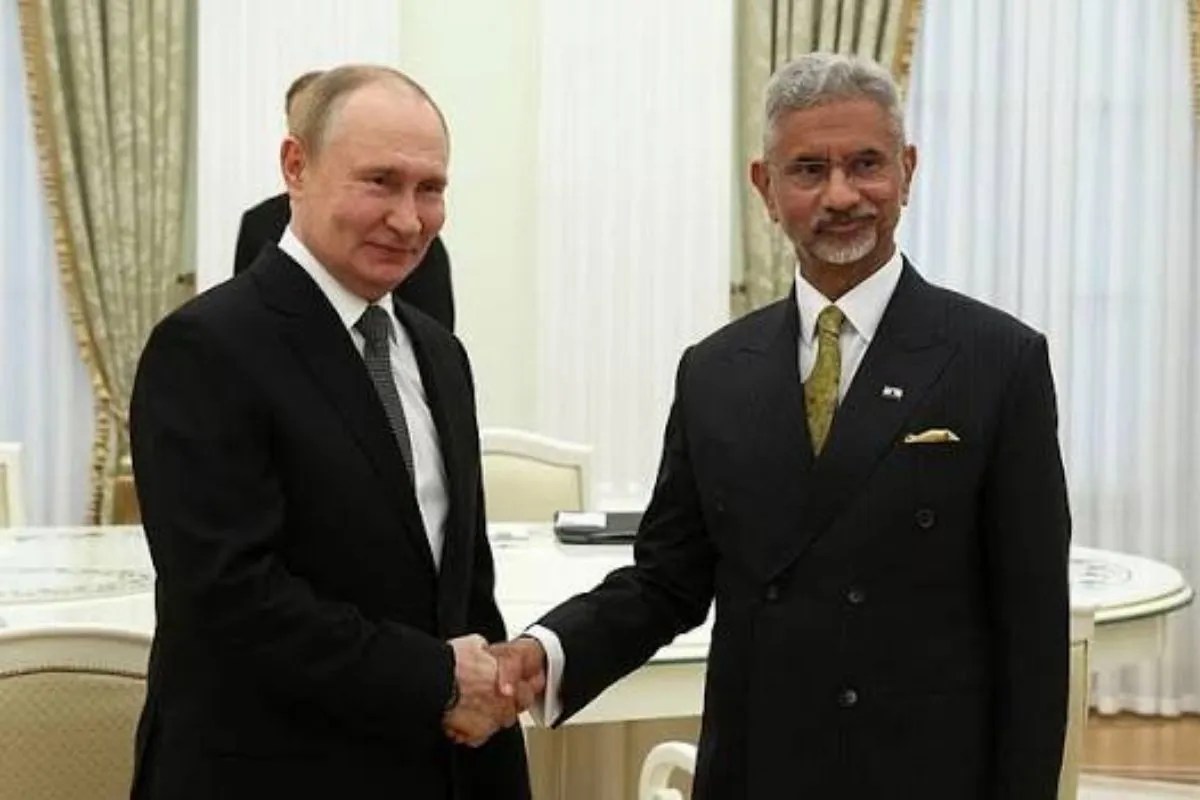
External Affairs Minister S. Jaishankar stepped into the ornate halls of the Kremlin to hand-deliver a personal missive from Prime Minister Narendra Modi to Russian President Vladimir Putin. On the surface, diplomatic dispatches reported standard protocol ahead of upcoming multilateral summits. Beneath that polished diplomatic veneer lies a calculated realignment of economic corridors that continues to frustrate Western capitals.
Bilateral trade numbers tell a stark story. Following a brief dip, commerce between New Delhi and Moscow has surged upward by eight percent through the first half of the year. This resurgence is not accidental. It is the product of intense, unyielding administrative pressure from both governments to bypass Western banking restrictions, insurance caps, and maritime logistics bottlenecks. When Jaishankar met with Russian First Deputy Prime Minister Denis Manturov to review the 27th session of the Intergovernmental Commission, the agenda bypassed polite diplomatic pleasantries. They focused on the mechanical wiring of commerce: long-term fertilizer supply guarantees for Indian agriculture, nuclear energy cooperation, and high-technology partnerships.
Western analysts frequently misinterpret India’s stance as passive balancing. That interpretation is dangerously naive. New Delhi is actively institutionalizing its economic insulation. By locking in guaranteed fertilizer shipments and steady energy inputs, India shields its domestic food and fuel security from volatile geopolitical shocks originating in the Atlantic corridors. President Putin explicitly credited Modi’s personal oversight for maintaining this trade momentum, acknowledging that political will at the highest tier of government has kept bureaucratic inertia at bay.
The timing of this high-level outreach carries profound strategic weight. With the Shanghai Cooperation Organisation summit in Kyrgyzstan and the upcoming BRICS summit in India slated back-to-back, Moscow and New Delhi are synchronizing their diplomatic calendars to project an alternative center of gravity. Multilateral institutions originally dismissed by Western experts as mere talking shops are being weaponized for economic decoupling from dollar-dominated settlement systems.
Consider the mechanics of the agricultural agreements hammered out during these sessions. India requires massive, predictable volumes of urea and potash to feed its domestic agricultural sector. Traditional supply chains remain fraught with secondary sanction risks. By securing direct bilateral frameworks with Moscow, New Delhi secures its agrarian backbone while giving Russian state exporters a reliable, non-Western cash flow. It is a pragmatic bargain born out of mutual necessity.
Critics in European and American think tanks argue that this growing commercial intimacy undermines global security architecture. Yet, Indian foreign policy planners operate from a doctrine of absolute strategic autonomy. To New Delhi, ignoring discounted energy and essential commodities to appease distant capitals would amount to economic self-harm. The dialogue inside the Kremlin reaffirmed that neither sanctions nor diplomatic arm-twisting from Washington and Brussels will alter a bilateral partnership that has weathered decades of geopolitical turbulence.
As leaders prepare to shake hands under the banner of the SCO and later welcome the Russian delegation to Indian soil for BRICS, the message sent from South Block to the Kremlin is unmistakable. Trade channels will remain open, financial workarounds will multiply, and the architecture of a multipolar world order will continue to be built brick by practical brick, far away from the gaze of Western regulators.