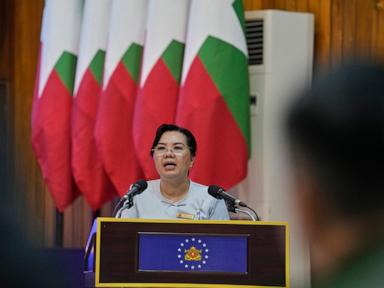
Myanmar’s military regime has formally rejected the United Nations top court's jurisdiction and findings regarding the Rohingya genocide, dismissing the International Court of Justice proceedings as fundamentally unfair and politically biased. By labeling the legal reckoning a Western-backed distortion of internal security operations, Naypyidaw is executing a calculated diplomatic strategy designed to shield its top brass from international accountability while consolidating domestic nationalist support.
This is not merely a reflexive diplomatic tantrum. It is a cold, methodical playbook that authoritarian regimes have perfected over decades. When cornered by international law, attack the legitimacy of the bench. You might also find this connected story interesting: The Invisible Weight of Air and Why a Nine-Million-Dollar Fine Cannot Bring Back What Vanished.
To understand why Myanmar’s junta is aggressively dismissing the International Court of Justice (ICJ), you have to look beyond the courtroom in The Hague and examine the crumbling internal reality of the Burmese state. Since the 2021 military coup ousted the civilian government, the generals have been fighting a losing war on multiple fronts against armed ethnic organizations and pro-democracy resistance forces. In this existential crisis, admitting guilt—or even acknowledging the validity of a foreign tribunal—would shatter the military's foundational myth as the sole guardian of national sovereignty.
The Anatomy of a Legal Stonewall
The legal battle at the ICJ began in November 2019, when The Gambia, backed by the 57-member Organization of Islamic Cooperation, filed a landmark lawsuit accusing Myanmar of breaching the 1948 Genocide Convention. The case centers on the brutal 2017 military "clearance operations" in Rakhine State, which forced more than 730,000 Rohingya Muslims to flee into neighboring Bangladesh amid widespread reports of mass killings, sexual violence, and the systematic burning of entire villages. As reported in latest coverage by Reuters, the implications are notable.
In January 2020, the ICJ unanimously ordered Myanmar to take provisional measures to prevent further genocidal acts and preserve evidence. In July 2022, the court rejected Myanmar's preliminary objections, ruling that it did indeed have jurisdiction to hear the case. Now, as the proceedings advance toward a definitive ruling on the merits, the junta's rhetoric has sharpened from procedural pushback to outright dismissal.
The junta’s core argument rests on three pillars:
- Sovereignty over internal security: Naypyidaw maintains that the 2017 operations were legitimate counter-terrorism responses to attacks by the Arakan Rohingya Salvation Army (ARSA) on police posts.
- Challenging standing: Myanmar’s legal team repeatedly argued that The Gambia, a small West African nation thousands of miles away, has no direct stake in the conflict and is merely acting as a proxy for international bodies.
- Institutional bias: State-controlled media in Myanmar routinely frame the UN and the ICJ as tools of Western hegemony, claiming the court ignores atrocities committed against ethnic Rakhine and Buddhist populations.
By calling the process "unfair," the military leadership is speaking to two distinct audiences. Abroad, they are signaling to geopolitical allies—primarily Russia and China—that they will not bow to Western legal norms. At home, they are attempting to tap into deep-seated xenophobia and historical grievances to rally a fractured populace behind the Tatmadaw, Myanmar's armed forces.
The Domestic Calculus Behind the Defiance
Decades of covering Southeast Asian geopolitics teach you one undeniable truth about the Tatmadaw. Everything they do internationally is dictated by their immediate survival needs domestically.
When Aung San Suu Kyi, then Myanmar's civilian leader, famously traveled to The Hague in December 2019 to defend the military against genocide charges, she did so out of political necessity. She needed to placate the generals at home. Today, with Suu Kyi locked away in solitary confinement and the military ruling directly through the State Administration Council, the generals no longer need a civilian shield. They are fighting for their lives.
The junta’s grip on power is weaker than at any point since Myanmar gained independence in 1948. Major border towns, lucrative trade routes, and vast swathes of territory have fallen to resistance coalitions. Against this backdrop, cooperating with the ICJ is politically impossible for Senior General Min Aung Hlaing.
Why Admission Equals Collapse
In the rigid hierarchy of the Burmese military, institutional infallibility is non-negotiable. The army views itself not as a servant of the state, but as the state itself. If the junta were to accept the ICJ's findings on the Rohingya, it would trigger a catastrophic domino effect:
- Loss of internal cohesion: Rank-and-file soldiers, already suffering from plummeting morale and high desertion rates, would question the legitimacy of the orders they are currently executing across the country.
- Validation of domestic enemies: The National Unity Government (NUG), Myanmar’s shadow opposition administration, has already declared that it accepts the ICJ's jurisdiction and has withdrawn the country's previous legal objections. If the junta validated the court, it would be handing a massive diplomatic victory to its sworn enemies.
- Personal liability: A formal finding of state responsibility for genocide at the ICJ paves the way for individual criminal prosecutions at the International Criminal Court (ICC) or through universal jurisdiction cases in national courts, directly threatening the personal freedom and hidden wealth of the ruling generals.
Dismissing the court as unfair is a survival mechanism. It allows the regime to maintain an illusion of strength and moral superiority while its actual territorial control evaporates.
The Enforcement Paradox of International Law
The harsh reality of international justice is that the ICJ has no police force. It cannot dispatch marshals to Naypyidaw to arrest generals, freeze bank accounts, or enforce reparations. The court relies entirely on the UN Security Council and the diplomatic pressure of member states to compel compliance.
This structural limitation is precisely what emboldens Myanmar's leadership. They know the UN Security Council is paralyzed by geopolitical rivalries. Russia, which has become the junta's primary supplier of fighter jets and heavy weaponry, and China, which holds massive infrastructure investments in Rakhine State under its Belt and Road Initiative, have consistently shielded Myanmar from binding Security Council resolutions.
Without Security Council enforcement, an ICJ ruling becomes a battle of diplomatic isolation versus geopolitical utility.
Let's examine how this plays out in practice. Even after the ICJ issued its legally binding provisional measures in 2020, requiring Myanmar to report back every six months on how it was protecting the remaining Rohingya, the military simply filed confidential reports claiming everything was fine while continuing to restrict humanitarian aid and deny citizenship rights. When the 2021 coup occurred, the same military units implicated in the 2017 Rohingya atrocities—such as the notorious 33rd and 99th Light Infantry Divisions—were deployed to gun down peaceful protesters in Yangon and Mandalay.
The Overlooked Factor in Rakhine State
Most mainstream coverage of the ICJ case treats the Rohingya crisis as a closed chapter from 2017. That is a critical analytical mistake. The situation on the ground in Rakhine State has mutated into a complex, multi-sided catastrophe that makes the junta's dismissal of the UN court even more dangerous.
In recent months, fierce fighting has erupted between the Myanmar military and the Arakan Army (AA), a powerful ethnic Rakhine insurgent group seeking autonomy. Caught directly in the crossfire are the roughly 600,000 Rohingya who remain in Rakhine State, many confined to internment camps since 2012.
Desperate for manpower, the junta has resorted to forcibly conscripting Rohingya men to fight against the Arakan Army. In a cynical twist that defies comprehension, the very military that drove the Rohingya out of the country in 2017 is now handing them rifles, forcing them onto the front lines as human shields, and stoking communal violence between ethnic Rakhine Buddhists and Rohingya Muslims to divide its enemies.
The Weaponization of Historical Grievances
By rejecting the UN court's authority, the junta is giving itself carte blanche to repeat its darkest tactics. When international observers have no access to the ground, and the ruling regime openly mocks international treaties, accountability ceases to exist in real time.
Consider the mechanics of how impunity operates in conflict zones:
- Information blackouts: The junta routinely cuts internet and telecommunications infrastructure in Rakhine State, ensuring that fresh atrocities cannot be documented or verified quickly enough to influence ongoing legal proceedings in The Hague.
- Aid weaponization: International humanitarian organizations face severe travel restrictions, leaving hundreds of thousands of displaced people without basic food or medical supplies.
- Demographic engineering: Burnt villages have been bulldozed and replaced with military bases, border guard posts, and model villages for non-Rohingya settlers, permanently altering the geography of northern Rakhine State to ensure refugees in Bangladesh can never return home.
The ICJ process moves at a glacial pace. While lawyers in The Hague debate the precise legal threshold of "genocidal intent" under Article II of the Genocide Convention, the facts on the ground are being irreversibly altered by force.
Why the ICJ Ruling Still Matters Despite the Defiance
If the junta ignores the court, and the UN Security Council refuses to enforce the verdict, it is tempting to view the entire ICJ process as an expensive exercise in diplomatic theater. Veteran legal analysts and human rights investigators know better. A formal ruling of genocide carries immense, long-term consequences that outlast individual regimes.
First, it establishes an unimpeachable historical record. Authoritarian regimes thrive on revisionism. By systematically collecting, cross-examining, and validating thousands of witness testimonies, satellite images, and leaked military orders, the ICJ strips the Tatmadaw of plausible deniability. Future generations—both inside Myanmar and globally—will have an authoritative judicial determination of what transpired.
Second, a final judgment unlocks targeted multilateral action outside the UN Security Council. While Russia and China can veto a Security Council resolution, they cannot stop individual nations or regional blocs from imposing coordinated financial sanctions, aviation fuel embargoes, and arms bans. A formal ICJ verdict provides the legal bedrock governments need to justify aggressive economic measures against state-owned enterprises like the Myanma Oil and Gas Enterprise (MOGE), which still generates hundreds of millions of dollars in foreign currency for the junta.
Third, it reshapes the political transition inside Myanmar. The opposition National Unity Government and various ethnic resistance organizations have recognized that they cannot secure Western backing or international legitimacy if they inherit the military's racist policies toward the Rohingya. The ICJ case has forced Myanmar's pro-democracy movement to confront its own historical blind spots, leading to public pledges to abolish the discriminatory 1982 Citizenship Law and recognize the Rohingya as an official ethnic group once the junta falls.
The Cost of Appeasement
The international community has seen this exact scenario play out before. During the Bosnian War in the 1990s, Serbian leadership dismissed international tribunals as biased, anti-Serb institutions while continuing ethnic cleansing campaigns. Years later, those very leaders stood in the dock in The Hague.
Justice in international law is rarely swift, and it is never guaranteed. The generals in Naypyidaw are betting that global attention spans are short, that geopolitical crises in Eastern Europe and the Middle East will distract Western powers, and that regional neighbors in ASEAN will continue to prioritize quiet diplomacy over human rights.
For over a million Rohingya refugees languishing in the sprawling, overcrowded camps of Cox's Bazar in Bangladesh, the junta's dismissal of the UN court is a bitter confirmation of what they already know: words from The Hague cannot unlock the gates of their homeland. Until global powers match the ICJ's legal clarity with coordinated economic and diplomatic consequences that directly choke the junta's war machine, Naypyidaw will continue to treat international law as an optional inconvenience.


