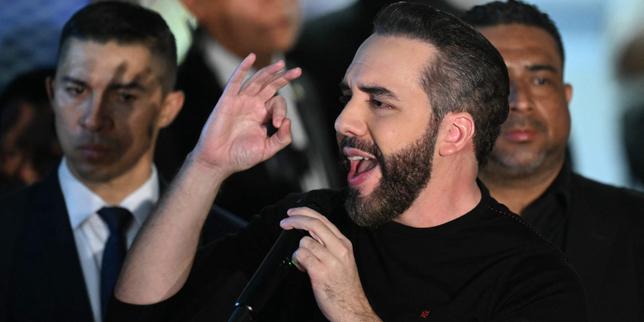
On the night of November 19, 2026, Salvadoran President Nayib Bukele arrived at the Supreme Electoral Tribunal in San Salvador surrounded by a fleet of police cruisers and thousands of chanting supporters. He was there to file paperwork for a third consecutive presidential term ahead of the February 28, 2027 election. That filing was made possible not by a single overnight decree, but by a calculated, multi-year dismantling of constitutional guardrails—starting with a 2021 judicial purge, accelerating through a 2024 alteration to amendment rules, and culminating in a July 2025 legislative overhaul that abolished presidential term limits, extended terms from five to six years, eliminated runoff elections, and truncated Bukele’s second mandate to align with legislative polls.
Most surface-level coverage frames this moment as a simple story of a popular strongman bending rules to stay in power. That reading misses the mechanics. Bukele did not merely break El Salvador’s 1983 Constitution; his Nuevas Ideas supermajority systematically rewired the legal engine that amends it, neutralizing every institutional veto point before the public ever cast a ballot on the matter.
The Five-Year Blueprint Behind the November Filing
To understand how a country with a 180-year constitutional tradition banning consecutive presidential re-election arrived at indefinite rule, you have to trace the sequence of institutional captures. None of these moves happened in isolation. Each step removed a barrier needed for the next.
- May 2021 Judicial Purge: Immediately after Nuevas Ideas won control of the Legislative Assembly, lawmakers voted to dismiss all five magistrates of the Supreme Court’s Constitutional Chamber alongside the Attorney General. Neither due process hearings nor constitutional selection procedures were followed. Four months later, the handpicked replacement judges issued a ruling reinterpreting the constitutional ban on immediate re-election, clearing Bukele to run in 2024.
- April 2024 Amendment Shortcut: Under Article 248 of the 1983 Constitution, any constitutional reform required approval by one legislature and ratification by the next—a deliberate cooling-off mechanism allowing voters to weigh in during intervening elections. During a lame-duck session in April 2024, the outgoing assembly voted to let a single legislature both approve and ratify amendments with a three-quarters majority. The newly seated, Nuevas Ideas-dominated assembly ratified that procedural change on January 29, 2025.
- July 2025 Structural Overhaul: Armed with fast-track amendment power, lawmakers rewrote core electoral rules in a matter of hours. They scrapped term limits entirely, lengthened future presidential terms from five to six years, and abolished the second-round runoff. Under the revised Article 80, a candidate now wins outright with a simple plurality of valid votes.
- December 2025 Institutional Consolidation: Before year-end recess, the assembly stripped the judiciary of its constitutionally guaranteed minimum budget allocation—cutting financial independence—and extended the tenure of Supreme Electoral Tribunal magistrates.
Watch how those pieces interlock. By cutting his current term short so it ends on June 1, 2027 instead of 2029, Bukele synchronized the presidential race with municipal and legislative elections. That alignment ensures his personal approval ratings—hovering between 80% and 90% in recent polling—carry down-ballot candidates across all 60 congressional seats and 44 municipal councils simultaneously. If he wins in February 2027, his third term will run until 2033, locking in 14 consecutive years in office.
Why the 1983 Eternity Clauses Failed to Hold
Constitutional scholars watching San Salvador point to a glaring legal contradiction inside the 2025 reforms. Even when Nuevas Ideas rewrote Article 248 in 2024 to speed up constitutional amendments, lawmakers left intact the cláusulas pétreas—entrenched "eternity clauses" that explicitly prohibit altering the form of government, the territorial integrity of the state, or the principle of presidential alternation without convening a full Constituent Assembly.
In strict constitutional theory, an amendment passed by an ordinary legislature cannot override an unamendable clause without first repealing the prohibition itself. Yet in El Salvador, legal theory only matters if an independent court exists to enforce it. Because the Constitutional Chamber was reconstituted by the very ruling coalition passing the amendments, no judicial check remained to declare the July 2025 overhaul unconstitutional.
Bukele’s public defense leans heavily on false equivalence. When pressed on the abolition of term limits, he argued that roughly 90% of developed nations allow heads of government to seek indefinite re-election without international outcry. That talking point conflates parliamentary democracies—where a prime minister can be removed on any afternoon through a legislative vote of no confidence—with a hyper-presidential system where the executive controls the military, the police, the legislature, and the courts.
The Security Bargain Sustaining Public Consent
Critics in Washington and Brussels frequently treat Bukele’s consolidation of power as an imposition forced upon an unwilling public. On the ground in San Salvador, the political reality is far more uncomfortable for democratic purists. Bukele is not clinging to office against popular will; he is riding genuine, overwhelming domestic support built on one undeniable metric—physical safety.
Before March 2022, El Salvador endured decades of extortion and territorial control by MS-13 and Barrio 18. When Bukele declared a state of exception—suspending constitutional rights to legal counsel, limits on administrative detention, and privacy of communications—security forces swept up suspected gang members on an industrial scale. By late 2026, the country’s prison population reached roughly 118,000 to 120,000 detainees, representing nearly 2% of the entire national population.
For millions of working-class Salvadorans, the trade-off feels concrete rather than theoretical. Bus drivers no longer pay weekly extortion taxes to stay alive, and neighborhood shopkeepers open their doors without fear of gang retaliation. Polling consistently shows that a decisive majority of citizens prioritize personal security over abstract procedural norms.
Yet the human and institutional cost of that security model carries severe long-term risks:
- Mass Due Process Collapse: Thousands of detainees have been processed through collective mass trials involving hundreds of defendants simultaneously, leaving innocent citizens swept up in dragnet arrests with virtually no legal recourse.
- Documented Prison Abuses: Independent human rights monitors and international experts have documented systematic torture, denial of medical care, and deaths in custody inside facilities like the Terrorism Confinement Center.
- Unresolved Gang Deals: Past investigations by the U.S. Treasury Department alleged that Bukele’s administration secretly negotiated truces and financial incentives with senior gang leaders early in his presidency to suppress homicide numbers before the 2022 crackdown.
Exporting the Strongman Brand to Haiti
Timing matters in political theater. Just weeks before submitting his third-term candidacy in November 2026, Bukele deployed roughly 2,500 Salvadoran troops to Port-au-Prince to combat armed gangs in Haiti, framing the mission as a response to the October disappearance of four Salvadoran aviation technicians.
That deployment serves two strategic purposes at once. Domestically, it reinforces Bukele’s image as a decisive commander who projects Salvadoran strength beyond national borders right as the 2027 election cycle kicks off. Internationally, positioning El Salvador as an indispensable security exporter complicates diplomatic pushback from regional neighbors and the United States. Governments struggling with transnational crime or migration pressures hesitate to sanction a leader visibly doing heavy security lifting in the Caribbean.
Central America's Familiar Institutional Script
What happened in San Salvador between 2021 and 2026 is not an invention; it is the refinement of a well-worn Central American playbook. In October 2009, Nicaragua’s Supreme Court—stacked with loyalists of President Daniel Ortega—invalidated constitutional term limits on the grounds that banning re-election violated the incumbent’s fundamental human rights. In April 2015, Honduras’s Constitutional Chamber used the exact same legal reasoning to clear the way for President Juan Orlando Hernández after Congress had previously ousted four dissenting magistrates.
Bukele’s innovation was speed and completeness. Where Ortega and Hernández relied primarily on judicial rulings that remained vulnerable to future court reversals, Bukele paired judicial capture with full legislative rewriting of the constitutional text itself, then eliminated the runoff election so fragmented opposition parties cannot unite behind a single challenger in a second round.
Opposition parties in El Salvador—including the once-dominant ARENA and FMLN—enter the February 28, 2027 race fractured, underfunded, and discredited by decades of pre-2019 corruption scandals. Without a runoff threshold or an independent electoral tribunal, the ballot box in 2027 will function less as a competitive test of leadership and more as a plebiscite on whether Salvadorans still value street-level order above every institutional check that used to restrain their presidency. Once a nation trades away the rules that govern how power changes hands, the only remaining guarantee against abuse is the permanent goodwill of the man holding all the keys.