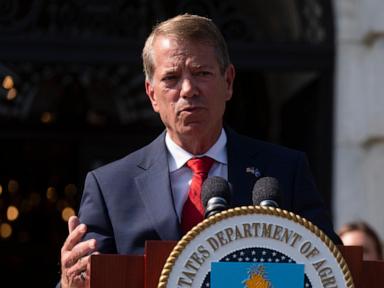
Nebraska is effectively turning its Medicaid program into a laboratory for federal welfare reform. Starting May 1, 2026, the state will become the first in the nation to enforce strict work requirements for its Medicaid expansion population, a move triggered by the federal H.R. 1 "One Big Beautiful Bill" signed by President Trump. While the federal mandate sets a 2027 deadline for states to act, Nebraska Governor Jim Pillen has fast-tracked implementation by eight months, positioning the state as the vanguard of a movement to link health coverage to "community engagement."
The stakes are immense. Approximately 70,000 Nebraskans between the ages of 19 and 64, who fall into the Heritage Health Adult expansion group, are now facing a choice: document 80 hours of qualifying monthly activity or risk losing their health insurance. This isn't just a local policy shift; it is the first live test of a national strategy to reshape the social safety net by emphasizing self-sufficiency over entitlement. Discover more on a connected issue: this related article.
The Mechanical Reality of 80 Hours
The policy requires able-bodied adults to engage in work, job training, education, or community service for at least 80 hours per month. For a single person earning the federal minimum wage, this equates to roughly $580 in monthly income. On paper, the math is simple. In practice, the administrative machinery required to track these hours for tens of thousands of people is anything but.
Nebraska is adopting a "lookback" system. For new applicants, the state will examine their activity in the month prior to application. For existing enrollees, the state will begin auditing compliance during their annual renewal periods, starting with those whose coverage expires on July 31, 2026. This creates a staggered but relentless rollout. Further analysis by Everyday Health explores comparable perspectives on the subject.
Health care providers are already sounding the alarm. Jeremy Nordquist, President of the Nebraska Hospital Association, estimates that up to 40% of the expansion population will require manual verification of their hours. This isn't just about the patients; it’s a massive administrative burden on the state’s Department of Health and Human Services (DHHS) and the clinics that serve these individuals.
The Cost of the Paperwork Trap
Critics of the mandate argue that the greatest threat to coverage isn't a lack of work, but a surplus of bureaucracy. Historically, when states have attempted similar requirements—most notably Arkansas in 2018—thousands lost coverage not because they weren't working, but because they failed to navigate the reporting portals.
Nebraska’s DHHS has attempted to mitigate this by automating some of the process. They plan to use payroll data and records from other assistance programs like SNAP or TANF to "auto-verify" as many people as possible. However, the gig economy, seasonal labor, and informal community service don't always leave a clean digital footprint.
Brad Meyer, CEO of Bluestem Health, has projected that his clinic alone could lose 10% to 15% of its Medicaid patient base due to disenrollment. For a safety-net clinic, that translates to hundreds of thousands of dollars in lost revenue and a surge in uncompensated care. When people lose Medicaid, they don't stop getting sick; they just stop going to the doctor until they end up in the emergency room.
Exemptions and the Medically Frail
The state has carved out a long list of exemptions to protect the most vulnerable. Pregnant women, parents of children under 13, and those with total disability ratings are technically safe. The most complex category is the "medically frail."
To identify these individuals, Nebraska has established a clinical team to scan diagnostic codes in medical claims history. If the data shows a chronic or complex condition, the exemption is granted. But what about the person who hasn't been to the doctor because they haven't had insurance? They must proactively seek a "short-term hardship" or a medical declaration.
This creates a paradox. To be exempt from work requirements due to health, you often need a doctor to sign off on your condition. To see that doctor, you need the very insurance that is being threatened.
The National Ripple Effect
CMS Administrator Dr. Mehmet Oz has publicly lauded Nebraska for its "leadership" in this rollout. The federal government is watching Nebraska’s implementation as a blueprint for the other states that will be forced to follow suit by 2027. If Nebraska can prove that work requirements increase workforce participation without causing a collapse in rural healthcare finances, it will provide the political capital needed for a nationwide overhaul.
However, if the state sees a mass exodus of enrollees and a subsequent spike in hospital bankruptcies, the "Nebraska Model" could become a cautionary tale. The state is currently meeting with CMS on a weekly basis to fine-tune the system before the May 1 launch. They are racing against a clock that they themselves sped up.
The transition is already causing confusion on the ground. Advocates like Nebraska Appleseed have reported instances of frontline workers providing incorrect information to enrollees, telling them they would lose coverage before the rules even took effect. These "informational casualties" are often the first signs of a system that is moving faster than its participants can keep up with.
The Financial Gamble for Rural Health
The irony of the fast-tracked implementation is that it may hit rural Nebraska the hardest. Rural hospitals operate on razor-thin margins. In these communities, the expansion population often represents the difference between a facility staying open or shuttering its doors.
If a significant portion of the 70,000 expansion members lose coverage, the financial shock will ripple through the entire state healthcare system. Higher employment rates are a stated goal of Governor Pillen, but the immediate fiscal reality for many clinics is a projected increase in debt and a decrease in preventative care.
Nebraska is no longer just a state; it is a proof-of-concept. Whether this leads to a more "self-sufficient" populace or a hollowed-out healthcare safety net will be determined in the coming months as the first reporting notices hit mailboxes across the Heartland. The experiment begins on May 1.
Ensure your contact information is updated with the Nebraska DHHS immediately; the state will use the address on file to send the declaration forms that could determine whether you keep your doctor or lose your coverage.