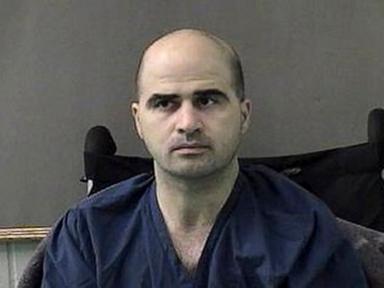
President Donald Trump announced that the execution of Nidal Hasan will not be streamed, settling an immediate question about whether the high-profile military capital punishment will be broadcast to the public. In short, there will be no live feed, no official video release, and no public viewing portal. The decision closes the door on speculative talk of a televised or streamed military execution while pushing legal, ethical, and political questions about transparency and accountability back into sharp relief.
Politicians love a clean headline. Capital punishment inside the military justice system rarely comes with one. For an alternative view, read: this related article.
When a president declares that a military execution will not be streamed, the surface reaction splits predictably along partisan and ideological lines. Some view it as an obvious guard against spectacle and sensationalism. Others suspect a bid to keep the final moments of an infamous case out of public sight. Veteran reporters who have covered courthouses, military bases, and execution chambers for decades know that the real story sits underneath the soundbite. It lives in statutory rules, chain-of-command friction, security logistics, and the quiet tension between public accountability and institutional control.
Why Streaming Was Never a Simple Switch to Flip
Public curiosity around high-profile executions has existed long before smartphones or livestreams. Decades ago, crowds gathered outside prison walls. Later came print accounts, witness pools, and heated debates over cameras in execution chambers. Today, the default assumption among many observers is that if an event exists, someone can stream it. Further coverage on this matter has been published by Reuters.
That assumption breaks down fast when applied to a military execution.
Unlike civilian executions carried out by state departments of corrections or the federal Bureau of Prisons, military capital punishment sits inside the Uniform Code of Military Justice and the Manual for Courts-Martial. It is governed by military regulations, command authority, and strict operational security protocols rather than state-level media rules. A broadcast or livestream does not happen merely because someone wants a larger audience or an easier way to distribute information. It would require explicit authorization, technical infrastructure, clear rules on who can view or record it, and protection against unauthorized capture or rebroadcast.
Consider a hypothetical example to see how quickly a livestream idea collides with practical reality. Suppose a media organization asks to stream an execution remotely so reporters who cannot travel to the facility can watch in real time. Even if officials wanted to accommodate remote press access, a live feed introduces immediate risks: recording by unauthorized viewers, rapid spread of sensitive visuals online, security vulnerabilities on or near a military installation, and potential legal challenges over privacy, dignity, or statutory limits on witness attendance.
Once those mechanics come into focus, the announcement that the Nidal Hasan execution will not be streamed looks less like a sudden whim and more like a firm boundary drawn around an already volatile process. Still, saying "will not be streamed" answers how the public will not see it without fully explaining what the public actually will see, hear, or read.
The Witness Pool Problem in Modern Capital Cases
When cameras and livestreams are off the table, witness access becomes the primary bridge between the execution chamber and the public.
Historically, witness pools have served a specific democratic function. In a system where the state takes a human life in the name of the law or military justice, outside observers—typically selected representatives of the press, designated witnesses, or families where permitted—bear witness so the act does not occur in total secrecy. Their presence does not turn an execution into entertainment. It anchors factual reporting.
Yet witness access in high-profile cases is notoriously delicate. In civilian and military cases alike, officials must balance press reporting needs against security clearances, facility capacity, travel logistics, and the emotional toll on victims' families and survivors. When a case carries deep national pain, as the 2009 Fort Hood attack does, every logistical choice carries symbolic weight.
A no-stream policy removes the mass broadcast element entirely. That shifts immense weight onto the written record, official statements, and any authorized pool reporting that may or may not exist. If press access is tight or restricted, reporters are forced to rely heavily on official summaries. If press access is broader, accounts still vary depending on sightlines, timing, and what officials permit observers to share.
Decades of covering capital cases teach a simple lesson. Secrecy breeds suspicion, even when officials have legitimate security reasons for drawing curtains. A crisp announcement that there will be no stream settles the broadcast question immediately, yet it leaves lingering questions about how thoroughly the event itself will be documented for the public record.
Politics, Spectacle, and the Weight of the Fort Hood Legacy
No political statement about Nidal Hasan exists in a vacuum. The case carries heavy political resonance, unresolved debates over counterterrorism and military readiness, and enduring grief for those killed and wounded at Fort Hood.
For a president, speaking plainly about an execution serves multiple purposes at once. It signals decisiveness on a long-running legal saga. It projects firm executive posture on punishment and order. It also preempts speculation at a moment when online rumors can spin out of control in minutes.
Critics from different angles will read the same move in sharply different ways. Some will argue that refusing to stream avoids turning a solemn legal procedure into digital theater—a legitimate concern in an era where viral clips flatten complex tragedies into shock value. Others will contend that keeping visuals completely off-screen insulates the government from scrutiny or denies survivors and the public a direct sense of finality.
Both arguments touch real nerves, and neither resolves the underlying tension cleanly. Public trust in institutions is fragile. When officials withhold visual access, some citizens see prudent restraint; others see a closed door. A seasoned analyst looks past the spin and asks a more practical question: what factual details will be verifiable after the fact, and how quickly will they be shared?
What Happens When Information Is Tightly Controlled
In high-stakes stories involving national security, the military, or capital punishment, information control shapes public understanding long after the initial headline fades.
When an event is not streamed, official statements and authorized reporting carry almost the entire burden of informing the public. Rumors fill whatever vacuum remains. Misinformation travels faster than corrections, especially on social platforms designed for outrage rather than nuance.
Official Narratives Versus Independent Verification
Governments naturally prefer controlled, accurate, and orderly information releases during sensitive operations. Uncontrolled live video creates chaos, potential security leaks, and immediate distress for families watching from afar. Those are real operational concerns, not invented excuses.
At the same time, journalism thrives on independent verification. When access is limited, reporters have to work harder to cross-check timelines, confirm procedural steps, and separate verified facts from speculation. Readers benefit when coverage explicitly states what has been confirmed firsthand, what comes from official releases, and where questions remain open.
The Risk of Performative Outrage
Modern media cycles reward instant certainty. A phrase like "will not be streamed" can easily be spun as either a heroic stand against sensationalism or a sinister cover-up, depending on who is talking.
Neither caricature captures the full picture. The refusal to stream aligns with longstanding norms that treat executions as somber legal acts rather than public broadcasts, while also reflecting the practical realities of military control and security. Recognizing both sides does not mean excusing opacity or endorsing sensationalism. It means treating the story with the sober scrutiny it demands.
Key Takeaways for Following the Story Closely
Anyone tracking developments around the case does not need to get swept up in cable-news theatrics or social media noise. A few practical habits cut straight to what matters:
- Separate the broadcast ban from broader access rules. Knowing there will be no livestream does not automatically tell you who is permitted inside, what press pools exist, or how soon official confirmation is released.
- Watch the legal and procedural posture. Military capital cases involve layered review steps, command actions, and strict rules that govern how and when sentences are carried out.
- Look for corroborated details over viral claims. In high-emotion stories, fabricated quotes, fake screenshots, and recycled old footage circulate routinely whenever live video is absent.
- Keep the human toll in view. Behind the legal mechanics and political commentary are service members, families, and survivors whose lives were altered permanently.
The announcement that Nidal Hasan's execution will not be streamed closes off one avenue of public spectacle while keeping the deeper questions of transparency, authority, and accountability squarely in front of the public. Pay attention not just to what officials say will not be broadcast, but to every detail they choose to put—or keep—out of sight.