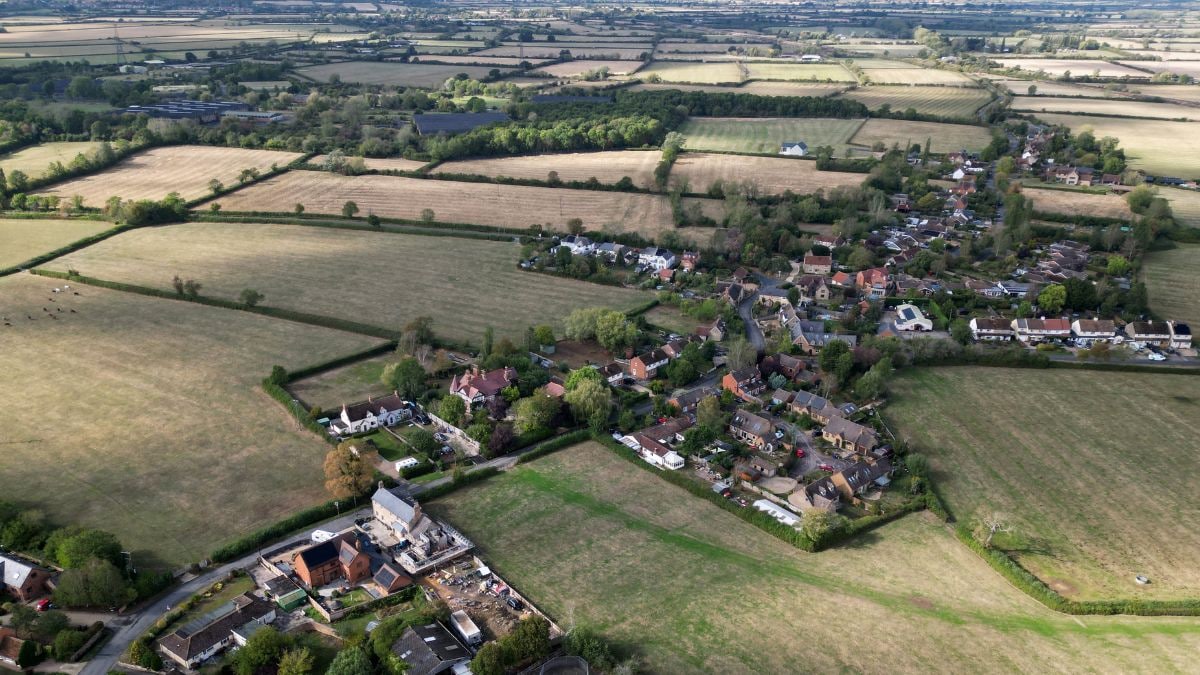
The Oxfordshire hamlet of Piddington did not secede from the United Kingdom because its residents suddenly discovered an appetite for constitutional radicalism. When 285 voters cast ballots in favor of creating a self-declared "Principality of Piddington" during an extraordinary local poll, the exercise was entirely symbolic. Yet the underlying fury driving a community of roughly 350 people to stage a tongue-in-cheek break from Westminster is anchored in a very grim, very real administrative collision.
The spark for this theatrical mutiny was a state-backed plan to transform a former Ministry of Defence site near the village into a high-capacity housing facility for more than 1,200 detained asylum seekers. When Housing Secretary Angela Rayner fast-tracked full planning permission through emergency Crown development powers, overriding thousands of public objections, local patience evaporated. For a rural Oxfordshire parish where public infrastructure consists of narrow lanes, finite medical practices, and strained drainage networks, the arrival of a facility housing over a thousand men represents an existential shock.
The mechanics of how this confrontation escalated reveal a deep chasm between centralized planning mandates and rural community survival. Local leaders point out that nearby general practice surgeries operate at zero spare capacity. Environmental assessments and sewage disposal infrastructure logistics were either sidelined or deferred for later approval, leaving residents to shoulder the perceived risks of a massive population influx. When traditional municipal pushback failed to halt the machinery of central government, the parish turned to a mock secession movement simply to force the national media to look at a map.
This standoff illuminates a wider structural failure in how the British state manages regional infrastructure and immigration burdens. Successive administrations have struggled to distribute asylum accommodation equitably across the country, often defaulting to isolated rural or military sites where local opposition lacks the political weight to mount sustained resistance. Piddington became a flashpoint precisely because the sheer scale of the proposed center threatened to dwarf the indigenous population by a factor of nearly four to one.
The approval has triggered immediate political polarization. Figures from opposition benches have descended on the parish to condemn the decision, framing the development as proof of administrative abandonment. Meanwhile, government defenders argue that self-contained security compounds are necessary to cut ballooning hotel accommodation costs nationwide.
The Principality of Piddington will not be issuing passports or printing currency. Its brief moment of mock-sovereignty has now transitioned into the cold reality of the courts, with parish leaders preparing a formal judicial review to challenge the planning consent within the statutory six-week window. Whether a small rural community can successfully arrest the momentum of a central government determined to enforce its housing strategy remains doubtful. What is certain is that the quiet lanes of Oxfordshire have become the latest battleground in a bitter national argument over who gets to decide the future of Britain's local spaces.