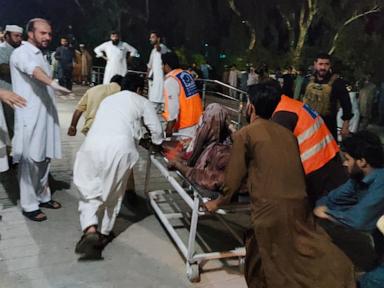
Militants in Pakistan’s northwest executed a deadly pair of coordinated assaults on July 15, 2026, leaving at least three police officers dead and 20 others wounded. The twin strikes—an ambush on a security convoy in Upper Dir followed hours later by a suicide vehicle attack on a police station in Bannu—underscore a rapid and dangerous escalation of violence along the Pakistan-Afghanistan border. While local authorities scramble to contain the immediate fallout, the sophisticated tactics and strategic locations of these strikes reveal a much deeper, more systemic failure of state containment policies in Khyber Pakhtunkhwa province.
This is not a story of isolated, sporadic lawlessness. It is the visible symptom of a deteriorating border regime, a fracturing of local intelligence networks, and a relentless offensive by the Tehrik-i-Taliban Pakistan (TTP), which operates with increasing impunity from across the Afghan border.
The Geometry of the July 15 Attacks
The day’s violence began in the mountainous district of Upper Dir. A heavily armed group of militants ambushed a police and security convoy, using the high-altitude terrain to trap the vehicles. Local police officials confirmed that the initial volley of gunfire killed three officers and wounded 15 others. Despite a swift return of fire and an ongoing gunbattle, the attackers utilized well-rehearsed escape routes through the dense, rugged ridges that line the border.
Before the provincial command could fully redeploy resources to Upper Dir, a second, highly coordinated blow landed further south. In Bannu—a critical transit city and a historical flashpoint—a suicide bomber rammed an explosives-laden vehicle directly into the gates of a local police station. The blast sheared off a portion of the concrete facade and wounded at least five officers, showcasing a level of logistical sophistication and bomb-making capability that points to established, deep-seated local sleeper cells.
Upper Dir Ambush  =======> Convoy trapped in high-altitude terrain
                          (3 officers killed, 15 wounded)
                                 │
                                 ▼
Bannu Suicide Blast =====> Explosives-laden vehicle rams police station
                          (5 officers wounded, structural damage)
No group has officially claimed responsibility for either strike. However, the dual-pronged nature of the operations, the combination of guerrilla ambush tactics with suicide vehicle-borne improvised explosive devices (VBIEDs), and the geographical choices point squarely toward the TTP.
The Failure of Border Containment and the Kabul Connection
The structural core of this crisis lies in the geopolitical disconnect between Islamabad and the Taliban-led administration in Kabul. For years, Pakistani military planners believed that a friendly regime in Kabul would secure their western flank. That assumption has proved to be a catastrophic miscalculation.
The TTP shares deep ideological, tribal, and historical ties with the Afghan Taliban. Despite public assurances from Kabul that Afghan soil will not be used to launch cross-border attacks, the reality on the ground is vastly different. The TTP has successfully maintained sanctuaries in the eastern provinces of Afghanistan, using these safe havens to rest, refit, recruit, and plan operations like those witnessed on July 15.
Pakistan’s response has grown increasingly desperate. In late June 2026, following a deadly attack on a Rangers camp in Karachi, the Pakistani military launched retaliatory airstrikes inside Afghanistan’s eastern provinces of Paktia, Paktika, and Kunar. These cross-border strikes aimed to decapitate TTP command structures but instead fueled intense diplomatic friction and local resentment. The cycle is vicious:
- Militants strike Pakistani security forces from border sanctuaries.
- Pakistan responds with airpower, often resulting in border clashes and civilian casualties.
- Kabul condemns the violations of its sovereignty, refusing to cooperate on joint border policing.
- The TTP capitalizes on the diplomatic gridlock to launch further attacks.
Why the Khyber Pakhtunkhwa Police Are Sitting Ducks
The frontline of this shadow war is manned not by elite, heavily armored military divisions, but by underfunded, under-equipped local police officers.
The provincial police force in Khyber Pakhtunkhwa is facing a severe asymmetrical disadvantage. While militants are armed with advanced night-vision optics, thermal imaging gear, and military-grade weaponry—much of it left behind during the 2021 Western withdrawal from Afghanistan—local police officers are often left with outdated bolt-action rifles, insufficient body armor, and unreinforced patrol vehicles.
| Resource Gap | Militant Capabilities | Police Realities |
|---|---|---|
| Weaponry | Automatic assault rifles, heavy machine guns, VBIEDs | Outdated semi-automatic rifles, limited ammunition |
| Optics | Thermal imaging, modern night-vision goggles | Bare eyes, flashlight-dependent night patrols |
| Mobility | Highly mobile light vehicles, decentralized mountain paths | Predictable convoy routes, soft-skinned transport trucks |
| Intelligence | Decentralized sleeper networks, encrypted communication | Vulnerable analog communications, compromised local informants |
Furthermore, the police are structurally vulnerable. Stations like the one targeted in Bannu are frequently situated in highly populated urban centers or isolated rural outputs, making them soft targets for VBIEDs and coordinated storming operations. The police lack the heavy fortifications, standoff perimeter barriers, and signal-jamming technology required to neutralize vehicle-borne threats before they reach the gates.
The Strategic Shift in Militant Tactics
What occurred on July 15 reflects a broader tactical evolution. Rather than attempting to hold territory as they did a decade ago, militants are executing a highly effective attrition campaign designed to hollow out state authority from within.
By targeting local police, the TTP and its affiliates systematically destroy the state’s primary link to the community. When a police station is successfully bombed, or a convoy easily ambushed, it sends a clear, chilling message to the local population: The government cannot protect its own defenders, let alone you.
This erodes public trust, drys up local human intelligence networks, and forces the police to retreat into a purely defensive, fortified posture. Once the police cease active patrolling, security vacuums emerge, allowing militants to establish shadow governance, extort local businesses, and enforce their own version of law.
The Upper Dir and Bannu attacks are not random acts of rage. They are highly calculated maneuvers designed to stretch security forces thin, force the military to redeploy assets from other critical regions, and ultimately render the entire border belt ungovernable.
The Limits of Kinetic Operations
For over a decade, Islamabad’s playbook has remained remarkably static: deploy the military, conduct sweeping clearance operations, declare victory, and hand control back to a weak local administration.
This cycle has reached its natural limits. While intelligence-based operations and military sweeps can temporarily disrupt militant networks, they do not address the underlying political and economic grievances of the border regions. The merger of the former Federally Administered Tribal Areas (FATA) into Khyber Pakhtunkhwa was supposed to bring development, legal reforms, and robust state services. Instead, it has left millions in a developmental limbo, creating a fertile recruiting ground for militant groups.
Without a fundamental shift in strategy—one that prioritizes genuine border management diplomacy with Kabul, massive economic investment in Khyber Pakhtunkhwa's peripheral districts, and a comprehensive overhaul of the provincial police's tactical capabilities—the cycle of violence will only accelerate. The twin attacks on July 15 are a stark warning that the status quo is no longer holding.
The first step toward stability requires acknowledging that this is not merely a policing problem, but a strategic national security crisis that cannot be bombed away.