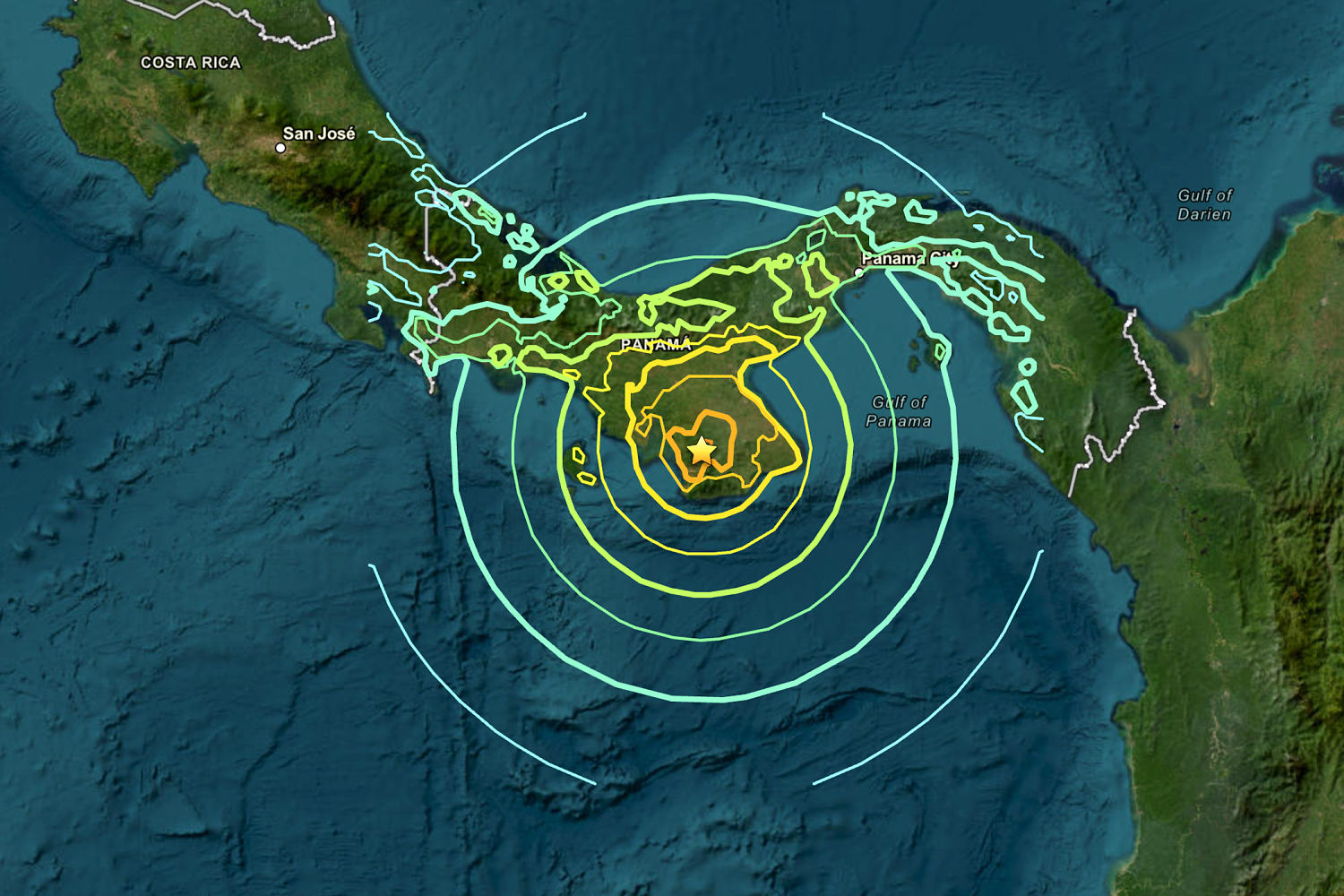
When a 7.7-magnitude earthquake struck Panama, tearing through the Herrera Province with a shallow depth of roughly 12.6 kilometers, the shockwaves reached far beyond the immediate epicenter. Millions of people felt the violent tremors, emptying high-rises in Panama City and triggering widespread regional panic. Yet, beneath the initial headlines of evacuation orders and jittery international markets lies a far more sobering reality about tectonic complacency in a region traditionally viewed as a secondary seismic hazard zone compared to its volatile neighbors.
For decades, urban planning in central Panama operated under a quiet assumption. Major structural threats were external or historical, leaving contemporary infrastructure ill-prepared for a rupture of this scale on the Azuero-Soná fault system.
The Anatomy of an Uncalculated Rupture
Seismologists measuring the October event watched initial automated estimates bounce between magnitudes 8.0 and 7.6 before settling at 7.7. That statistical jitter matters. Small shifts in magnitude calculation reflect the complex mechanics of strike-slip and oblique faulting in a localized zone that rarely produces events of this magnitude.
The epicenter hit land in the southern part of Herrera Province, turning rural terrain into a dynamic wave generator. Unlike subduction zone earthquakes that occur miles offshore and lose energy before hitting population centers, shallow inland crustal faults deliver raw, unmitigated kinetic force directly to the surface.
Buildings designed primarily for wind loads in commercial districts suddenly faced horizontal shear forces they were never engineered to absorb. In towns like Penonomé, historical architecture and municipal structures buckled under the strain. Walls collapsed, administrative offices failed, and emergency responders found themselves cut off by localized communications blackouts and power failures spanning multiple provinces.
The Infrastructure Paradox
Critical infrastructure faced an immediate stress test. The Panama Canal, the economic heartbeat of global maritime trade linking the Atlantic and Pacific oceans, became the focal point of anxious international scrutiny.
Operators executed emergency protocols instantly. Traffic paused while technical teams checked lock chambers, guide walls, and slope stability. Fortunately, the engineering marvel survived largely unscathed, avoiding a catastrophic disruption to global supply chains that are already strained by shifting climate patterns and navigational restrictions.
However, the capital told a different story. In Panama City, hundreds of modern glass-and-steel skyscrapers swayed violently for over forty seconds. Office workers flooded the asphalt, creating gridlock that paralyzed emergency transit routes.
This urban reaction exposes a persistent vulnerability in modern high-density development. Tall structures flex to absorb seismic energy, but human panic turns sidewalks into bottlenecks. Evacuation drills scheduled days after the event highlighted a grim irony: the country was practicing for a disaster it had just miraculously survived with limited fatalities, rather than one it was fully hardened against.
Aftershocks and the Long Shadow of Recovery
The primary shock is rarely the end of a seismic crisis. Within hours, scores of aftershocks rattled the region, including a disruptive 6.6-magnitude jolt that kept emergency shelters crowded and residents sleeping outdoors.
Each subsequent tremor degrades structures already weakened by the initial wave. Rural communities in the interior, where housing stock often relies on unreinforced masonry and adobe, bore the brunt of the long-term displacement. Insurance payouts, structural audits, and rebuilding bills will test national fiscal resilience in the months ahead.
Geological history offers a stark reminder. This event stands as the largest seismic release in Panama since the late nineteenth century. Regions that experience multi-century quiet periods routinely breed a dangerous institutional amnesia. Building codes soften, enforcement wanes, and populations expand directly over active fault traces without a second thought.
The ground beneath the Azuero Peninsula has quieted for now, but the structural deficits exposed by the tremors remain completely unaltered.