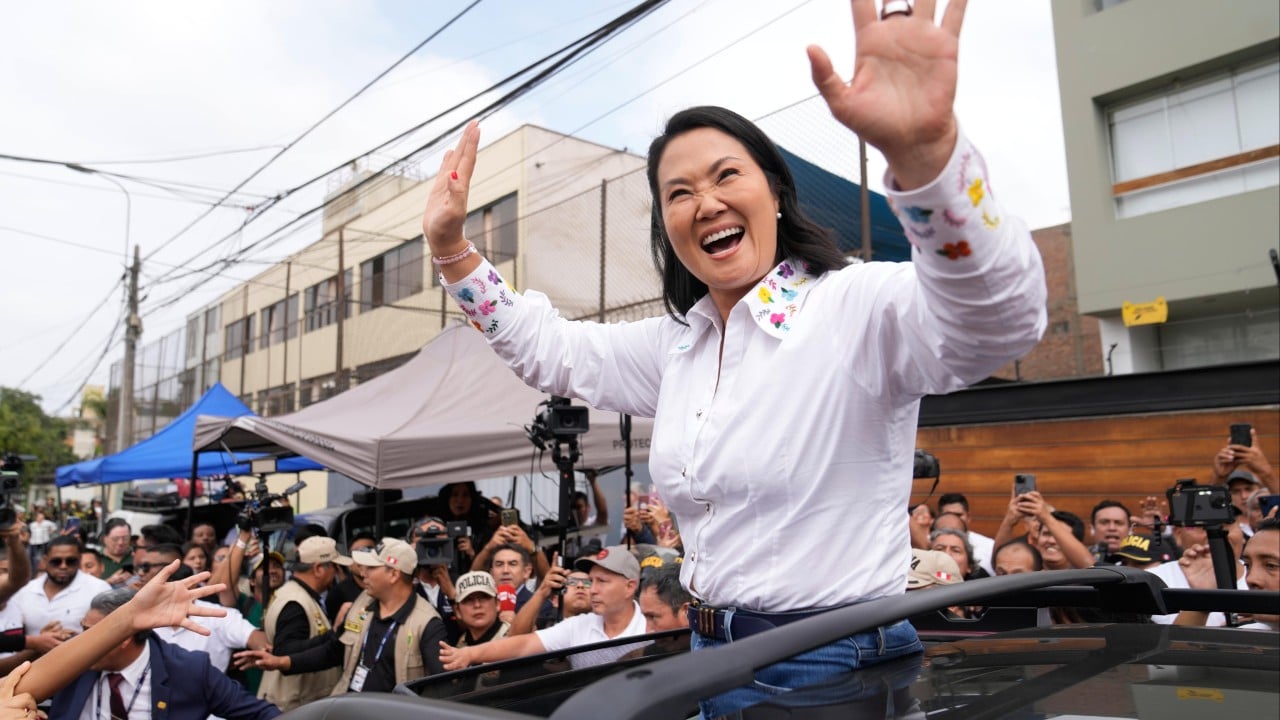
Peru is counting votes in near-total silence, trapped in a mathematical tie that masks a deeper systemic collapse. The official run-off results between right-wing Fuerza Popular leader Keiko Fujimori and leftist challenger Roberto Sánchez of Juntos por el Perú show a country split cleanly down the middle, with quick counts hovering within a fraction of a percentage point. While international observers watch the slow drip of ballot boxes from remote Andean valleys, the true story is not the delay. The real crisis is that Peru has built a political machine designed to produce instability, ensuring that whoever wins this week will face a hostile congress, a cynical public, and an institutional trapdoors that could remove them from office before their term even begins.
The razor-thin margins reported by the National Office of Electoral Processes (ONPE) are the symptom, not the disease.
To understand why Peru is on its ninth president in ten years, one must look past the immediate campaign rhetoric. The 2026 election cycle is a repeating cycle of the 2021 race, featuring the exact same ideological fracture lines, the exact same urban-rural divide, and the same terrifyingly low threshold of initial support. In the first round of voting in April, a staggering field of 35 presidential candidates fractured the electorate. Fujimori advanced to the run-off with just 17% of the valid vote. Sánchez crawled into second place with roughly 12%, beating out third-place finisher Rafael López Aliaga by a mere 20,000 votes.
This means that nearly 70% of the country voted for someone else entirely in April. The two candidates fighting for the presidency today do not command a mandate; they command two distinct factions of intense negative partisanship. People are not voting for Fujimori because they adore her economic platform; they are voting for her because they dread the radical nationalization plans of Sánchez. Conversely, the rural highlands are backing Sánchez not out of uncritical faith in his administrative competence, but to block the return of the Fujimori dynasty, which they associate with the human rights abuses and corruption of her father, Alberto Fujimori, in the 1990s.
The Institutional Architecture of Chaos
Peru's constitutional framework has become uniquely toxic. In most presidential systems, a razor-thin victory grants the executive a period of legislative breathing room. In Peru, the constitution includes a vaguely defined clause allowing unicameral—and now newly bicameral—legislatures to remove a president for "moral incapacity."
Historically, this was meant to cover severe mental or physical illness. In practice, it has been weaponized as a political tool. If a president does not command a working majority in the legislature, they can be removed on a whim.
The newly elected bicameral Congress, which returns a Senate to Peru for the first time since 1992, is just as fractured as the presidential field. Fujimori’s party holds the largest single bloc, but it is nowhere near a majority in either the Chamber of Deputies or the Senate. Sánchez faces an even steeper uphill battle. Should he win the presidency, his party commands less than a quarter of the seats. He has already threatened to remove Central Bank President Julio Velarde, an institutional anchor who has kept Peru’s currency remarkably stable despite years of executive turnover. If Sánchez touches Velarde, the business community will freeze, and a congressional coalition will likely trigger impeachment proceedings before the end of the year.
The legal jeopardy surrounding both candidates adds another layer of volatility. Sánchez is currently fighting accusations that he diverted tens of thousands of dollars in party finances to personal bank accounts, a charge he denies but which would go to trial the moment he loses his presidential immunity. Fujimori has spent years under the microscope of anti-corruption prosecutors for alleged money laundering related to past campaigns. The presidency in Peru is no longer just an executive office; it is a shield against incarceration.
The Illusion of Left versus Right
The international press frames this election as a classic Latin American ideological struggle. It is a neat narrative, but it misses the ground reality.
Sánchez has intentionally modeled his campaign on Pedro Castillo, the rural schoolteacher who won the presidency in 2021 only to be impeached and imprisoned after an inept attempt to dissolve Congress in late 2022. Sánchez wears the same iconic wide-brimmed Andean hat on the campaign trail. He promises to rewrite the constitution, expand government spending dramatically, and nationalize natural resources.
Yet, this is less about Marxism and more about a profound, bitter regional alienation. The economic boom of the last two decades, driven by copper and gold mining, built gleaming skyscrapers in Lima but left rural regions like Puno, Cusco, and Ayacucho with contaminated water, underfunded schools, and substandard roads. For a voter in the high Andes, the state does not exist except as an extractive force. Sánchez represents a voice for that resentment.
Fujimori, meanwhile, promises a mano dura—a heavy hand against a devastating wave of violent crime and extortion that has paralyzed small businesses across Lima and the northern coast. She has pledged to deploy military intelligence to the streets and temporarily place the armed forces in control of the prison system. To her supporters, this is a return to the security of the 1990s, when her father crushed the Shining Path insurgency. To her detractors, it is a blueprint for authoritarian overreach.
The irony is that neither candidate possesses the institutional strength to deliver on these promises. If Sánchez wins, the conservative-dominated Congress will block his attempts to rewrite the constitution or nationalize mines. If Fujimori wins, her attempts to implement emergency military measures will face fierce resistance from social movements in the interior, likely triggering the same bloody protests that crippled the country under Dina Boluarte’s administration.
The Silent Economic Toll
While the political class fights for survival, the Peruvian economy is quietly losing its resilience. For years, economists marvelled at the "Peruvian paradox"—the country’s ability to maintain steady macroeconomic growth and low inflation despite perpetual executive chaos. This resilience was built on two pillars: an fiercely independent Central Bank and a highly competent, technocratic Ministry of Economy and Finance.
That paradox has reached its structural limit.
Private investment has stalled. Foreign mining companies, wary of sudden regulatory shifts or localized protests that block access to key deposits like Las Bambas, are shifting capital to more predictable jurisdictions. The informal economy now employs nearly 75% of the workforce. When three-quarters of your population operates outside the tax system, survival is a daily hustle, entirely disconnected from the policies debated in the capital. The state cannot collect enough revenue to fix the infrastructure deficit, which fuels the very regional anger that drives political polarization.
The prolonged vote count is dangerous not because a few thousand ballots might tip the scales, but because it strips the eventual winner of any remaining shred of legitimacy. If Sánchez wins by a hair, Lima’s elite will echo the fraud allegations that Fujimori raised in 2021. If Fujimori wins by a fraction of a percent, the rural south will take to the streets, viewing the result as an establishment conspiracy.
Peru is not facing a temporary delay in its election results. It is facing a permanent crisis of governance where the rules of the game make stability impossible. The country is waiting for an official announcement from ONPE, but the math offers no rescue. The next president will enter the Palacio de Gobierno with a target on their back and a fractured nation at their feet.